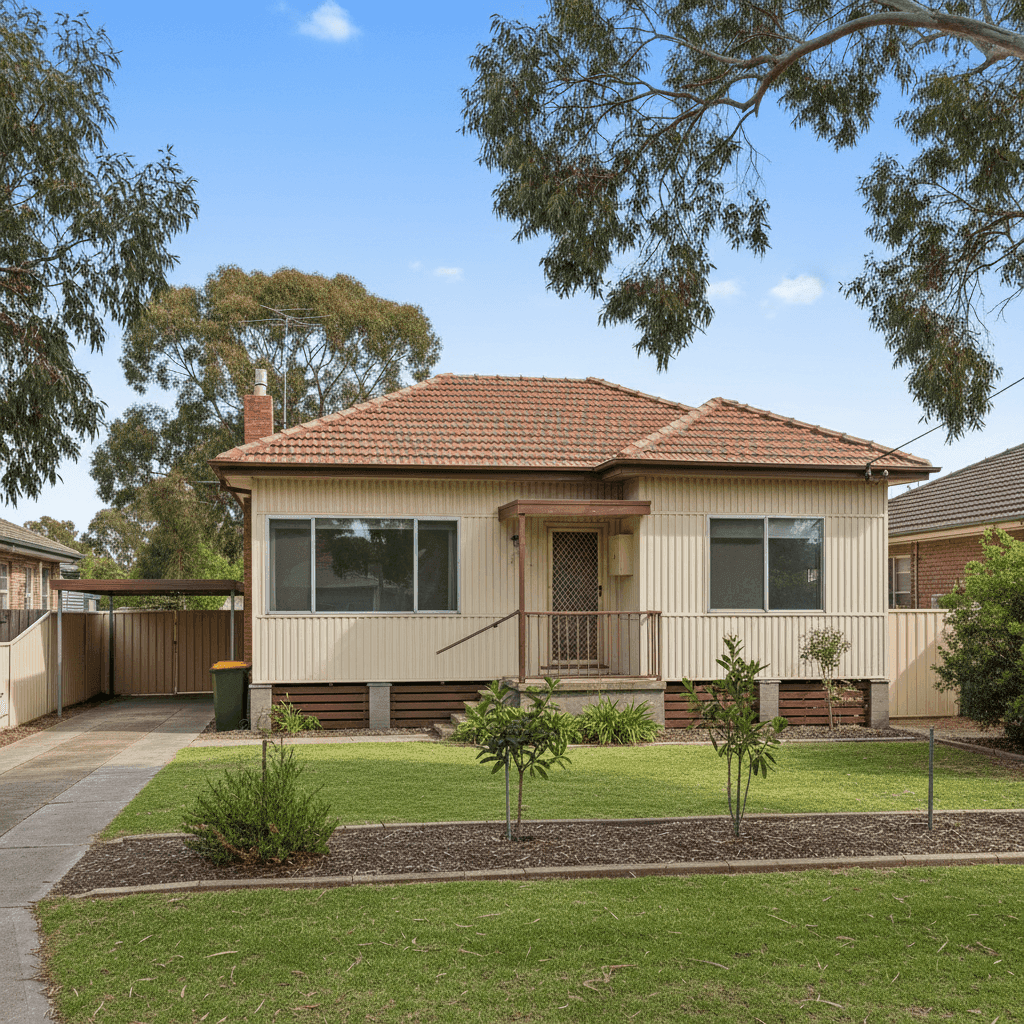
If you own a free standing home in Singleton, NSW 2330, you may be wondering whether you're paying a fair price for your building insurance — or whether there's a better deal out there. This article breaks down a real building-only insurance quote for a two-bedroom, one-bathroom free standing home in Singleton, comparing it against local, state, and national benchmarks to help you make a more informed decision.
---
Is This Quote Fair?
The short answer: yes, and then some. This quote came in at $1,751 per year (or $168 per month) for building-only cover with a $2,000 building excess and a $408,000 sum insured. CoverClub's pricing engine has rated this as CHEAP — below average for the area.
To put that in perspective, the suburb average premium for Singleton sits at $6,926 per year, with a median of $6,482. That means this quote is roughly 75% below the local average — a significant saving by any measure. Even against the suburb's 25th percentile (the cheapest quarter of quotes) of $5,670 per year, this premium is dramatically lower.
It's worth noting that suburb-level data is based on a sample of 15 quotes, so there's some natural variability. That said, the gap between this quote and the local benchmarks is large enough to be meaningful, not just statistical noise.
---
How Singleton Compares
To understand just how competitive this quote is, it helps to zoom out and look at the broader picture.
| Benchmark | Premium |
|---|---|
| This Quote | $1,751 / yr |
| Singleton Suburb Average | $6,926 / yr |
| Singleton Suburb Median | $6,482 / yr |
| NSW State Average | $9,528 / yr |
| NSW State Median | $3,770 / yr |
| National Average | $5,347 / yr |
| National Median | $2,764 / yr |
| Hawkesbury LGA Average | $10,350 / yr |
The NSW state average of $9,528 per year reflects the significant flood, storm, and bushfire exposure that many parts of New South Wales carry. The Hawkesbury LGA average of $10,350 is even higher, driven by well-documented flood risk in that region.
At the national level, the average premium of $5,347 per year is pulled upward by high-risk areas in Queensland, Western Australia, and northern NSW. The national median of $2,764 is more representative of typical homeowners — and even against this figure, the Singleton quote at $1,751 remains well below average.
Singleton itself sits in the Hunter Valley, a region with some bushfire exposure but generally moderate overall risk compared to coastal or flood-prone areas. This likely contributes to the more competitive premiums available in the suburb.
---
Property Features That Affect Your Premium
Several characteristics of this particular property work in the homeowner's favour when it comes to pricing.
Aluminium cladding is generally regarded as a lower-risk wall material compared to timber weatherboard, as it is non-combustible and resistant to rot and termite damage. Insurers tend to view this favourably, which can translate into more competitive premiums.
Tiled roofing is another positive signal for insurers. Tiles are durable, fire-resistant, and less susceptible to storm damage than corrugated iron or older fibrous cement sheeting. A well-maintained tiled roof can meaningfully reduce your risk profile.
The home is elevated on stumps by less than one metre. While stump foundations are common in older Australian homes — this one was built in 1960 — the modest elevation provides some degree of protection against minor surface water intrusion without introducing the additional wind-uplift risks associated with higher-set Queenslander-style homes.
The 130 sqm building size is relatively modest, and the standard fittings quality keeps the sum insured at a reasonable $408,000. Homes with premium finishes, larger footprints, or bespoke architectural features typically attract higher replacement costs and, consequently, higher premiums.
The absence of a swimming pool, solar panels, and ducted climate control also removes several common risk factors and potential replacement cost items that can push premiums higher.
One factor worth monitoring is the 1960 construction year. Older homes can present hidden risks — ageing wiring, plumbing, and structural elements — that some insurers price in. It's worth ensuring your policy covers the full cost of bringing the building up to current standards in the event of a claim, as modern building codes may require upgrades beyond like-for-like replacement.
---
Tips for Homeowners in Singleton
1. Review your sum insured annually Building costs in regional NSW have risen significantly in recent years due to labour shortages and material price increases. A sum insured of $408,000 may be appropriate today, but it's worth recalculating your estimated rebuild cost each year to avoid being underinsured. Use a building cost calculator or speak with a local builder for a rough estimate.
2. Understand your bushfire risk Singleton and the broader Hunter Valley have varying levels of bushfire exposure depending on proximity to bushland. Check your property's bushfire attack level (BAL) rating with the NSW Rural Fire Service and confirm your policy covers bushfire damage — most standard building policies do, but exclusions and sub-limits can vary.
3. Don't set and forget your excess This quote carries a $2,000 building excess. A higher excess generally reduces your premium, but it also means more out-of-pocket cost at claim time. Make sure you have that amount readily accessible in an emergency fund so a claim doesn't catch you short.
4. Compare quotes at renewal time Even if your current premium is competitive, the insurance market shifts regularly. Insurers reprice risk based on updated catastrophe models, reinsurance costs, and claims history. Taking 15 minutes to compare quotes at renewal — especially through a platform like CoverClub — can reveal whether you're still getting the best deal or whether it's time to switch.
---
Ready to Compare Your Own Quote?
Whether you're a first-time buyer in Singleton or a long-time homeowner reassessing your cover, comparing quotes is one of the simplest ways to make sure you're not overpaying. CoverClub makes it easy to see how your premium stacks up against real data from your suburb, state, and across Australia.
Get a home insurance quote today at CoverClub and find out if you're getting a fair deal — or if there's a better one waiting.