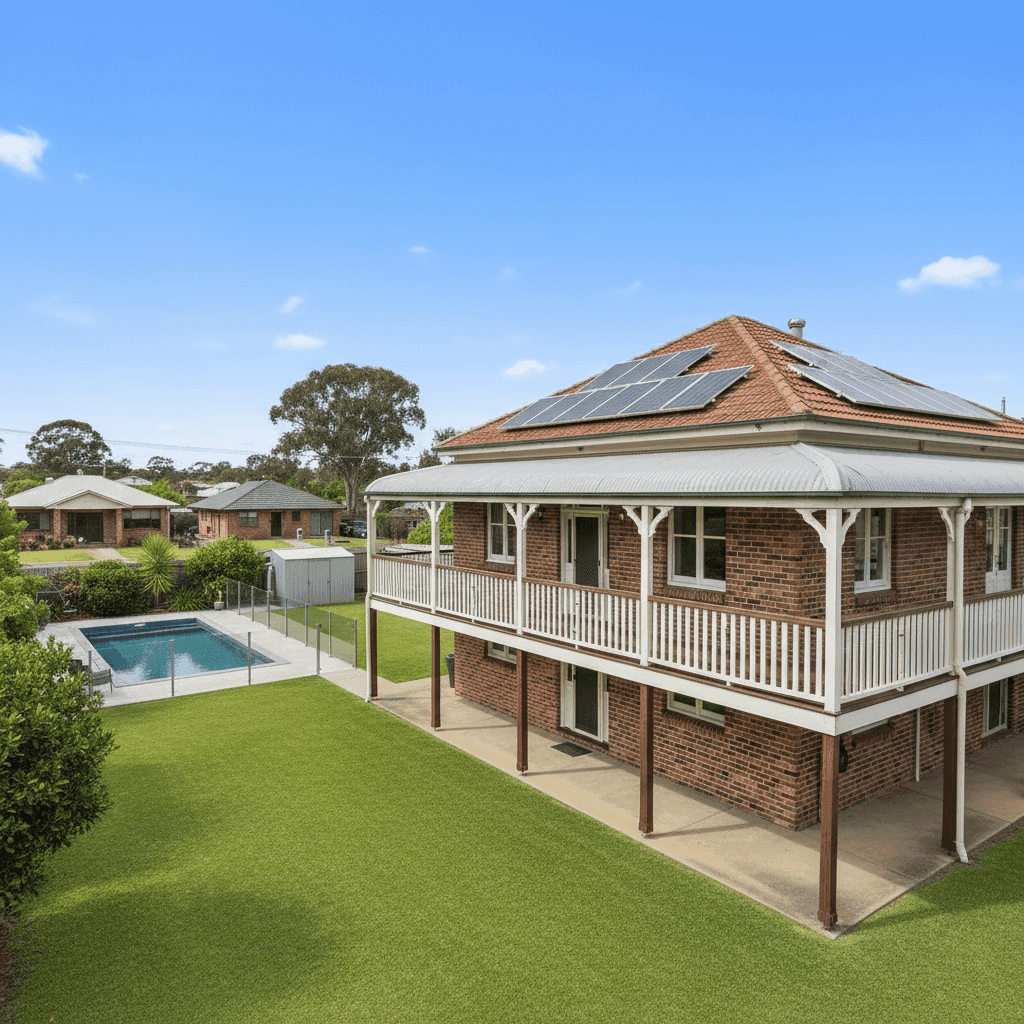
If you own a free standing home in Singleton, NSW 2330, you've probably wondered whether you're paying too much — or too little — for home insurance. This article breaks down a real building insurance quote for a four-bedroom, two-bathroom home in Singleton, comparing it against local, state, and national benchmarks so you can make a more informed decision at renewal time.
---
Is This Quote Fair?
The quote in question comes in at $3,006 per year (or $281 per month) for building-only cover, with a $1,000 excess and a sum insured of $857,000. Our price rating for this quote is CHEAP — below average for the Singleton area.
That's a meaningful finding. Based on 83 quotes collected for the Singleton 2330 postcode, the suburb average premium sits at $6,735 per year, with a median of $7,480. This quote is less than half the local average — a significant saving that's worth understanding in context.
At the 25th percentile, Singleton premiums start around $4,459 per year, meaning even the cheaper end of the local market is still nearly 50% more expensive than this quote. For a homeowner in this area, that's potentially thousands of dollars in annual savings compared to neighbours who haven't shopped around.
---
How Singleton Compares
Singleton's insurance costs are notably elevated compared to both state and national figures, which makes this quote stand out even further.
| Benchmark | Average Premium | Median Premium |
|---|---|---|
| Singleton (suburb) | $6,735/yr | $7,480/yr |
| LGA (Hawkesbury) | $4,423/yr | — |
| NSW (state) | $3,801/yr | $3,410/yr |
| National | $2,965/yr | $2,716/yr |
Singleton's suburb average of $6,735 is 77% higher than the NSW average and more than double the national average. This reflects the elevated risk profile of the Hunter Valley region — a combination of flood-prone river corridors, bushfire exposure in surrounding areas, and storm activity can all push premiums up significantly for local properties.
You can explore the broader NSW home insurance data or compare against national home insurance benchmarks to see how your own situation stacks up.
The $3,006 quote analysed here actually sits below the national average, which is remarkable for a Singleton property. This suggests the specific characteristics of this home are working in the owner's favour — and it's worth understanding why.
---
Property Features That Affect Your Premium
Several features of this particular home likely contribute to its competitive premium.
Brick Veneer Construction Brick veneer is generally well-regarded by insurers. It offers solid fire resistance and structural durability compared to weatherboard or lightweight cladding. For a home built in 1985, brick veneer construction has aged well and remains a low-risk material in the eyes of most underwriters.
Tiled Roof A tiled roof is considered one of the more resilient roofing options, particularly against ember attack in bushfire-prone areas and general weathering. This is a positive factor for premium pricing compared to older corrugated iron or asbestos roofing.
Elevated on Stumps This is a particularly important feature for flood risk. Being elevated by at least one metre on stumps means floodwater is less likely to cause catastrophic damage to the structure itself. In a region like the Hunter Valley — where the Hunter River and its tributaries have a documented history of flooding — elevation can make a substantial difference to how insurers assess your risk. This is likely one of the key drivers behind this property's below-average premium.
Solar Panels The property includes solar panels, which are typically covered under building insurance as a fixed structure. It's worth confirming with your insurer that the panels are explicitly included in your sum insured, as some policies require separate notation or may have specific conditions around storm or hail damage to panels.
Swimming Pool A pool is included in the building sum insured of $857,000. Pools can add to the insured value of a property, so it's important to ensure the replacement cost calculation accounts for the pool, fencing, and associated equipment. Underinsurance is a common issue for properties with pools, particularly as construction costs have risen sharply in recent years.
Standard Fittings, No Ducted Climate Control Standard-quality fittings and the absence of ducted air conditioning keep the replacement cost — and therefore the premium — more modest than a high-specification home. Ducted systems can add tens of thousands of dollars to a rebuild cost, so their absence here is a modest but real saving.
No Cyclone Risk Singleton is not classified as a cyclone risk area, which removes a significant premium loading that affects properties in northern Queensland and parts of Western Australia.
---
Tips for Homeowners in Singleton
1. Review Your Sum Insured Annually With a building sum insured of $857,000, it's essential to revisit this figure each year. Construction costs in regional NSW have increased considerably since COVID-19, and many homeowners are unknowingly underinsured. Use a building cost calculator or speak to a quantity surveyor if you're unsure whether your coverage reflects current rebuild costs — including the pool, solar panels, and any recent renovations.
2. Check Your Flood Cover Singleton sits within the Hunter Valley, a region with a well-documented flood history. Confirm explicitly whether your policy includes flood cover (not just storm or rainwater damage) and understand the difference. Since the introduction of a standardised flood definition in Australia, most major insurers include it — but excesses and sub-limits can vary widely.
3. Shop Around — Seriously This quote demonstrates that there is enormous price variation within the Singleton postcode. With a suburb average of $6,735 and quotes available below $3,100, the difference between the cheapest and most expensive policies can exceed $3,000 per year for comparable cover. Use CoverClub's free quote comparison tool to see multiple options side by side without the hassle of calling multiple insurers.
4. Don't Sacrifice Cover for Price A cheap premium is only valuable if the policy actually pays out when you need it. Review the Product Disclosure Statement (PDS) carefully — particularly around flood, bushfire, and escape of liquid — and check that your solar panels and pool are explicitly covered. The lowest premium isn't always the best value.
---
Compare Your Own Quote
Whether you're renewing soon or just curious about what others are paying in your area, CoverClub makes it easy to compare home insurance options in one place. See how your premium stacks up against Singleton's local benchmarks or get a new quote today — it takes just a few minutes and could save you thousands.