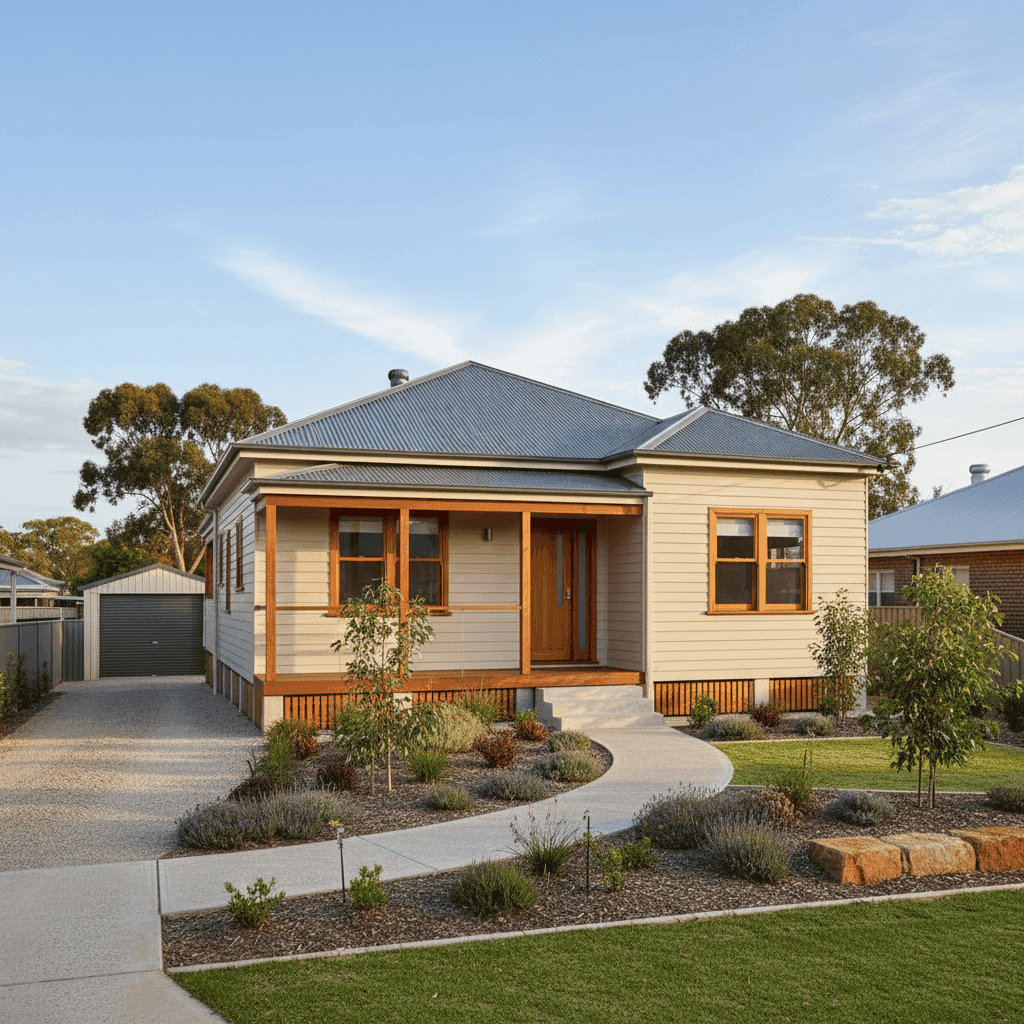
If you own a free standing home in Singleton, NSW 2330, you're probably curious about what a fair home insurance premium looks like — and whether you're paying too much, too little, or just about right. This article breaks down a real building insurance quote for a three-bedroom, weatherboard home in Singleton, comparing it against local, state, and national benchmarks to help you make a more informed decision.
---
Is This Quote Fair?
The quote in question comes in at $1,739 per year (or roughly $160 per month) for building-only cover on a 130 sqm free standing home insured for $319,000. Our price rating for this quote is CHEAP — below average — and the data strongly backs that up.
To put it in perspective, the suburb average premium in Singleton sits at $6,926 per year, and the median is $6,482 per year. That means this quote is sitting at roughly 25% of what most Singleton homeowners are paying for comparable cover. Even at the 25th percentile of local quotes — meaning the cheapest quarter of the market — premiums in the area run around $5,670 per year. This quote comfortably undercuts even that figure.
For a homeowner in Singleton, securing building cover at this price point represents genuinely strong value. Whether it's a result of the specific insurer's pricing model, the property's characteristics, or the chosen excess levels, this is a premium worth holding onto — or at least using as a benchmark when shopping around.
---
How Singleton Compares
Understanding where Singleton sits in the broader insurance landscape is useful context for any homeowner in the area. Here's how the numbers stack up:
| Benchmark | Annual Premium |
|---|---|
| This Quote | $1,739 |
| Singleton (2330) Median | $6,482 |
| Singleton (2330) Average | $6,926 |
| NSW State Median | $3,770 |
| NSW State Average | $9,528 |
| National Median | $2,764 |
| National Average | $5,347 |
| Hawkesbury LGA Average | $10,350 |
A few things stand out here. First, Singleton's suburb average of $6,926 is notably higher than the national average of $5,347, suggesting the local market carries elevated risk or limited insurer competition. Second, the NSW state average of $9,528 is significantly inflated — likely pulled upward by high-risk areas and expensive metropolitan properties — which is why the state median of $3,770 is a more reliable yardstick for typical NSW homeowners.
It's also worth noting the Hawkesbury LGA average of $10,350, which is one of the highest regional averages in NSW. While Singleton falls under a different council area, the broader Hunter Valley region shares some similar risk characteristics.
You can explore Singleton's local insurance statistics, NSW-wide premium data, and national home insurance benchmarks on CoverClub to dig deeper into the numbers.
---
Property Features That Affect Your Premium
Several characteristics of this property are worth examining through an insurance lens, as they directly influence how insurers calculate risk and price premiums.
Weatherboard timber construction is one of the most significant factors here. Weatherboard homes — particularly older ones — are generally considered higher risk by insurers due to their susceptibility to fire, rot, and pest damage. Many insurers apply a loading to timber-framed or timber-clad properties, so finding a competitive rate on a weatherboard home is all the more noteworthy.
Construction year (1965) adds another layer of consideration. Homes built in the 1960s may have older electrical wiring, plumbing, and structural elements that increase the likelihood of a claim. Insurers typically factor in building age when pricing premiums, so a 60-year-old home would ordinarily attract some age-related loading.
Stumps (raised foundation) is a foundation type common in older Queensland and NSW homes. While it allows for airflow and can be beneficial in certain climates, it also means the subfloor is exposed and may be more vulnerable to pest damage or deterioration over time.
Steel/Colorbond roof is generally viewed favourably by insurers. Colorbond is durable, fire-resistant, and low-maintenance compared to terracotta tiles or older corrugated iron, which can help keep premiums in check.
Ducted climate control is worth noting as it adds to the replacement value of the home. At $319,000 sum insured, it's important to ensure this figure adequately covers the cost of rebuilding — including all fixed inclusions like ducted systems — to avoid being underinsured.
No pool and no solar panels simplify the risk profile. Pools introduce liability considerations, and solar panels add to rebuild costs and electrical complexity. Their absence keeps things straightforward for insurers.
Building excess of $5,000 is notably high and is likely a key driver of the low premium. A higher excess means the homeowner absorbs more of the cost in the event of a claim, which reduces the insurer's exposure and lowers the annual cost accordingly. It's worth weighing up whether this trade-off suits your financial situation.
---
Tips for Homeowners in Singleton
Whether you're reviewing your current policy or shopping for a new one, here are some practical steps to help you get the most out of your home insurance in Singleton.
- Review your sum insured regularly. Building costs have risen sharply across Australia in recent years. A sum insured of $319,000 for a 130 sqm home may be appropriate today, but it's worth reassessing annually — especially if you've completed renovations or if local construction costs have increased. Being underinsured can leave you significantly out of pocket after a major claim.
- Understand the impact of your excess. This quote carries a $5,000 building excess, which is on the higher end. If you can afford to absorb smaller claims out of pocket, a high excess is a legitimate way to reduce your premium. But if a $5,000 outlay would cause financial stress, it may be worth paying a slightly higher premium for a lower excess.
- Maintain your weatherboard cladding proactively. Timber-clad homes require regular upkeep — painting, sealing, and checking for rot or termite activity. Keeping your home in good condition not only protects your asset but also ensures you remain compliant with your insurer's maintenance obligations, which can affect claim outcomes.
- Compare quotes at renewal time. Insurers regularly reprice their books, and loyalty doesn't always pay. Given that the suburb median sits at $6,482 and this quote came in at $1,739, the spread in the market is clearly substantial. Shopping around at renewal — even if you're happy with your current insurer — ensures you're not quietly rolled onto a less competitive rate.
---
Compare Your Home Insurance on CoverClub
Whether you're a first-time buyer or a long-term Singleton homeowner, comparing quotes is the easiest way to make sure you're not overpaying. CoverClub makes it simple to see how your premium stacks up against real data from your suburb and across Australia. Get a quote today and find out if you're getting the value you deserve.