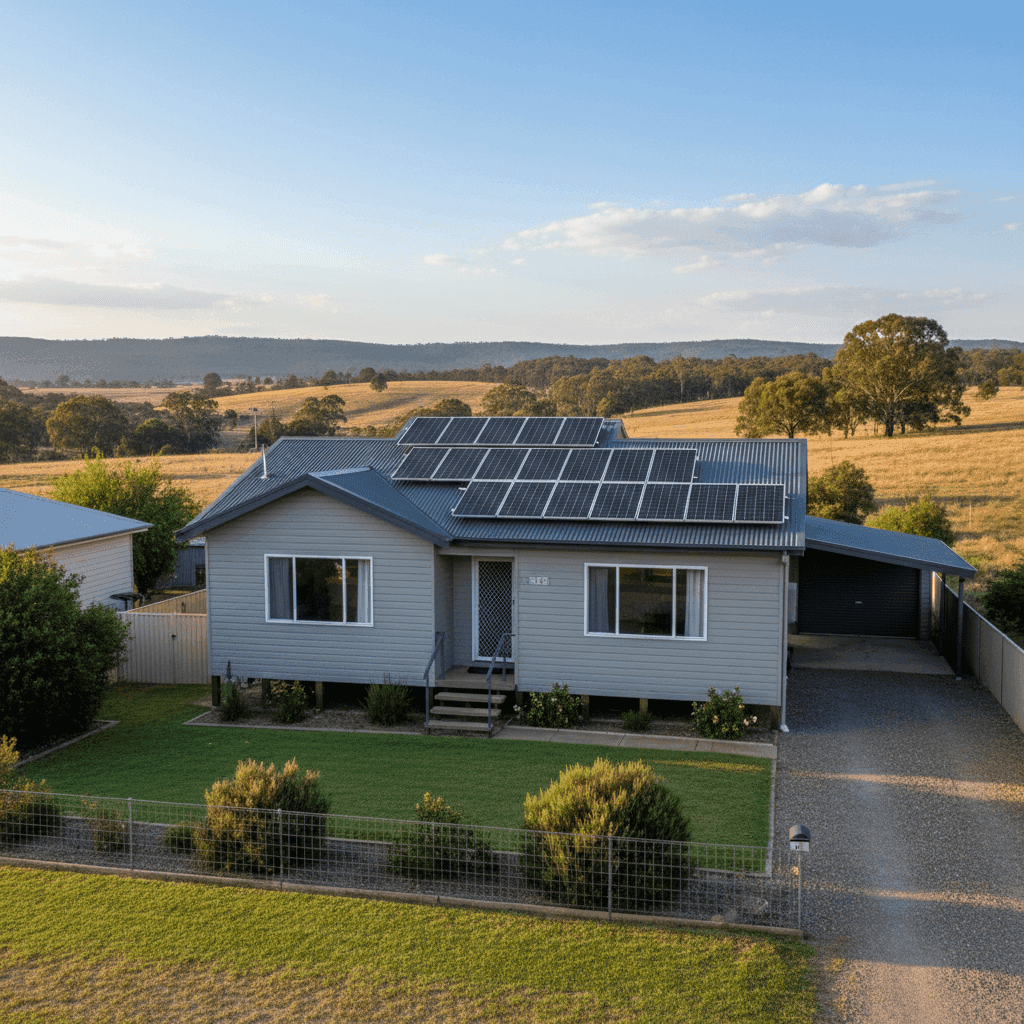
Singleton, nestled in the Hunter Valley of New South Wales, is a region better known for its wine, coal mining heritage, and relaxed country lifestyle than for sky-high insurance bills. But if you own a free standing home here, understanding what you should be paying for home and contents cover — and why — is just as important as anywhere else in Australia. This article breaks down a real quote for a three-bedroom, one-bathroom free standing home in Singleton (postcode 2330), compares it against local, state, and national benchmarks, and offers practical advice for homeowners in the area.
---
Is This Quote Fair?
The short answer? Yes — and then some. This quote comes in at $2,724 per year (or $254 per month) for combined home and contents insurance, covering a building sum insured of $529,000 and $50,000 worth of contents. Both the building and contents excess sit at $2,000.
Our pricing analysis rates this quote as CHEAP — Below Average, meaning it sits well beneath what most comparable properties in Singleton are paying. To put that in perspective:
- The suburb average for Singleton (2330) is $6,926/yr
- The suburb median is $6,482/yr
- Even the 25th percentile — the cheapest quarter of quotes in the area — sits at $5,670/yr
This quote at $2,724 comes in below the suburb's 25th percentile, meaning it's cheaper than at least 75% of quotes collected for this postcode. That's a genuinely strong result, and one that any Singleton homeowner would do well to benchmark their own policy against.
For broader context, you can explore Singleton's full insurance statistics on CoverClub.
---
How Singleton Compares
Zooming out beyond the suburb level reveals just how varied home insurance pricing can be across New South Wales and the country as a whole.
| Benchmark | Average Premium | Median Premium |
|---|---|---|
| Singleton (2330) | $6,926/yr | $6,482/yr |
| NSW | $9,528/yr | $3,770/yr |
| National | $5,347/yr | $2,764/yr |
| Hawkesbury LGA | $10,350/yr | — |
A few things stand out here. The NSW average of $9,528/yr is dramatically higher than the state median of $3,770/yr — a sign that a relatively small number of very expensive policies (likely in high-risk flood or bushfire zones) are pulling the average upward significantly. The same skew is visible at the national level, where the average ($5,347) is nearly double the median ($2,764).
The Hawkesbury LGA average of $10,350/yr is particularly striking, and serves as a reminder that geography within NSW can make an enormous difference to what insurers charge. Singleton, by comparison, appears to be a relatively more affordable area to insure — though its suburb average of $6,926 still sits above the national median.
This quote's $2,724 annual premium is remarkably close to the national median of $2,764, suggesting the homeowner has secured pricing that reflects favourable property characteristics rather than the broader Singleton market rate.
Dig deeper into NSW home insurance statistics or national home insurance data to see how your own situation compares.
---
Property Features That Affect Your Premium
Several characteristics of this particular property likely contribute to its competitive pricing — and it's worth understanding why.
Construction Era and Materials
Built in 1929, this is an older home, which can sometimes attract higher premiums due to concerns about ageing infrastructure, wiring, or plumbing. However, the Hardiplank/Hardiflex external walls are a genuine positive. Fibre cement cladding like Hardiflex is fire-resistant, durable, and far less susceptible to damage than weatherboard or timber — qualities that insurers tend to reward. The steel/Colorbond roof is similarly viewed favourably: it's lightweight, long-lasting, and performs well in storms and high winds.
Stump Foundation
The home sits on stumps, which is common for older Australian homes and can be a double-edged sword. On the positive side, stumped homes are elevated off the ground, which can reduce flood and moisture risk. On the other hand, they may require periodic maintenance (re-stumping), and some insurers price them differently. In this case, it doesn't appear to have negatively impacted the premium.
Solar Panels
The presence of solar panels is worth noting. While solar adds value to a property, it also adds replacement cost in the event of storm, hail, or fire damage. Homeowners should confirm that their solar system is explicitly covered under their building policy — some policies include it automatically, others require it to be specified.
Ducted Climate Control
Ducted climate control is a significant fixed asset and contributes to the building sum insured. At $529,000, the building cover appears appropriately scaled for a 130 sqm home with quality fixtures in a regional NSW market.
No Pool, Standard Fittings
The absence of a pool simplifies the risk profile (no public liability concerns around pool fencing or drowning risk), and standard fittings keep the replacement cost calculation straightforward. These factors likely help keep the premium lean.
---
Tips for Homeowners in Singleton
Whether you're reviewing an existing policy or shopping for the first time, here are four practical steps worth taking.
1. Don't assume your renewal price is competitive. The gap between this quote ($2,724) and the Singleton suburb average ($6,926) is enormous. If you've been with the same insurer for several years without comparing, there's a real chance you're overpaying. Use a comparison tool like CoverClub to see what's available for your specific property.
2. Check your solar panels are covered. Solar panel systems can cost $5,000–$15,000 or more to replace. Review your policy documents carefully to confirm whether your panels are covered under building insurance, and for what events (storm, fire, hail, accidental damage). If in doubt, call your insurer and ask directly.
3. Review your sum insured regularly. Building costs in regional NSW have risen considerably in recent years. A sum insured set several years ago may no longer reflect the true cost of rebuilding your home. Use a building cost calculator or speak to a local builder to sense-check your coverage amount — underinsurance can leave you significantly out of pocket after a major claim.
4. Consider your excess carefully. Both the building and contents excess on this policy sit at $2,000. A higher excess generally lowers your premium, but make sure you could comfortably cover that amount in the event of a claim. If $2,000 would be a stretch, it may be worth paying a slightly higher premium for a lower excess.
---
Compare Your Own Quote
Whether you own a heritage cottage or a modern build in the Hunter Valley, the best way to know if you're getting a fair deal is to compare. CoverClub makes it easy to see how your premium stacks up against real data from your suburb, your state, and across Australia.
[Get a home insurance quote and compare today at CoverClub →](https://coverclub.com.au/?focus=address)