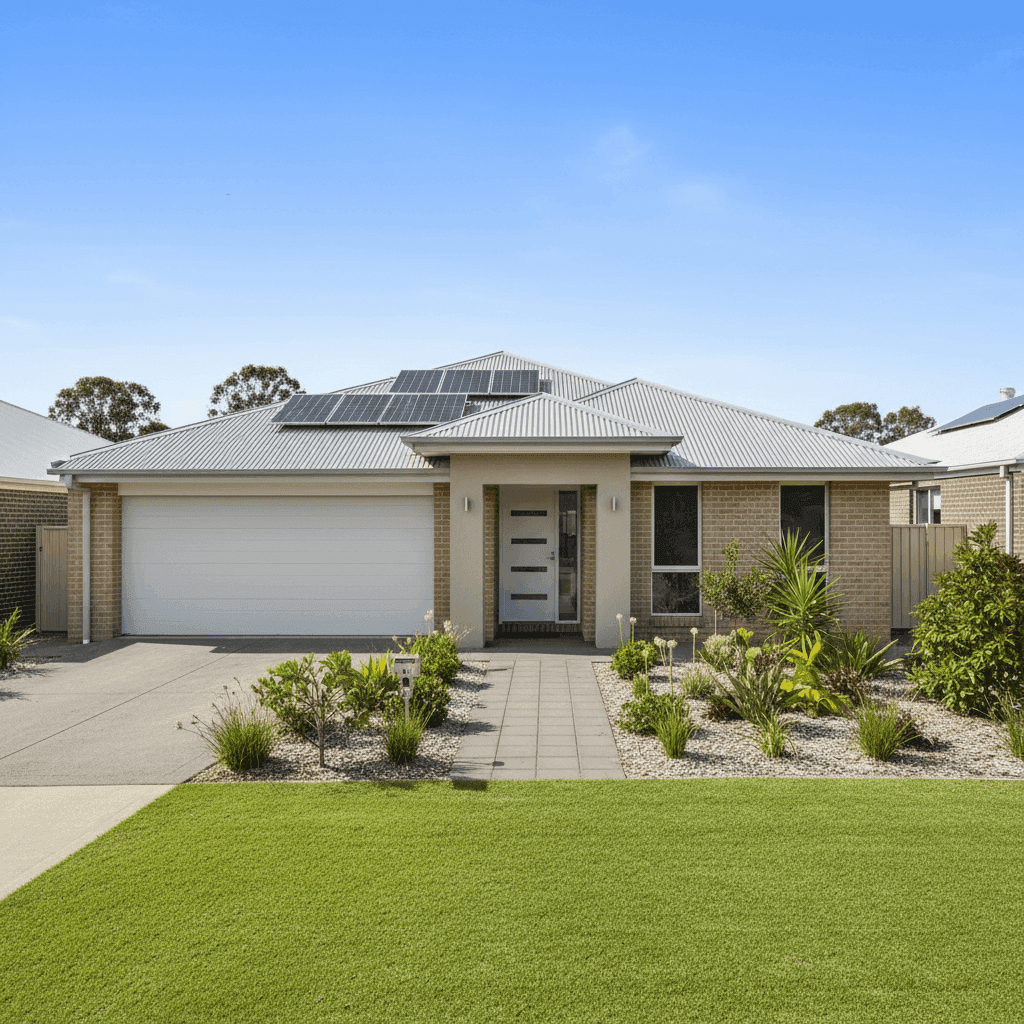
Sippy Downs is a well-established residential suburb on Queensland's Sunshine Coast, sitting roughly halfway between Maroochydore and Caloundra. Known for its family-friendly streets, proximity to the University of the Sunshine Coast, and a mix of modern and early-2000s housing stock, it's a popular spot for owner-occupiers looking for a quieter lifestyle without straying too far from coastal amenities. This article takes a close look at a home and contents insurance quote for a four-bedroom, two-bathroom free standing home in the area — and unpacks whether the price is genuinely competitive.
---
Is This Quote Fair?
The annual premium for this property comes in at $1,981 per year (or around $203 per month), covering a building sum insured of $500,000 and contents valued at $200,000. The building excess is $3,000 and the contents excess is $1,000.
Our price rating for this quote is FAIR — Around Average, and the data backs that up. Based on 60 quotes collected for the Sippy Downs area, the suburb's 25th percentile sits at $1,928 per year and the 75th percentile reaches $3,356 per year. At $1,981, this quote lands just above the cheapest quarter of the market — meaning roughly 75% of comparable quotes are more expensive. That's a reasonably solid position.
The suburb median is $2,696 per year, so this quote comes in about $715 below the midpoint — a meaningful saving without being an outlier that might signal inadequate cover. It's the kind of quote worth holding onto, but still worth comparing before committing.
---
How Sippy Downs Compares
To put this quote in broader context, it helps to look beyond the postcode.
| Benchmark | Premium |
|---|---|
| This quote | $1,981/yr |
| Sippy Downs median | $2,696/yr |
| Sippy Downs average | $21,055/yr |
| QLD median | $3,903/yr |
| QLD average | $9,129/yr |
| National median | $2,764/yr |
| National average | $5,347/yr |
| Sunshine Coast LGA average | $7,249/yr |
A few things stand out here. First, the Sippy Downs average of $21,055 is dramatically higher than the median of $2,696 — a classic sign that a small number of very high-cost quotes are pulling the mean upward. This is common in Queensland, where properties in flood-prone or high-risk zones can attract eye-watering premiums that distort suburb-level averages. The median is generally a more useful benchmark for typical homeowners.
Compared to the Queensland state median of $3,903, this quote is about 49% cheaper — a significant gap that reflects Sippy Downs' relatively favourable risk profile. The suburb sits outside designated cyclone risk zones, which is a meaningful advantage in a state where cyclone exposure can add thousands to a premium.
Against the national median of $2,764, this quote is also slightly under — suggesting the property is attracting pricing that's competitive not just locally, but across the country.
The Sunshine Coast LGA average of $7,249 further illustrates how much variation exists within a single local government area. Coastal and low-lying properties can face significantly higher premiums than those on elevated, well-drained ground like much of Sippy Downs.
---
Property Features That Affect Your Premium
Several characteristics of this property work in its favour from an insurer's perspective.
Brick veneer construction is generally well-regarded by insurers. It offers solid structural integrity and reasonable resistance to fire and wind compared to lightweight cladding materials. Combined with a Colorbond steel roof, which is durable, low-maintenance, and performs well in Queensland's heat and occasional severe weather, the construction profile is considered relatively low-risk.
The concrete slab foundation is another positive. Slab homes tend to be less susceptible to the kind of subfloor moisture and pest damage that can affect older elevated timber homes — and insurers tend to price this accordingly.
Tile flooring throughout the home is a practical choice in Queensland's climate and is generally treated neutrally by insurers. It doesn't add meaningful risk, and in the event of water damage, tiles are typically cheaper to remediate than carpet or timber.
The presence of solar panels is worth noting. While they add value to the property and are generally covered under building insurance, some insurers treat them as an increased risk due to potential electrical faults or storm damage. It's worth confirming that your policy explicitly covers solar panel systems — both for damage to the panels themselves and for any liability arising from them.
The standard fittings quality keeps the rebuild cost estimate grounded. High-end fixtures and finishes can push the sum insured significantly higher; standard fittings mean the $500,000 building cover is likely a reasonable reflection of actual replacement cost for a 2001-era home of this size.
Finally, the absence of a pool removes a common source of liability claims and incidental damage, which can otherwise nudge premiums upward.
---
Tips for Homeowners in Sippy Downs
1. Double-check your building sum insured regularly Construction costs in South East Queensland have risen sharply over the past few years. A sum insured that felt adequate in 2021 may no longer cover a full rebuild today. Use a quantity surveyor estimate or your insurer's rebuild cost calculator to make sure $500,000 still reflects current costs for a four-bedroom brick veneer home.
2. Confirm solar panel coverage in your policy Not all home insurance policies cover solar panels as standard, and some that do may apply sublimits or exclusions for electrical faults. Ask your insurer directly whether your system is covered for storm damage, accidental damage, and any resulting damage to the roof or wiring.
3. Review your contents sum insured annually $200,000 in contents cover is a reasonable starting point for a four-bedroom home, but it's easy to underestimate how quickly possessions accumulate. Do a room-by-room audit periodically — especially after major purchases like whitegoods, electronics, or furniture — to make sure you're not underinsured.
4. Consider the impact of your excess on your premium This quote carries a $3,000 building excess, which is on the higher side. A higher excess generally reduces your annual premium, but it means you'll need to cover more out of pocket before your insurer steps in. Make sure your emergency fund can comfortably absorb that amount before opting for a high-excess policy purely to save on premiums.
---
Compare Home Insurance Quotes in Sippy Downs
Whether you're reviewing an existing policy or shopping for the first time, it pays to see what's available across the market. CoverClub makes it easy to compare home and contents insurance quotes for properties across Queensland and Australia. Get a quote today and see how your premium stacks up against the benchmarks — you might be surprised by how much variation there is for the same level of cover.