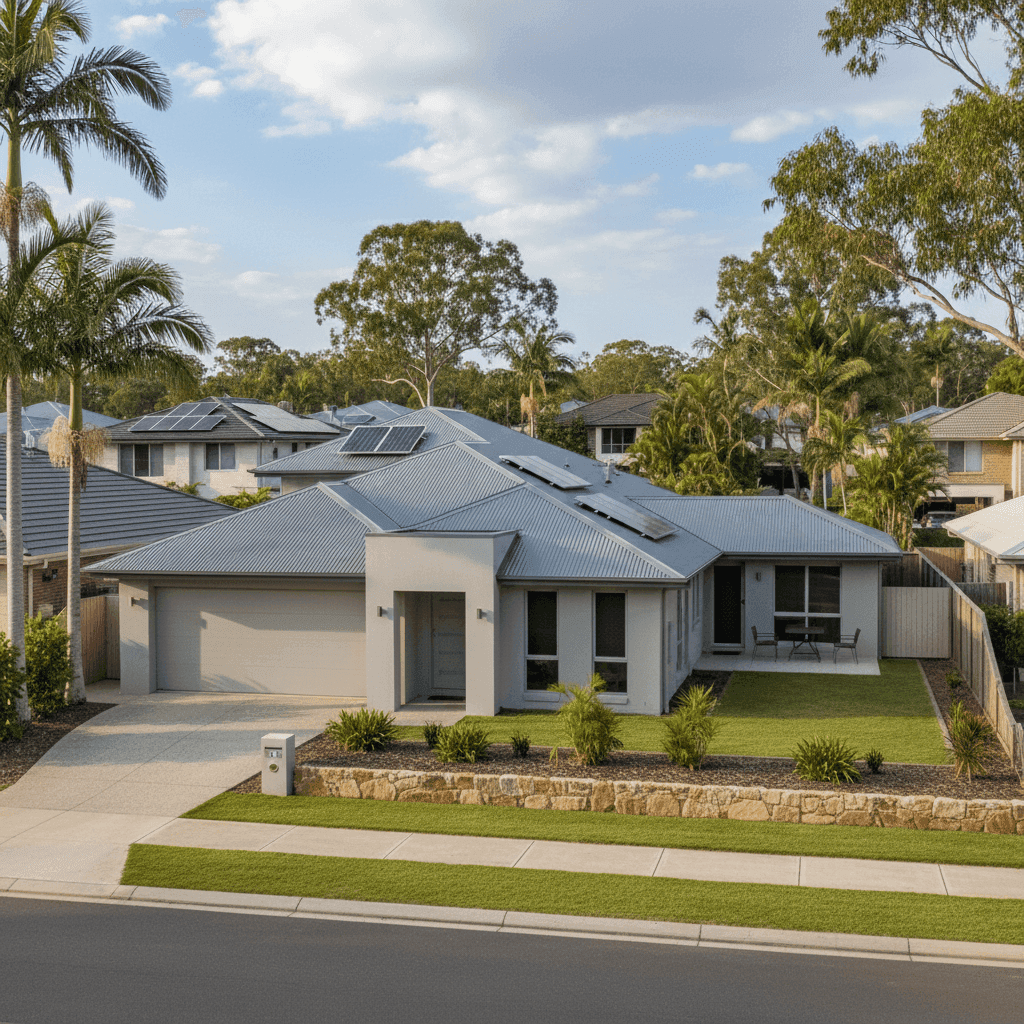
Sippy Downs, nestled in Queensland's Sunshine Coast region, is a well-established suburb popular with families thanks to its proximity to the University of the Sunshine Coast, quality schools, and easy access to coastal amenities. It's also a suburb where home insurance costs can vary quite significantly — and understanding why your premium lands where it does can save you thousands over the life of your policy.
This article breaks down a recent home and contents insurance quote for a four-bedroom, three-bathroom free standing home in Sippy Downs (postcode 4556), built in 2013 and sitting at 214 sqm. The quoted annual premium came in at $6,156 per year ($604/month), with a building sum insured of $600,000 and contents covered at $50,000. So — is that a fair price?
---
Is This Quote Fair?
In short: this quote is rated Expensive — above average for the area.
To put that in perspective, the suburb average premium for Sippy Downs sits at just $2,109 per year, with a median of $2,359. Even at the 75th percentile — meaning 75% of comparable quotes are cheaper — the figure is only $2,831 per year. At $6,156, this quote is more than double the suburb median, which warrants a closer look.
That said, it's worth noting that the building sum insured of $600,000 is likely higher than many comparable properties in the suburb sample, which would naturally push the premium up. A higher rebuild cost means more exposure for the insurer, and premiums scale accordingly. The presence of a granny flat also adds to the insurable value of the property — a separate dwelling structure on the same title requires additional cover and is a meaningful driver of premium cost.
The $3,000 building excess is on the higher end, which typically acts as a lever to reduce the base premium — yet the quote is still expensive. This suggests the insurer is pricing in the full replacement value of what is genuinely a larger-than-average residential property.
---
How Sippy Downs Compares
When you zoom out from the suburb level, the picture shifts considerably. Here's how this quote stacks up across different benchmarks:
| Benchmark | Premium |
|---|---|
| This Quote | $6,156/yr |
| Sippy Downs Average | $2,109/yr |
| Sippy Downs Median | $2,359/yr |
| Sippy Downs 75th Percentile | $2,831/yr |
| QLD State Average | $4,547/yr |
| QLD State Median | $3,931/yr |
| National Average | $2,965/yr |
| National Median | $2,716/yr |
| Sunshine Coast LGA Average | $4,608/yr |
Interestingly, while the quote looks steep compared to the Sippy Downs suburb average, it's not wildly out of line with the broader Queensland state average of $4,547 — particularly for a property of this size and configuration. Queensland homeowners consistently pay more than the national average of $2,965, largely due to elevated weather risks across the state, higher rebuild costs in coastal regions, and the general complexity of insuring larger homes.
The Sunshine Coast LGA average of $4,608 per year also provides useful context — this quote exceeds even that regional benchmark, reinforcing that the property's specific features (size, granny flat, sum insured level) are the primary cost drivers rather than location risk alone.
It's also worth noting the suburb sample size is relatively small at 31 quotes, so the averages may not fully capture the range of property types in the area.
---
Property Features That Affect Your Premium
Several characteristics of this property have a direct bearing on what insurers charge:
Hebel external walls are generally viewed favourably by insurers. Autoclaved aerated concrete (AAC) panels like Hebel offer good fire resistance and structural durability, which can positively influence premiums compared to timber weatherboard constructions.
Steel/Colorbond roofing is another plus. Colorbond is a popular choice in Queensland for good reason — it's durable, low-maintenance, and performs well in high-wind events. Insurers typically price this roof type more competitively than older terracotta or concrete tiles.
Slab foundation is standard for a 2013 build and carries no particular risk premium. Combined with a tile floor finish throughout, this is a straightforward profile for underwriters.
Solar panels are an increasingly common feature on Queensland homes, but they do add replacement value to the building. If the solar system is affixed to the roof structure, it's generally covered under building insurance — and insurers will factor in the cost of replacing those panels in the event of storm or hail damage.
The granny flat is arguably the single biggest premium driver beyond the sum insured itself. A secondary dwelling on the same property increases the total rebuild liability considerably. Homeowners should confirm with their insurer exactly what is covered under the policy — some policies cover secondary structures automatically up to a percentage of the building sum insured, while others may require it to be explicitly noted.
No pool and no ducted climate control work in the property's favour — both are common sources of claims and liability, so their absence helps keep the risk profile cleaner.
---
Tips for Homeowners in Sippy Downs
1. Review your sum insured carefully A $600,000 building sum insured is significant. Make sure this figure reflects the actual cost to rebuild your home from scratch — not its market value. Overinsuring can mean unnecessarily high premiums, while underinsuring leaves you exposed. Use a building cost estimator or speak with a quantity surveyor to get an accurate figure.
2. Confirm granny flat coverage in writing If you have a granny flat on the property, don't assume it's automatically covered. Ask your insurer to confirm the extent of cover for secondary structures and whether it's included in the building sum insured or requires a separate schedule.
3. Shop around — seriously The gap between the cheapest and most expensive quotes in Sippy Downs is enormous. The 25th percentile sits at just $1,373 per year, while this quote is $6,156. Even accounting for differences in property size and sum insured, there is likely meaningful savings available by comparing multiple insurers. Get a quote through CoverClub to see what competing insurers will offer for your specific property.
4. Consider adjusting your excess A $3,000 building excess is already quite high. Before increasing it further to chase a lower premium, make sure you're comfortable covering that amount out of pocket in the event of a claim. For contents, the $600 excess is more standard — but again, weigh the trade-off carefully.
---
Compare Your Home Insurance Today
Whether you're renewing your existing policy or insuring a property for the first time, it pays to compare. CoverClub makes it easy to see what multiple insurers will charge for your specific home — not just a generic estimate. Start your comparison at CoverClub and find out if you're getting a fair deal on your home and contents insurance.