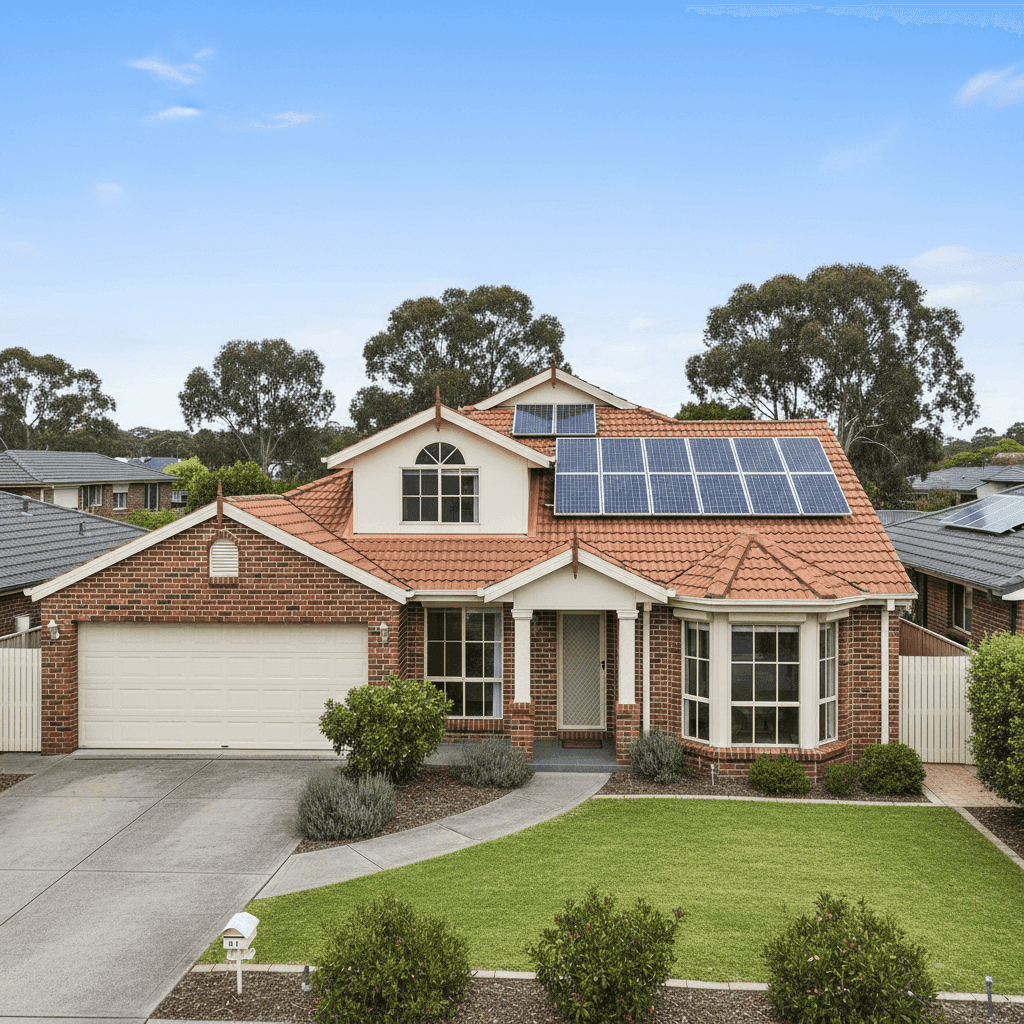
If you own a free standing home in Skye, VIC 3977, you've probably wondered whether you're paying too much — or too little — for home and contents insurance. Located in Melbourne's south-eastern corridor within the City of Frankston, Skye is a predominantly residential suburb where property values and insurance costs can vary considerably depending on your home's characteristics and the insurer you choose.
This article breaks down a real home and contents insurance quote for a four-bedroom, two-bathroom brick veneer home in Skye, comparing it against local, state, and national benchmarks so you can make a more informed decision at renewal time.
---
Is This Quote Fair?
The quote in question comes in at $1,958 per year (or $196/month) for combined home and contents cover, with a building sum insured of $750,000 and contents valued at $120,000. Both the building and contents excess are set at $1,000.
Our price rating for this quote is FAIR — Around Average, and the numbers back that up. The suburb median premium for Skye sits at $1,931 per year, meaning this quote is almost exactly in the middle of what other homeowners in the area are paying. It's slightly above the median but well within a normal range — certainly not a cause for alarm.
What does this mean in practice? You're not getting the sharpest deal on the market, but you're also not being gouged. There's a reasonable spread of premiums in this suburb: the cheapest 25% of quotes come in at or below $1,449/year, while the top 25% exceed $2,966/year. At $1,958, this quote sits comfortably between those two extremes — solidly average for the area.
---
How Skye Compares
To put this quote in proper context, it helps to zoom out and look at the broader picture. You can explore the full breakdown on the Skye suburb stats page.
| Benchmark | Average Premium | Median Premium |
|---|---|---|
| Skye (3977) | $2,301/yr | $1,931/yr |
| LGA (Frankston) | $3,283/yr | — |
| Victoria | $3,000/yr | $2,718/yr |
| National | $5,347/yr | $2,764/yr |
A few things stand out here. First, Skye premiums are notably lower than the Victorian state average of $3,000/year — a meaningful saving of around $1,000 annually at the median level. Second, the LGA average for Frankston is considerably higher at $3,283/year, which suggests that some parts of the Frankston council area carry higher risk profiles than Skye itself.
At the national level, the average premium of $5,347/year looks eye-watering by comparison — though it's worth noting that figure is heavily influenced by high-risk regions in Queensland and Western Australia, particularly cyclone-prone coastal areas. The national median of $2,764/year is a more useful comparison point, and Skye's median of $1,931 still comes in well below it.
For Victorian context, visit the VIC state insurance stats page, or explore national home insurance benchmarks if you'd like to see the full picture.
---
Property Features That Affect Your Premium
Every insurer prices risk differently, but the physical characteristics of your home play a significant role in what you'll pay. Here's how the features of this particular property are likely influencing the quote:
Brick Veneer Construction Brick veneer is one of the most common external wall types in suburban Melbourne, and insurers generally view it favourably. It offers solid fire resistance and durability compared to weatherboard or cladding, which can translate to more competitive premiums.
Tiled Roof Terracotta or concrete tile roofs are considered low-to-moderate risk by most insurers. They're durable and less susceptible to fire than Colorbond or corrugated iron in some scenarios, though they can be costly to repair if damaged by hail or fallen branches.
Concrete Slab Foundation A slab foundation is standard for homes of this era (built in 2001) and is generally well-regarded by underwriters. It reduces the risk of subsidence and pest-related structural damage compared to older suspended timber floors.
Solar Panels This property has solar panels installed, which is worth noting. Solar panels are typically covered under building insurance, but it's important to confirm this with your insurer — some policies have sub-limits or exclusions for solar systems. Given the cost of replacement, ensuring your sum insured accounts for the panels is essential.
Ducted Climate Control Ducted heating and cooling systems are a significant fixed asset. As part of the building, they should be included in your building sum insured. Underinsurance is a real risk if you haven't reviewed your coverage since the system was installed or upgraded.
Building Size: 214 sqm At 214 square metres, this is a mid-to-large sized suburban home. Rebuild costs per square metre in Melbourne's south-east typically range from $1,800 to $2,500+, depending on finishes and current construction costs. A $750,000 building sum insured works out to roughly $3,505/sqm — a figure that appears reasonable, though homeowners should verify this against current building cost estimates to avoid underinsurance.
---
Tips for Homeowners in Skye
1. Review your sum insured annually Construction costs have risen sharply in recent years. If your building sum insured hasn't been updated since you first took out the policy, there's a real chance you're underinsured. Use a building cost calculator or speak to a quantity surveyor to get a current estimate.
2. Check your solar panel coverage Confirm with your insurer that your solar panels are explicitly covered under your building policy, and check whether there's a sub-limit that might not reflect the full replacement cost. If your system is large or recently upgraded, you may need to notify your insurer.
3. Shop around at renewal A "fair" rating means you're around the average — but the cheapest 25% of Skye quotes come in at $1,449/year or less. That's potentially over $500 in annual savings. Even if you're happy with your current insurer, it costs nothing to compare at renewal time.
4. Consider your excess carefully Both the building and contents excess on this policy are set at $1,000. A higher excess typically reduces your annual premium, while a lower excess gives you more protection for smaller claims. Think about what you could comfortably afford to pay out of pocket and set your excess accordingly.
---
Compare Your Home Insurance Quote Today
Whether you're renewing your policy or shopping for the first time, comparing quotes is the single most effective way to make sure you're not overpaying. CoverClub makes it easy to see how your premium stacks up against real quotes from other homeowners in your suburb.
Get a home insurance quote at CoverClub and find out if you could be paying less for the same level of cover.