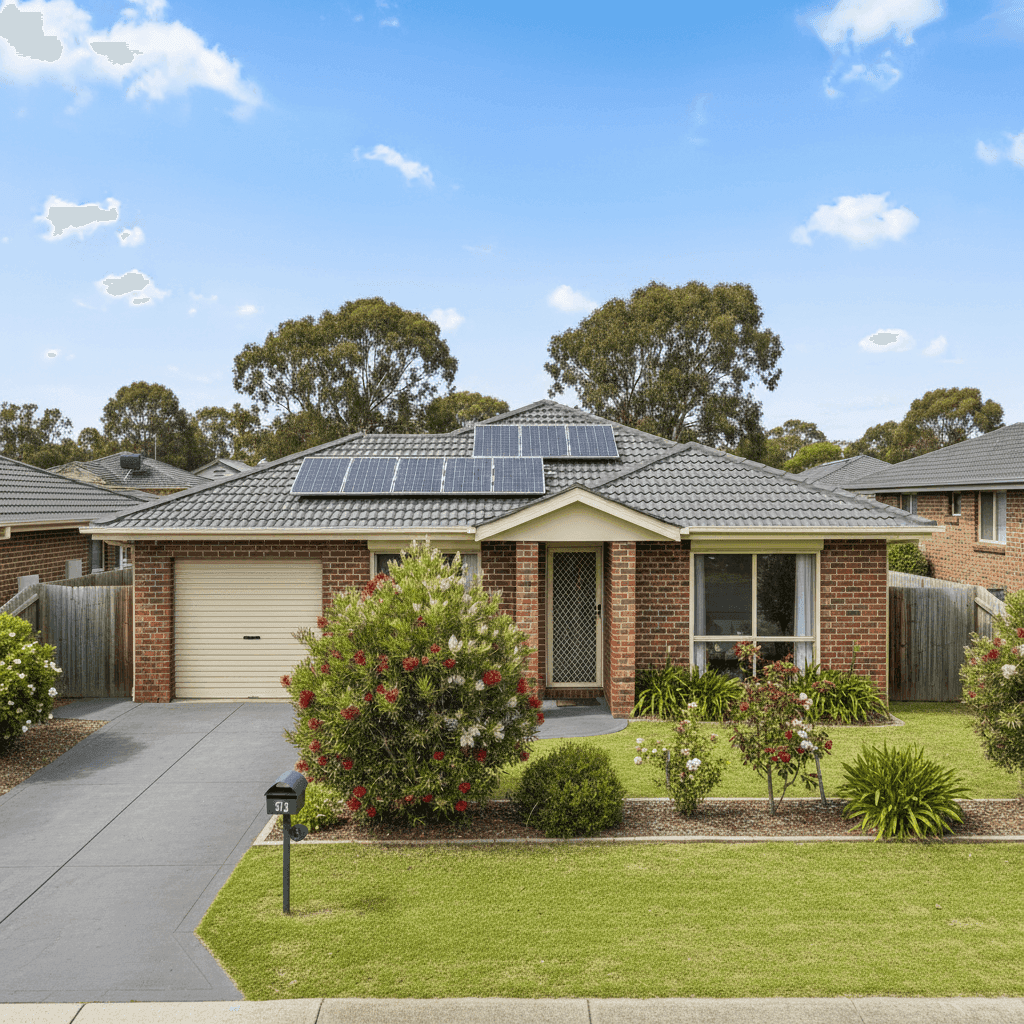
Skye is a quiet residential suburb in Melbourne's south-eastern corridor, sitting within the City of Frankston. Known for its family-friendly streets and proximity to the Mornington Peninsula, it's a popular choice for homeowners looking for space without straying too far from the city. This article breaks down a real home and contents insurance quote for a four-bedroom, free-standing home in Skye (postcode 3977), comparing it against local, state, and national benchmarks to help you understand what a fair premium looks like in this area.
---
Is This Quote Fair?
The short answer: yes — and then some. This quote comes in at $1,413 per year (or $135 per month), covering both building ($518,000 sum insured) and contents ($93,500), each with a $1,000 excess. Our price rating for this quote is CHEAP, meaning it sits well below the average for comparable properties in the area.
To put that into perspective, the suburb average premium in Skye is $3,044 per year, and the suburb median sits even higher at $3,513 per year. That means this quote is saving the homeowner roughly $1,600–$2,100 per year compared to what most people in the same postcode are paying. Even against the 25th percentile — the cheapest quarter of quotes in the suburb — the figure of $2,272 per year is still significantly higher than this result.
This is a genuinely strong outcome, and it suggests the insurer has assessed this particular property favourably based on its characteristics, location, and risk profile.
---
How Skye Compares
Zooming out to a broader view, the value of this quote becomes even clearer. Here's how it sits against key benchmarks:
| Benchmark | Annual Premium |
|---|---|
| This Quote | $1,413 |
| Skye Suburb Average | $3,044 |
| Skye Suburb Median | $3,513 |
| Skye 25th Percentile | $2,272 |
| LGA (Frankston) Average | $2,247 |
| VIC State Average | $2,921 |
| VIC State Median | $2,694 |
| National Average | $2,965 |
| National Median | $2,716 |
Across every single benchmark — suburb, LGA, state, and national — this quote outperforms. You can explore how Skye's premiums compare in more detail on the Skye suburb stats page, or broaden your view with Victoria-wide insurance data and national home insurance statistics.
It's worth noting that the Frankston LGA average of $2,247 per year is the lowest of the broader comparisons — suggesting the region is generally considered moderate-risk — yet even this figure is nearly 60% higher than the quote in question. That's a meaningful gap.
---
Property Features That Affect Your Premium
Several characteristics of this property likely contribute to its competitive premium. Understanding these factors can help any homeowner make sense of their own quote.
Brick Veneer Construction
Brick veneer walls are generally well-regarded by insurers. They offer solid fire resistance and structural durability compared to weatherboard or lightweight cladding, which can translate into lower risk assessments and, in turn, lower premiums.
Tiled Roof
A tiled roof is considered one of the more resilient roofing options in Australia. Tiles perform well against ember attack and general weather events, and they tend to have a long lifespan — all positives from an insurer's perspective.
Concrete Slab Foundation
Slab foundations are common in homes built from the 1990s onward and are generally considered stable and low-risk. They're less susceptible to subsidence and pest damage than older pier-and-beam constructions, which can reduce the likelihood of costly structural claims.
Built in 2005
At around 20 years old, this home sits in a sweet spot for insurers. It's modern enough to meet contemporary building codes — including improved fire and safety standards — but old enough that any early construction defects would have already surfaced. Homes in this age bracket often attract more competitive premiums than either very old or brand-new builds.
Solar Panels
The property has solar panels, which are worth noting. While they don't dramatically shift premiums in most cases, it's important to ensure your policy explicitly covers solar panels as part of the building sum insured. Some policies include them automatically; others may require a specific endorsement. Always confirm this with your insurer.
Ducted Climate Control
Ducted heating and cooling systems are a significant fixture and should be accounted for in both the building sum insured and, in some cases, contents cover. At 214 sqm, this is a well-appointed home, and ensuring the sum insured accurately reflects the full cost of rebuilding — including fixtures like ducted systems — is essential.
No Pool, No Cyclone Risk
The absence of a swimming pool removes a common liability risk factor, and Skye's location outside designated cyclone risk zones means the property isn't subject to the significant premium loadings seen in northern Australia.
---
Tips for Homeowners in Skye
Whether you're reviewing an existing policy or shopping for the first time, here are some practical steps to make sure you're getting the best deal.
1. Don't underestimate your building sum insured. The sum insured here is $518,000 for a 214 sqm home — roughly $2,420 per sqm. This is a reasonable estimate for a standard-quality brick veneer home in Victoria, but rebuild costs can shift with inflation and labour shortages. Use a building cost calculator annually to make sure your coverage keeps pace with current construction costs.
2. Review your contents value carefully. $93,500 in contents cover is a starting point, but many households underestimate what they actually own. Walk through each room and consider electronics, furniture, appliances, clothing, and jewellery. Underinsurance at claim time can leave you significantly out of pocket.
3. Confirm your solar panels are covered. As noted above, solar panels represent a meaningful asset. Check your policy wording to confirm they're included under the building sum insured and that damage from storm, hail, or electrical faults is covered.
4. Consider your excess strategically. Both the building and contents excess on this policy are set at $1,000. A higher excess generally reduces your premium, but make sure you can comfortably cover that amount in the event of a claim. If cash flow is a concern, a lower excess may be worth the slightly higher annual cost.
---
Compare Quotes for Your Home in Skye
Even if you're happy with your current insurer, it pays to compare. The data here shows that premiums in Skye vary enormously — from well under $2,000 to over $3,600 per year for broadly similar properties. The only way to know whether you're getting a competitive rate is to see what else is available.
Get a home insurance quote at CoverClub and find out how your premium stacks up against the suburb, state, and national averages — in minutes, with no obligation.