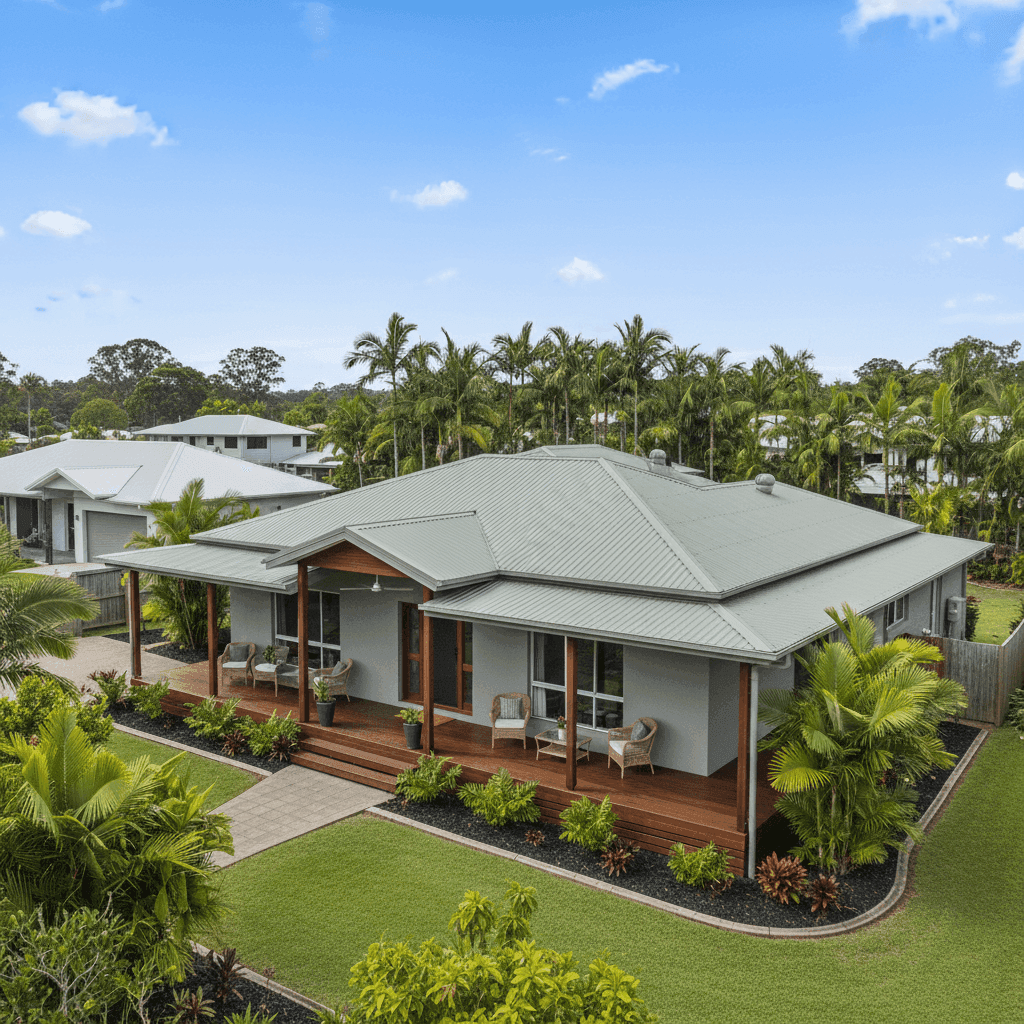
Smithfield is a leafy residential suburb on the northern fringe of Cairns, popular with families drawn to its proximity to James Cook University, the rainforest, and the Great Barrier Reef. It's a beautiful part of Queensland — but beauty comes with a catch. Sitting squarely in a cyclone risk zone, homeowners in Smithfield face some of the most complex insurance pricing in the country. This article unpacks a recent building-only insurance quote for a four-bedroom, two-bathroom free standing home in Smithfield (postcode 4878), and helps you understand whether the premium stacks up.
---
Is This Quote Fair?
The annual premium for this property came in at $4,795 per year (or $459/month), covering the building only with a sum insured of $860,000 and a $2,000 excess. Our price rating for this quote is Expensive — Above Average.
To put that in context: the average building insurance premium across Smithfield sits at $3,596 per year, and the median is even lower at $3,374. This quote lands well above both benchmarks, placing it closer to the 75th percentile of local quotes ($4,435) — meaning roughly three-quarters of comparable properties in the suburb are being insured for less.
That said, "expensive" is relative. The sum insured here is $860,000 for a 235 sqm concrete home built in 1988 — a substantial rebuild cost that naturally pushes the premium upward. Higher coverage limits mean higher premiums, and in a cyclone-prone area like Smithfield, insurers price that risk heavily. So while this quote is above the local average, it's not necessarily unreasonable given the coverage level and location risk.
---
How Smithfield Compares
Understanding where Smithfield sits in the broader insurance landscape helps put any individual quote into perspective. Here's a snapshot:
| Benchmark | Average Premium | Median Premium |
|---|---|---|
| Smithfield (4878) | $3,596/yr | $3,374/yr |
| Queensland | $9,129/yr | $3,903/yr |
| National | $5,347/yr | $2,764/yr |
| Cairns LGA | $12,404/yr | — |
(Based on [Smithfield suburb data](https://coverclub.com.au/stats/QLD/4878/smithfield), [QLD state data](https://coverclub.com.au/stats/QLD), and [national benchmarks](https://coverclub.com.au/stats/national).)
A few things stand out here. Queensland's average premium of $9,129 is extraordinarily high — but the median of $3,903 tells a very different story. That gap between mean and median signals that a relatively small number of very high-risk or high-value properties (think beachfront homes, elevated flood zones, or premium Cairns suburbs) are dragging the state average up dramatically. The same dynamic plays out at the national level, where the average ($5,347) is nearly double the median ($2,764).
Smithfield's local figures are notably more moderate than the Cairns LGA average of $12,404 — a figure heavily influenced by higher-risk and higher-value properties across the broader region. With a sample of 40 quotes, Smithfield's suburb-level data provides a reasonably reliable local benchmark.
At $4,795, this quote sits above the Smithfield average but well below the state and Cairns LGA averages — which, given the cyclone exposure, is worth keeping in mind.
---
Property Features That Affect Your Premium
Several characteristics of this property have a direct influence on how insurers calculate the premium.
Cyclone Risk Area
This is the single biggest factor. Smithfield falls within a designated cyclone risk zone, and insurers apply significant loadings to premiums in these areas. Cyclone damage can be catastrophic and widespread, and the insurance industry prices that exposure accordingly. There's no way around this — it's a geographic reality for anyone owning property in Far North Queensland.
Construction: Concrete Walls & Colorbond Roof
Concrete external walls are generally viewed favourably by insurers. Concrete is durable, fire-resistant, and performs well in high-wind events compared to timber or lightweight cladding. Similarly, a steel Colorbond roof is considered a solid choice in cyclone-prone regions — it's less likely to lift than some other roofing materials and is widely used in northern Queensland for exactly this reason. These construction features may help moderate the premium compared to what a timber-framed home with a tiled roof might attract.
Slab Foundation & Tile Flooring
A concrete slab foundation is standard for Queensland homes of this era and is generally not a risk factor in itself. Tile flooring is durable and low-maintenance, and doesn't introduce any particular insurance concern. Both are neutral-to-positive features from an underwriting perspective.
1988 Build Year
Homes built in 1988 sit in an interesting position. They predate modern cyclone-resistant building codes introduced after Cyclone Tracy (1974 codes) and significantly upgraded through the 1980s and 1990s. Depending on whether the property has been upgraded to meet current standards, this may influence how some insurers assess the risk. It's worth checking whether your home meets current tie-down and bracing requirements.
Building Size & Sum Insured
At 235 sqm with a sum insured of $860,000, the rebuild cost per square metre works out to approximately $3,660/sqm. This is on the higher end for a standard-finish home, though construction costs in regional Queensland — particularly Far North Queensland — are elevated due to supply chain factors, labour costs, and cyclone-resilient construction requirements. It's worth periodically reviewing your sum insured to ensure it reflects current rebuild costs without over-insuring.
---
Tips for Homeowners in Smithfield
1. Compare Quotes Across Multiple Insurers
Premiums for cyclone-zone properties can vary enormously between insurers — sometimes by thousands of dollars for equivalent cover. Never accept a renewal quote without shopping around. Use a comparison platform like CoverClub to see multiple quotes side by side.
2. Review Your Sum Insured Annually
Building costs in Queensland have risen sharply in recent years. Underinsurance is a serious risk — if your sum insured doesn't reflect the true cost to rebuild, you could be left significantly out of pocket after a major event. Equally, over-insuring means you're paying more premium than necessary. Consider getting a professional building valuation every few years.
3. Ask About Cyclone Mitigation Discounts
Some insurers offer discounts for homes that have been upgraded to improve cyclone resilience — things like roof tie-down systems, impact-resistant windows, or reinforced garage doors. If you've made any such improvements to your 1988-built home, make sure to disclose these when getting quotes, as they may reduce your premium.
4. Consider Your Excess Carefully
This quote carries a $2,000 building excess. Opting for a higher excess is one of the most straightforward ways to reduce your annual premium — but make sure the excess is an amount you could comfortably pay in the event of a claim. In cyclone-prone areas, some insurers also apply a separate cyclone excess, so read your Product Disclosure Statement carefully.
---
Ready to Find a Better Rate?
Whether you think this quote is reasonable or you're convinced you can do better, the only way to know for certain is to compare. CoverClub makes it easy to see how your premium stacks up and explore alternatives — all in one place. Get a home insurance quote today and find out what Smithfield homeowners are actually paying.