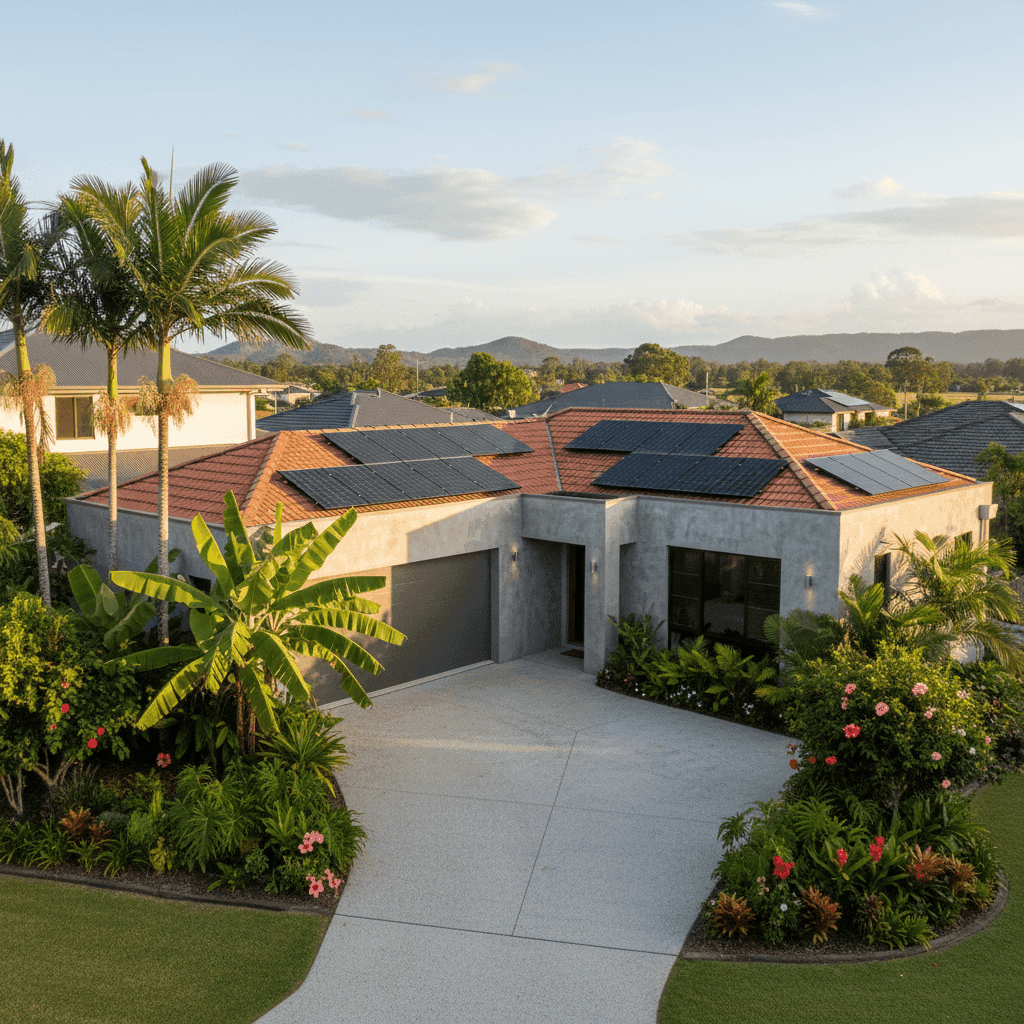
Smithfield is a leafy residential suburb on the northern outskirts of Cairns, popular with families drawn to its modern housing estates, proximity to James Cook University, and easy access to the Great Barrier Reef hinterland. It's also a suburb where home insurance premiums deserve a close look — because geography, climate, and property characteristics all play a significant role in what you'll pay. This article analyses a recent home and contents insurance quote for a four-bedroom free standing home in Smithfield (postcode 4878), breaking down whether the price stacks up and what local homeowners can do about it.
---
Is This Quote Fair?
The quote in question comes in at $4,771 per year (or $457/month) for a combined home and contents policy, covering a building sum insured of $809,000 and $50,000 in contents. Our price rating for this quote is Expensive — above average for the Smithfield area.
To put that in context: the suburb average premium sits at $3,596/year, and the median is $3,374/year. This quote is roughly 33% above the suburb average and 41% above the suburb median. It does, however, fall within the upper quartile range — the 75th percentile for Smithfield is $4,435/year — so while it's on the high end, it's not wildly out of step with what some local homeowners are paying.
The elevated premium is likely a reflection of several compounding factors: the relatively high building sum insured ($809,000 for a 244 sqm home), the cyclone risk designation for this area, and the presence of features like solar panels and ducted climate control that add to the replacement cost calculation.
That said, "above average" doesn't mean you should simply accept the price. There's meaningful variation in the market, and comparing quotes could put hundreds — or even over a thousand — dollars back in your pocket each year.
---
How Smithfield Compares
Understanding where your premium sits relative to broader benchmarks is one of the most useful exercises a homeowner can do. Here's how this quote compares across different geographies:
| Benchmark | Average Premium | Median Premium |
|---|---|---|
| Smithfield (4878) | $3,596/yr | $3,374/yr |
| Queensland | $9,129/yr | $3,903/yr |
| National | $5,347/yr | $2,764/yr |
| Cairns LGA | $12,404/yr | — |
A few things stand out here. The Cairns LGA average of $12,404/year is extraordinarily high — a figure heavily influenced by properties in extreme cyclone-exposed or flood-prone pockets of the region. Smithfield's suburb average of $3,596/year is considerably more moderate, suggesting that this particular pocket of Cairns carries less extreme risk than some coastal or low-lying neighbours.
The Queensland state average of $9,129/year is similarly skewed by high-risk postcodes across the state — think Far North Queensland coastal strips and flood-affected areas in South East Queensland. The median of $3,903/year is a more representative figure for typical Queensland homeowners, and Smithfield's median actually comes in slightly below that.
Compared to national figures, Smithfield sits below the national average ($5,347/year) but above the national median ($2,764/year) — consistent with a suburb that carries above-average risk due to its tropical climate, but isn't among the most extreme cases in the country.
---
Property Features That Affect Your Premium
Several characteristics of this property directly influence the premium calculation, for better or worse.
Cyclone Risk Area This is arguably the single biggest factor. Smithfield falls within a designated cyclone risk zone, and insurers price this in significantly. Cyclone damage can be catastrophic and widespread, and the cost of claims in affected regions drives premiums up across the board — even for well-built, modern homes.
Construction Year & Materials Built in 2014, this is a relatively modern home, which generally works in the owner's favour. Newer builds are constructed to more stringent cyclone and building codes, making them more resilient and less likely to suffer severe damage. Concrete external walls are particularly advantageous in cyclone-prone areas — far more so than timber weatherboard — and insurers typically recognise this with more favourable pricing. The tiled roof and slab foundation are similarly standard and well-regarded construction choices for the region.
Building Size & Sum Insured At 244 sqm and a sum insured of $809,000, this is a substantial property. The higher the rebuilding cost, the higher the premium — it's a straightforward relationship. Homeowners should ensure their sum insured accurately reflects current construction costs (which have risen sharply in recent years), but over-insuring can unnecessarily inflate premiums.
Solar Panels The presence of solar panels adds to the replacement cost of the home and introduces additional risk (particularly in hail or cyclone events), which insurers factor into their pricing. It's worth confirming with your insurer that your solar system is explicitly covered under your building policy.
Ducted Climate Control Ducted air conditioning is a significant fixed asset and adds to the overall insured value of the home. Like solar panels, it's important to ensure this is captured in your sum insured rather than treated as an afterthought.
Flooring & Fittings Tiled flooring throughout and standard-quality fittings are both relatively straightforward from an insurance perspective — tiles are durable and less susceptible to water damage than carpet or timber, and standard fittings don't attract the premium loadings associated with high-end or custom finishes.
---
Tips for Homeowners in Smithfield
1. Compare quotes — seriously The spread of premiums in Smithfield is wide, with the 25th percentile sitting at $2,432/year and the 75th at $4,435/year. That's a difference of over $2,000 for broadly similar properties. Shopping around through a comparison platform like CoverClub is one of the most effective ways to ensure you're not overpaying.
2. Review your sum insured annually Construction costs in Queensland have increased substantially over the past few years. If your sum insured hasn't kept pace, you could be underinsured — meaning you'd face a shortfall in the event of a total loss. Equally, if you've been auto-renewing without checking, your sum insured may have been inflated beyond what's actually needed. Use a building cost calculator or ask your insurer to verify the figure.
3. Ask about cyclone mitigation discounts Some insurers offer premium reductions for homes that have undergone cyclone mitigation improvements — such as upgraded roof tie-downs, impact-resistant windows, or reinforced garage doors. Given the age of this home (2014), it was likely built to post-2011 cyclone standards, but it's worth asking your insurer whether any additional measures could further reduce your premium.
4. Bundle strategically, but verify the value Many insurers offer discounts for combining home and contents cover under a single policy, which this quote already does. However, bundling isn't always the cheapest option — sometimes separate policies from different providers work out more cost-effective. It's worth running the numbers both ways when you compare.
---
Ready to Find a Better Rate?
If your current premium is sitting above the Smithfield average, there's a good chance you could do better. CoverClub makes it easy to compare home and contents insurance quotes from multiple insurers in one place — so you can see exactly where your current policy stands and whether switching makes financial sense. Get a quote today and find out how much you could save.