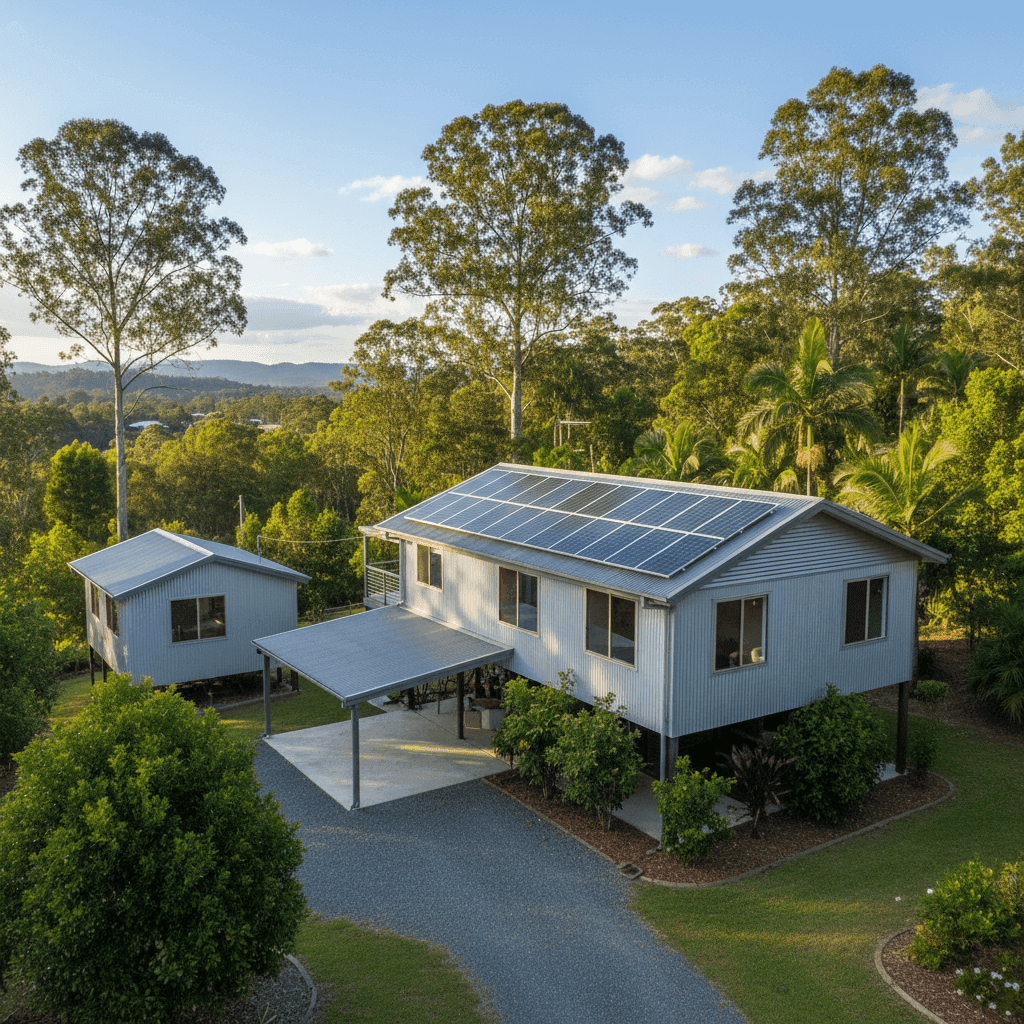
If you own a free standing home in Smiths Creek, NSW 2484, you already know this part of the Northern Rivers region is a beautiful — if occasionally unpredictable — place to live. Lush hinterland surroundings, a relaxed lifestyle, and proximity to the Tweed Valley make it a sought-after pocket of New South Wales. But when it comes to home insurance, location and property characteristics can have a dramatic impact on what you pay. This article breaks down a recent building insurance quote for a 3-bedroom free standing home in Smiths Creek, comparing it against local, state, and national benchmarks so you can make a more informed decision.
---
Is This Quote Fair?
The annual premium on this quote comes in at $2,492 per year (or $239/month) for building-only cover on a home insured for $500,000. Our independent price rating classifies this as CHEAP — below average — which is genuinely good news for the homeowner.
To put that in perspective: the NSW state average premium sits at a hefty $9,528 per year, and even the state median — a more representative figure that strips out extreme outliers — is $3,770 per year. This quote comes in well under both marks. Nationally, the average premium across Australia is $5,347/yr, with a national median of $2,764/yr.
At $2,492/yr, this quote is tracking just below the national median, suggesting the insurer has assessed the risk profile of this particular property favourably. That's worth noting, especially given the Kyogle LGA (which encompasses Smiths Creek) carries an average premium of $9,180/yr — nearly four times this quote. Securing a below-average rate in a region with such elevated typical premiums is a meaningful outcome.
One thing to keep in mind: the building excess on this policy is $5,000, which is on the higher side. A higher excess is a common lever insurers and policyholders use to bring premiums down, so it's worth factoring that into your assessment. If you ever need to make a claim, you'll be covering the first $5,000 out of pocket.
---
How Smiths Creek Compares
Drilling into the numbers, the pricing context for Smiths Creek (NSW 2484) tells an interesting story:
| Benchmark | Premium |
|---|---|
| This Quote | $2,492/yr |
| NSW State Average | $9,528/yr |
| NSW State Median | $3,770/yr |
| National Average | $5,347/yr |
| National Median | $2,764/yr |
| Kyogle LGA Average | $9,180/yr |
The gap between this quote and the Kyogle LGA average is striking. LGA-level averages can be skewed by a small number of very high-risk properties — flood-prone land, bushfire-exposed blocks, or older homes with undesirable construction types — so individual quotes can vary enormously. Still, landing at roughly 27% of the LGA average is a strong result.
It's also worth noting that no suburb-level comparison data is currently available for Smiths Creek specifically, which reflects how thinly populated some of these Northern Rivers communities are. As more data comes in over time, suburb-level benchmarks will become more reliable.
---
Property Features That Affect Your Premium
Several characteristics of this home likely contributed to its competitive premium. Here's how the key features stack up from an insurer's perspective:
Construction (2005 build, steel/Colorbond roof): A home built in 2005 benefits from relatively modern building codes, which generally means better structural integrity and compliance with updated standards. Colorbond steel roofing is viewed favourably by insurers — it's durable, fire-resistant, and low maintenance compared to older tile or fibrous cement alternatives.
Elevated foundation (stumps, less than 1m): The home sits on stumps and is elevated by less than one metre. This style is common in the Northern Rivers and can offer some flood resilience, though the modest elevation means it won't provide significant protection in a major inundation event. Insurers assess stump foundations carefully, particularly in areas with soil movement or flood history.
Timber/laminate flooring: Timber floors are susceptible to water damage, which can influence how insurers price moisture-related risks. In elevated homes, subfloor ventilation is important to manage humidity and minimise long-term damage.
Solar panels: The presence of solar panels adds replacement value to the building sum insured. At $500,000, it's important to ensure the sum insured accounts for the cost of reinstating the solar system in a total loss scenario.
Granny flat: The property includes a granny flat, which adds complexity to the insurance picture. Granny flats are typically covered under building insurance if they're a permanent structure on the same title, but it's essential to confirm this with your insurer and ensure the sum insured is sufficient to cover both structures.
Ducted climate control: Ducted air conditioning systems are a significant fixed asset and should be captured in the building sum insured. These systems can be costly to repair or replace following storm or water damage.
No pool, no cyclone risk zone: The absence of a swimming pool removes a common liability and maintenance risk factor. And while Smiths Creek sits in the Northern Rivers — a region that can experience intense rainfall and storm events — it falls outside designated cyclone risk zones, which helps keep premiums in check.
---
Tips for Homeowners in Smiths Creek
1. Review your sum insured annually. With a granny flat, solar panels, and ducted climate control all contributing to your home's replacement value, $500,000 may or may not be adequate depending on current construction costs. Building costs have risen significantly in recent years — get a building replacement cost estimate to make sure you're not underinsured.
2. Understand your excess before you claim. A $5,000 building excess is a meaningful financial commitment. Make sure you have this amount accessible in an emergency fund so that a claim doesn't create cash flow pressure at an already stressful time. If the excess feels too high, compare quotes with a lower excess — the premium difference may be worth it.
3. Protect the subfloor space. Stump-based homes in the Northern Rivers can be vulnerable to subfloor moisture, pests, and debris accumulation. Regular inspections of the subfloor area, maintaining good ventilation, and clearing vegetation away from stumps can reduce the risk of structural issues that could lead to costly claims — or premium increases at renewal.
4. Compare at renewal, not just at inception. Insurers often apply stealth increases at renewal. Given that this quote is currently rated as cheap relative to the market, it's worth setting a calendar reminder to compare quotes again before your next renewal. Markets shift, and the competitive advantage you have today may not persist if your insurer reprices the risk upward.
---
Ready to Compare?
Whether you're happy with your current quote or wondering if you can do even better, the smartest move is to compare. CoverClub makes it easy to see how your home insurance stacks up against real market data — no jargon, no pressure. Get a quote and compare today at CoverClub and make sure your Smiths Creek home is covered at a price that actually makes sense.