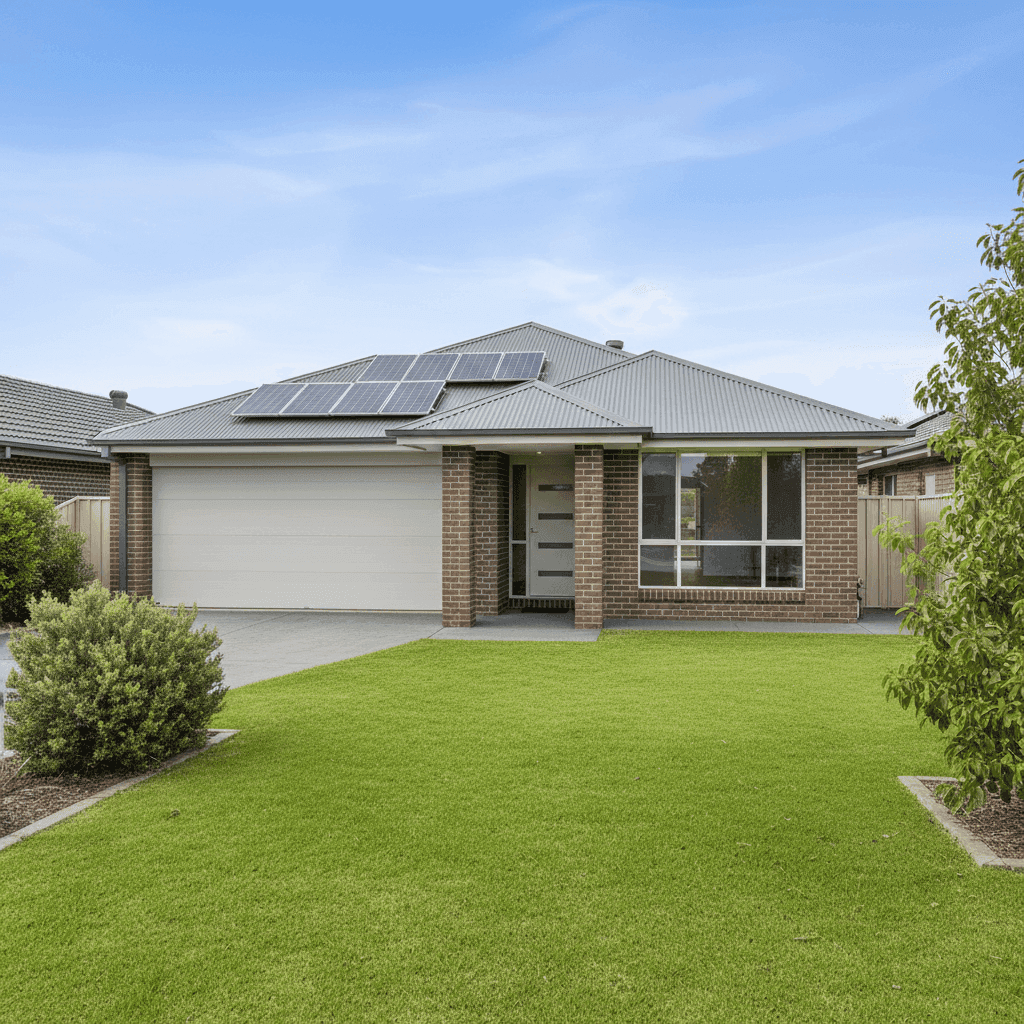
Smythes Creek is a quiet residential locality on the western fringe of Ballarat, offering the kind of spacious, established streetscapes that attract families looking for room to breathe without straying too far from the city. For owners of a free-standing home in this pocket of Victoria, understanding what drives your insurance premium — and whether you're paying a fair price — can make a meaningful difference to your household budget.
This article breaks down a recent home and contents insurance quote for a four-bedroom, two-bathroom brick veneer home in Smythes Creek (postcode 3351), comparing it against local, state and national benchmarks to help you make a more informed decision.
---
Is This Quote Fair?
The quote in question comes in at $4,593 per year (or $440 per month), covering both building (sum insured: $735,000) and contents ($150,000), each with a $1,000 excess.
Based on data collected by CoverClub, this premium sits in the "Expensive" band — above average for the area. Here's how it stacks up:
| Benchmark | Premium |
|---|---|
| This quote | $4,593/yr |
| Smythes Creek suburb average | $3,298/yr |
| Smythes Creek suburb median | $1,992/yr |
| Victoria state average | $3,000/yr |
| National average | $5,347/yr |
The quote is $1,295 above the suburb average and more than double the suburb median. While it does sit below the national average of $5,347, that's a relatively cold comfort when most comparable properties in the same postcode are insured for considerably less.
That said, premium comparisons aren't always apples-to-apples. The building sum insured of $735,000 is on the higher end and will naturally push the premium up. The contents cover of $150,000 also adds to the total cost. If either of those figures is higher than what you'd actually need to rebuild or replace, there may be room to recalibrate.
---
How Smythes Creek Compares
Looking at suburb-level insurance data for Smythes Creek (VIC 3351), the spread of premiums across 56 quotes tells an interesting story:
- 25th percentile: $1,441/yr — what the most cost-effective quarter of policyholders are paying
- Median: $1,992/yr — the midpoint of the market
- 75th percentile: $2,630/yr — still well below the quote being analysed
- Suburb average: $3,298/yr — pulled upward by higher-value properties and more comprehensive policies
The quote at $4,593 sits above even the 75th percentile, meaning roughly three-quarters of comparable quotes in the suburb come in cheaper. This doesn't necessarily mean the quote is wrong — it could reflect a genuinely higher rebuild cost, a more comprehensive policy, or specific insurer pricing — but it does signal that shopping around is worthwhile.
Zooming out to Victoria-wide insurance statistics, the state average sits at $3,000/yr with a median of $2,718/yr. The LGA of Moyne, which encompasses parts of western Victoria, records an average of just $2,351/yr — further context that this quote is on the pricier side for the region.
At the national level, the average premium is $5,347/yr and the median is $2,764/yr. The higher national average is largely driven by coastal and cyclone-prone regions in Queensland and Western Australia, where premiums can be significantly elevated.
---
Property Features That Affect Your Premium
Several characteristics of this property will influence how insurers assess and price the risk.
Brick veneer construction is generally viewed favourably by insurers. It offers solid fire resistance and structural durability, which can help moderate premiums compared to timber-framed or weatherboard homes.
Steel/Colorbond roofing is another positive signal. Colorbond is lightweight, durable, and performs well in high-wind conditions. It's also non-combustible, which matters in bushfire-adjacent areas.
Slab foundation is a stable, low-maintenance base that carries minimal additional risk from a structural standpoint — good news for insurance pricing.
Timber and laminate flooring is worth noting for contents and building assessments. Timber floors can be costly to repair or replace if damaged by water or impact, and insurers will factor this into their building valuation.
Solar panels add value to the property but also represent an additional insurable asset. Depending on the policy, panels may or may not be covered under the standard building sum insured — it's worth confirming this explicitly with your insurer.
Ducted climate control is a significant fixed installation that contributes to the building's replacement cost. Systems like these are expensive to repair or reinstall, and ensuring your sum insured reflects their value is important.
No pool and no cyclone risk both work in the property's favour. Pools introduce liability and maintenance risks, while cyclone-rated areas attract significant premium loadings — neither applies here.
The home was built in 2001, placing it in a period of reasonably modern construction standards. It's not so old as to raise concerns about ageing infrastructure, but it's also mature enough that some systems (roofing, plumbing, electrical) may be approaching the stage where maintenance becomes more critical.
---
Tips for Homeowners in Smythes Creek
1. Review your sum insured carefully A building sum insured of $735,000 is substantial. Make sure this figure reflects the actual cost to rebuild your home from the ground up — not its market value. Overinsuring is a common and costly mistake. Use a building cost calculator or speak with a quantity surveyor to get a more precise figure.
2. Confirm solar panel coverage Solar panels are a meaningful investment, and not all standard home insurance policies cover them automatically under the building section. Ask your insurer directly whether your panels — including inverters and mounting hardware — are included, and for how much.
3. Shop around before renewal With the suburb median sitting at $1,992/yr and the 75th percentile at $2,630/yr, there's a reasonable chance a comparable policy could be found at a lower price point. Insurers price risk differently, and switching at renewal (rather than mid-policy) typically avoids cancellation fees.
4. Consider your excess strategically Both the building and contents excess on this quote are set at $1,000. Opting for a higher excess — say $2,000 or $2,500 — can meaningfully reduce your annual premium. If you have the financial buffer to absorb a larger out-of-pocket cost in a claim, this trade-off often makes sense.
---
Compare Your Options with CoverClub
Whether you're reviewing an existing policy or shopping for cover for the first time, comparing quotes is the most effective way to make sure you're not overpaying. Get a home insurance quote through CoverClub to see how different insurers price your specific property — and find a policy that fits both your needs and your budget.