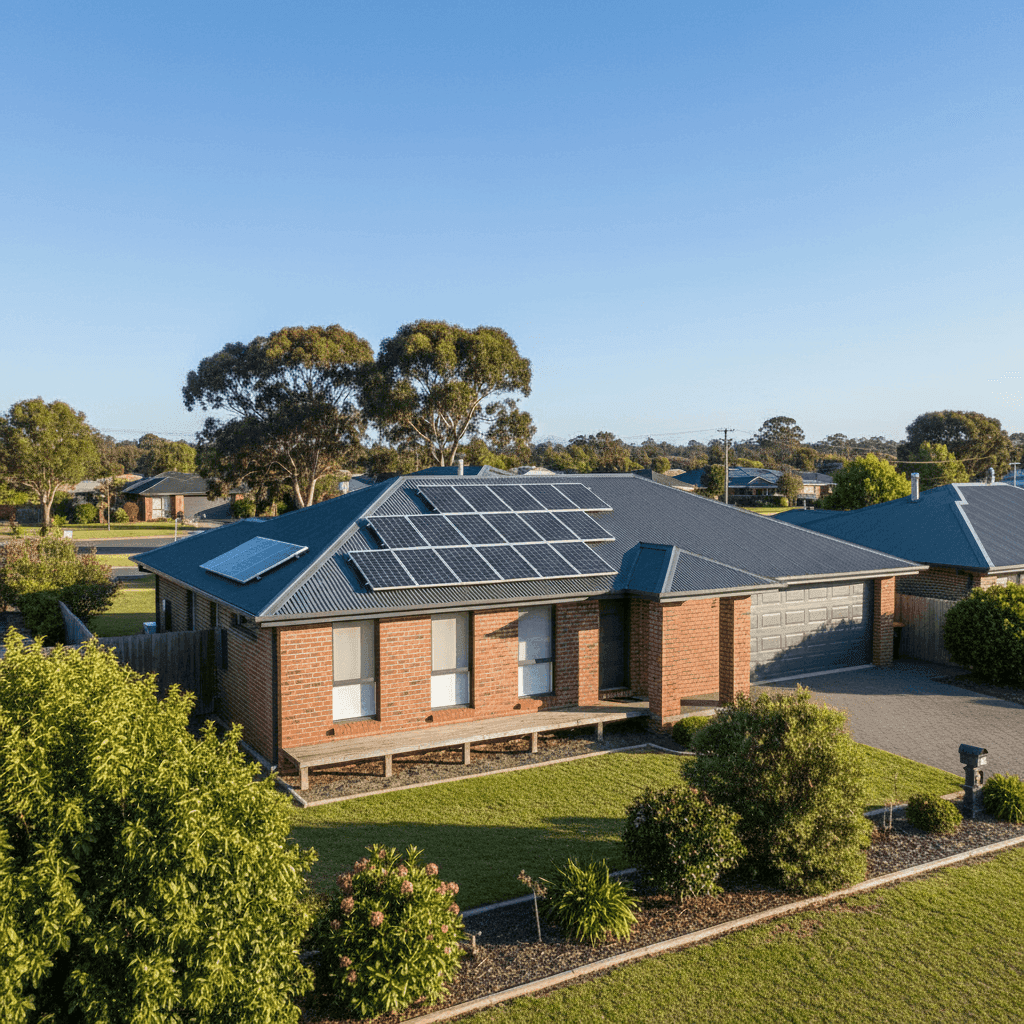
If you own a free standing home in Sorell, TAS 7172, you've probably noticed that home insurance costs can vary enormously depending on who you ask. This article breaks down a real home and contents insurance quote for a two-bedroom property in the area, puts it in context against local, state, and national benchmarks, and offers practical tips to help you get better value on your cover.
---
Is This Quote Fair?
The quote in question comes in at $1,978 per year (or $190 per month) for combined home and contents cover, with a building sum insured of $1,035,000 and contents valued at $140,000. Both the building and contents excess are set at $500.
Our price rating for this quote is Expensive (Above Average) — and the data backs that up.
Compared to the Sorell suburb average of $1,545 per year, this quote sits roughly 28% above what most homeowners in the area are paying. It also nudges just above the suburb's 75th percentile of $1,957 per year, meaning fewer than one in four Sorell quotes in our dataset are priced higher.
That said, context matters. The higher building sum insured ($1,035,000) and above-average fittings quality will naturally push the premium upward compared to more modestly valued properties in the same postcode. So while the price rating is "expensive" relative to local peers, part of that premium is simply reflecting a higher level of cover.
---
How Sorell Compares
To understand whether this quote is genuinely steep or simply reflective of the property's value, it helps to zoom out and look at the broader picture.
| Benchmark | Average Premium | Median Premium |
|---|---|---|
| Sorell (7172) | $1,545/yr | $1,456/yr |
| Tasmania (TAS) | $2,814/yr | $2,326/yr |
| National | $5,347/yr | $2,764/yr |
A few things stand out here. First, Sorell is actually a relatively affordable suburb to insure compared to the Tasmanian state average — local premiums run well below the state mean of $2,814 per year. This is encouraging news for homeowners in the area.
Second, the national average of $5,347 per year is heavily skewed by high-risk regions (think cyclone-prone Queensland or flood-affected parts of New South Wales), so the national median of $2,764 is a more meaningful comparison point. Against that benchmark, even this "expensive" Sorell quote looks quite reasonable.
For broader Tasmanian context, you can explore TAS home insurance statistics, or check out national home insurance data to see how your state stacks up across the country.
It's also worth noting that the nearby Glamorgan-Spring Bay LGA average sits at $2,000 per year — almost identical to this quote — which suggests the pricing is broadly in line with the wider regional market.
Explore the full Sorell suburb insurance statistics to see how your own quote compares to the 37 quotes in our local dataset.
---
Property Features That Affect Your Premium
Every home is different, and insurers price risk based on a combination of construction materials, location factors, and the features inside and around the property. Here's how the key characteristics of this Sorell home influence its premium:
Brick Veneer Walls & Colorbond Roof
Brick veneer is generally viewed favourably by insurers — it's durable, fire-resistant, and widely used in Australian construction. Similarly, a steel Colorbond roof is considered low-maintenance and resilient, which can help keep premiums in check. Together, these materials suggest a solid, modern build that presents a manageable risk profile.
Stump Foundation
Homes built on stumps are common in Tasmania and can be advantageous in areas prone to ground movement or moisture. However, some insurers apply a slight loading to stump-foundation homes due to the added complexity of underfloor access and potential for subsidence. It's worth checking whether your policy covers damage related to foundation movement.
Built in 2002
At just over two decades old, this property sits in a comfortable middle ground — not so new that it commands a premium for replacement costs, but modern enough to comply with building codes that reduce certain risks. Construction standards from this era are generally well-regarded by underwriters.
Solar Panels
Solar panels are an increasingly common feature on Australian rooftops, but they do add complexity to a home insurance policy. Insurers need to account for the replacement cost of the panels themselves, potential roof damage during installation or storms, and electrical risks. Make sure your policy explicitly covers your solar system — not all standard policies do without an endorsement.
Ducted Climate Control
A ducted climate control system is a significant fixed asset that forms part of the building sum insured. These systems can be expensive to repair or replace, and their inclusion helps justify a higher building sum insured figure. Confirm with your insurer that the system is covered under the building section of your policy.
Above-Average Fittings Quality
Above-average fittings — think stone benchtops, quality cabinetry, premium tapware, and upgraded flooring — directly increase the cost to rebuild or repair your home to its original standard. This is one of the primary drivers of the higher building sum insured and, in turn, a higher premium.
---
Tips for Homeowners in Sorell
Whether you're reviewing an existing policy or shopping around for the first time, these practical steps can help you get the most out of your home insurance.
- Review your sum insured annually. Building costs have risen significantly in recent years, and an outdated sum insured could leave you underinsured if you need to make a claim. Use a building cost calculator or speak with a quantity surveyor to ensure your coverage reflects current rebuild costs — not just the market value of your home.
- Check your solar panels are covered. As mentioned above, solar systems aren't always automatically included in standard home policies. Ask your insurer specifically whether your panels are covered for storm damage, theft, and electrical faults, and whether the inverter is included.
- Consider a higher excess to reduce your premium. With both excesses currently set at $500, there may be room to increase them in exchange for a lower annual premium. If you have an emergency fund and rarely make small claims, opting for a $1,000 or $2,000 excess can meaningfully reduce your yearly cost.
- Compare quotes before renewal. Loyalty doesn't always pay in insurance. The 37 quotes in our Sorell dataset show a wide spread — from $1,127 at the 25th percentile to $1,957 at the 75th — which means shopping around could save you hundreds of dollars for equivalent cover.
---
Ready to Find a Better Deal?
If this quote has you wondering whether you're paying too much, the best next step is to compare. At CoverClub, we make it easy to see what home and contents insurance actually costs for properties like yours — without the guesswork.
Get a home insurance quote today and find out whether you could be paying less for the same level of protection.