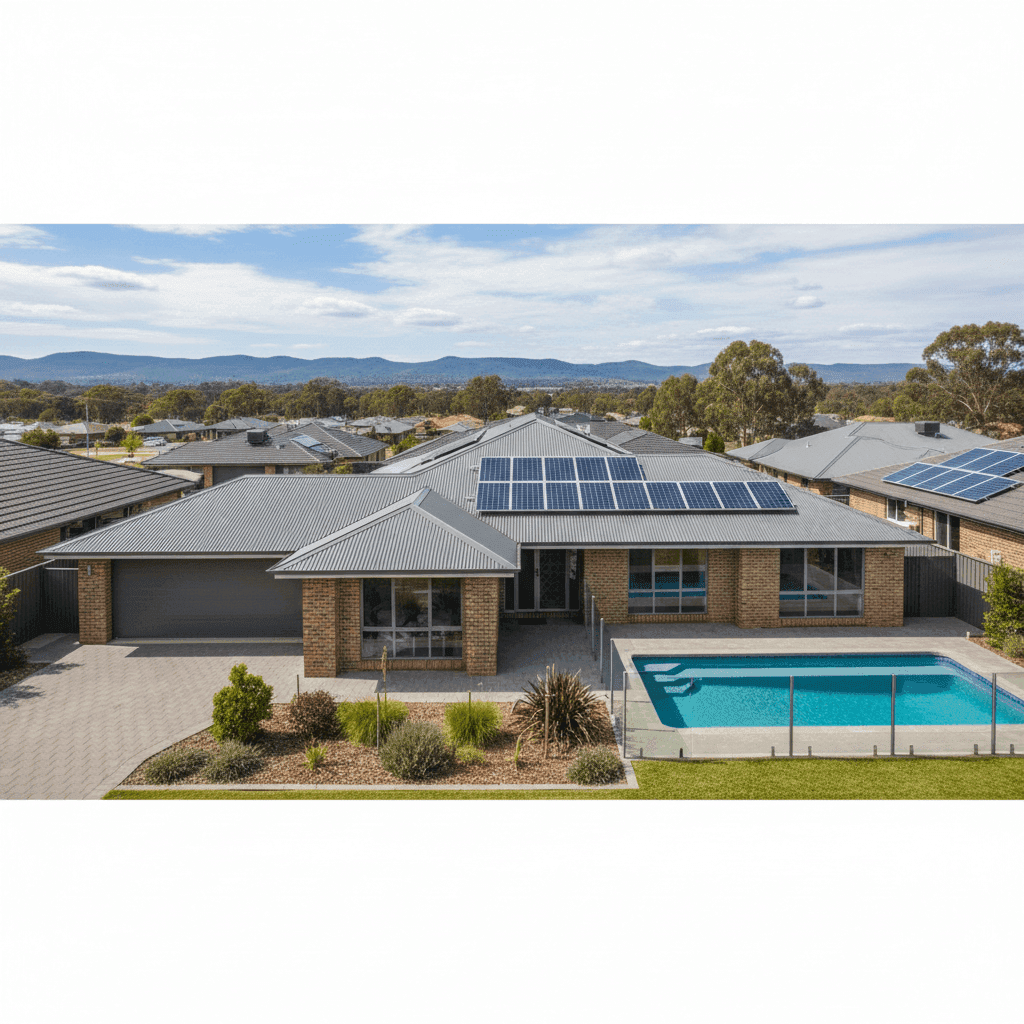
If you own a free standing home in South Bowenfels, NSW 2790, you're probably wondering whether you're paying a fair price for home and contents insurance — or leaving money on the table. In this article, we break down a real insurance quote for a four-bedroom, three-bathroom brick veneer home in South Bowenfels, compare it against local, state, and national benchmarks, and share practical tips to help you get the best possible cover at the right price.
---
Is This Quote Fair?
The quote in question comes in at $3,645 per year (or $356 per month) for combined home and contents insurance, covering a building sum insured of $1,075,000 and contents valued at $99,000. Both the building and contents excess are set at $1,000 each.
Our price rating for this quote is CHEAP — below average — which is great news for the homeowner. Considering the level of cover on offer, this premium represents solid value. A building sum insured of over a million dollars is substantial, and including contents cover in the same policy adds meaningful protection without dramatically inflating the cost.
It's worth noting that "cheap" doesn't mean cutting corners. A below-average premium on a well-structured policy simply means the insurer has assessed the risk profile of this particular property favourably. For homeowners in South Bowenfels, that's a reassuring outcome.
---
How South Bowenfels Compares
To put this quote in proper context, let's look at how it stacks up against broader benchmarks. You can explore the full data on our South Bowenfels insurance stats page, the NSW state overview, and national insurance statistics.
| Benchmark | Annual Premium |
|---|---|
| This Quote | $3,645 |
| LGA (Blue Mountains) Average | $4,220 |
| NSW State Median | $3,770 |
| NSW State Average | $9,528 |
| National Median | $2,764 |
| National Average | $5,347 |
A few things stand out here. First, the NSW state average of $9,528 is strikingly high — this is heavily influenced by properties in flood-prone, bushfire-affected, or high-risk coastal areas dragging the mean upward. The state median of $3,770 is a more representative figure for typical NSW homeowners, and this quote sits just below it.
Compared to the Blue Mountains LGA average of $4,220, this quote is approximately $575 cheaper per year — a meaningful saving. The Blue Mountains region can attract elevated premiums due to bushfire exposure and the rugged terrain surrounding many properties, so coming in below the LGA average is a positive result.
Against the national median of $2,764, this quote is higher — which is expected given NSW's generally elevated risk profile and property values compared to many other parts of Australia. The higher building sum insured ($1,075,000) also naturally pushes the premium above what a lower-value property might attract nationally.
Overall, this quote is competitive and well-positioned relative to comparable properties in the region.
---
Property Features That Affect Your Premium
Insurance premiums aren't calculated in a vacuum — every characteristic of your home plays a role. Here's how the features of this South Bowenfels property influence its risk profile:
Brick Veneer Walls & Colorbond Roof
Brick veneer construction is generally viewed favourably by insurers. It offers solid fire resistance and durability compared to lightweight cladding materials. The steel Colorbond roof is similarly well-regarded — it's non-combustible, low-maintenance, and performs well in extreme weather. Together, these materials contribute to a lower-risk construction profile.
Slab Foundation
A concrete slab foundation is a stable and common choice for homes built in the 2000s. It reduces the risk of subsidence and pest-related structural damage compared to older suspended timber floors, which can be a positive factor in premium calculations.
Timber & Laminate Flooring
While beautiful and popular, timber and laminate flooring can be more susceptible to water damage than tiles. This is a minor consideration for insurers, particularly when assessing contents and internal damage claims.
Swimming Pool
A pool adds value to the property but also introduces liability considerations. Some insurers factor in the increased risk of accidental injury on the premises. It's important to ensure your policy includes adequate liability cover if you have a pool.
Solar Panels
The home's solar panel system needs to be correctly declared and ideally specified in your policy. Solar panels are typically covered under building insurance, but their value should be factored into your sum insured to avoid being underinsured in the event of damage or theft.
Ducted Climate Control
Ducted air conditioning systems are a fixed part of the building and should be included in your building sum insured. Given their cost to repair or replace, ensuring they're adequately covered is important — and this property's sum insured of $1,075,000 appears to account for this level of fitting.
Built in 2008
A home constructed in 2008 benefits from relatively modern building standards and is unlikely to have the aged wiring, plumbing, or structural issues that can affect older properties. This is generally a positive factor for insurers.
---
Tips for Homeowners in South Bowenfels
1. Review Your Building Sum Insured Annually
Construction costs have risen significantly in recent years. A sum insured that was accurate two or three years ago may no longer reflect what it would actually cost to rebuild your home today. Use a building cost calculator or speak with a quantity surveyor to make sure your $1,075,000 cover remains adequate.
2. Don't Overlook Bushfire Preparedness
The Blue Mountains region has a well-documented bushfire risk. Even if your specific street isn't in a high-risk zone, it's worth reviewing your policy's bushfire cover, maintaining a defensible space around your property, and checking whether your insurer offers any premium discounts for fire-resistant measures.
3. Declare Your Solar Panels and Pool Correctly
Both your solar panel system and swimming pool need to be accurately declared to your insurer. Failing to disclose these features — or undervaluing them — could result in a claim being reduced or rejected. Check your policy schedule to confirm they're listed.
4. Compare Quotes at Renewal Time
Even if your current premium looks competitive, the insurance market shifts constantly. Insurers reprice their books, new players enter the market, and your own risk profile may change. Making it a habit to compare quotes at renewal — rather than simply auto-renewing — can save you hundreds of dollars a year.
---
Ready to Compare?
Whether you're renewing your existing policy or insuring a property for the first time, comparing multiple quotes is the smartest way to make sure you're getting genuine value. At CoverClub, we make it easy to see what different insurers would charge for your specific home. Get a quote now at CoverClub and find out if you could be paying less — without compromising on cover.