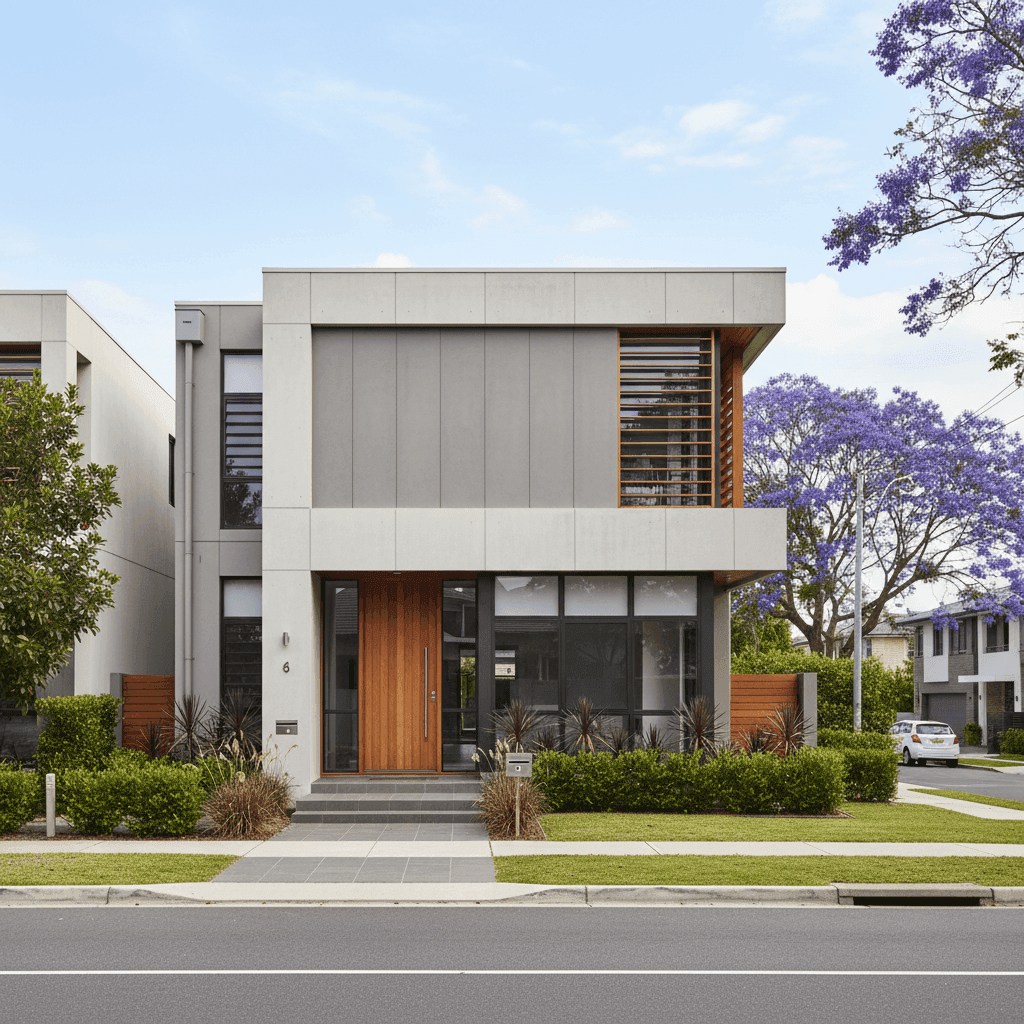
If you own a townhouse in South Brisbane, QLD 4101, you already know the suburb punches above its weight — inner-city convenience, strong rental demand, and a lifestyle that's hard to beat. But when your home insurance renewal lands in the letterbox, the premium can feel like anything but a bargain. This article breaks down a real home and contents insurance quote for a 2-bedroom townhouse in South Brisbane, compares it against local, state, and national benchmarks, and gives you practical steps to make sure you're not overpaying.
---
Is This Quote Fair?
The quote in question comes in at $12,468 per year (or $1,195/month) for combined home and contents cover, with a $414,000 building sum insured and $50,000 in contents. Our price rating for this quote is Expensive — Above Average.
To put that in perspective, the suburb average for South Brisbane sits at just $4,098 per year, with a median of $3,734. This quote is more than three times the suburb median — a significant gap that warrants a closer look. Even at the 75th percentile of local quotes ($4,485/yr), this premium is still nearly 2.8 times higher than what most comparable properties in the area are paying.
That said, it's worth noting that the Brisbane LGA average is $16,277/yr, which suggests some properties in the broader Brisbane area do attract very high premiums — often driven by flood zone classifications, high replacement values, or specific insurer risk assessments. Against that LGA backdrop, this quote looks more moderate, though it still sits well above the typical South Brisbane range.
The bottom line? While this premium isn't the highest we've seen in the Brisbane area, it is materially above what most South Brisbane townhouse owners are paying, and shopping around is strongly advisable.
---
How South Brisbane Compares
Understanding where South Brisbane sits in the broader insurance landscape helps frame whether a high quote is a suburb-specific issue or part of a wider trend. Here's how the numbers stack up:
| Benchmark | Annual Premium |
|---|---|
| This Quote | $12,468 |
| South Brisbane Suburb Average | $4,098 |
| South Brisbane Suburb Median | $3,734 |
| QLD State Average | $9,129 |
| QLD State Median | $3,903 |
| National Average | $5,347 |
| National Median | $2,764 |
| Brisbane LGA Average | $16,277 |
A few things stand out here. First, the QLD state average of $9,129 is notably higher than the national average of $5,347 — a reflection of Queensland's elevated exposure to extreme weather events, including storms, flooding, and cyclones. Second, the gap between the QLD state average and median ($9,129 vs $3,903) is enormous, indicating that a relatively small number of very high-premium properties are pulling the average up significantly.
For South Brisbane specifically, the suburb average and median are closely aligned ($4,098 and $3,734), suggesting a fairly consistent pricing environment locally — which makes this quote's position at $12,468 stand out even more sharply.
You can explore live suburb-level data on the South Brisbane insurance stats page, compare against Queensland-wide trends, or view national home insurance benchmarks.
> Note: The suburb sample size for this comparison is 7 quotes, so while directionally useful, these figures should be interpreted with some caution. A larger sample would provide greater statistical confidence.
---
Property Features That Affect Your Premium
Every insurer prices risk differently, but several characteristics of this property are worth understanding in the context of your premium.
Concrete walls and concrete roof are generally viewed favourably by insurers. Concrete construction is highly resistant to fire, wind damage, and general wear — factors that typically translate to lower rebuild risk. For a 2015-built townhouse, this modern construction also means compliance with contemporary building codes, which further reduces insurer risk.
Stump foundations are common in Queensland and can be a double-edged sword. On the plus side, stumped homes allow for better airflow and can reduce flood inundation risk by elevating the floor level. However, some insurers may factor in the cost of restumping or potential movement when calculating building sum insured.
Tile flooring is a practical and durable choice that's unlikely to significantly inflate your premium, while above-average fittings will increase the rebuild cost estimate — and rightly so. High-quality fixtures, finishes, and appliances cost more to replace, and your $414,000 building sum insured should reflect that reality.
Ducted climate control adds to the replacement value of the property and is correctly included in the building sum insured calculation. In Queensland's subtropical climate, this is essentially a standard fitting rather than a luxury.
The property is not in a cyclone risk zone, which is a meaningful premium advantage compared to properties in North Queensland. It also has no pool or solar panels, both of which can add complexity and cost to a policy.
---
Tips for Homeowners in South Brisbane
1. Compare multiple insurers — especially for inner-city properties South Brisbane is a high-demand, densely developed suburb, and different insurers assess inner-city townhouse risk very differently. A premium that's three times the suburb median is a strong signal to get competing quotes. Use CoverClub's free quote comparison tool to see what other insurers are offering for your specific property.
2. Review your building sum insured carefully At $414,000 for a 105 sqm townhouse with above-average fittings, the sum insured appears reasonable — but it's worth cross-checking against a current quantity surveyor estimate or your insurer's calculator. Being over-insured means you're paying more premium than necessary; being under-insured can leave you seriously out of pocket at claim time.
3. Consider your excess strategy Both the building and contents excess on this policy are set at $1,000. Opting for a higher voluntary excess (e.g., $2,500 or $5,000) can meaningfully reduce your annual premium. If you have emergency savings to cover a larger out-of-pocket cost in the event of a claim, this can be a smart trade-off.
4. Check your flood and storm surge classification South Brisbane sits close to the Brisbane River, and flood classifications can vary significantly from street to street. Make sure your policy clearly covers riverine flooding (not just storm surge or flash flooding), and verify your property's flood risk rating through the Brisbane City Council flood maps. This classification is one of the most common drivers of elevated premiums in the area.
---
Ready to Find a Better Deal?
Whether this quote is your current renewal or a new policy you're considering, you deserve to know if you can do better. CoverClub makes it easy to compare home and contents insurance quotes from multiple Australian insurers — all in one place, with no obligation. Get a quote for your South Brisbane property today and see how much you could save.