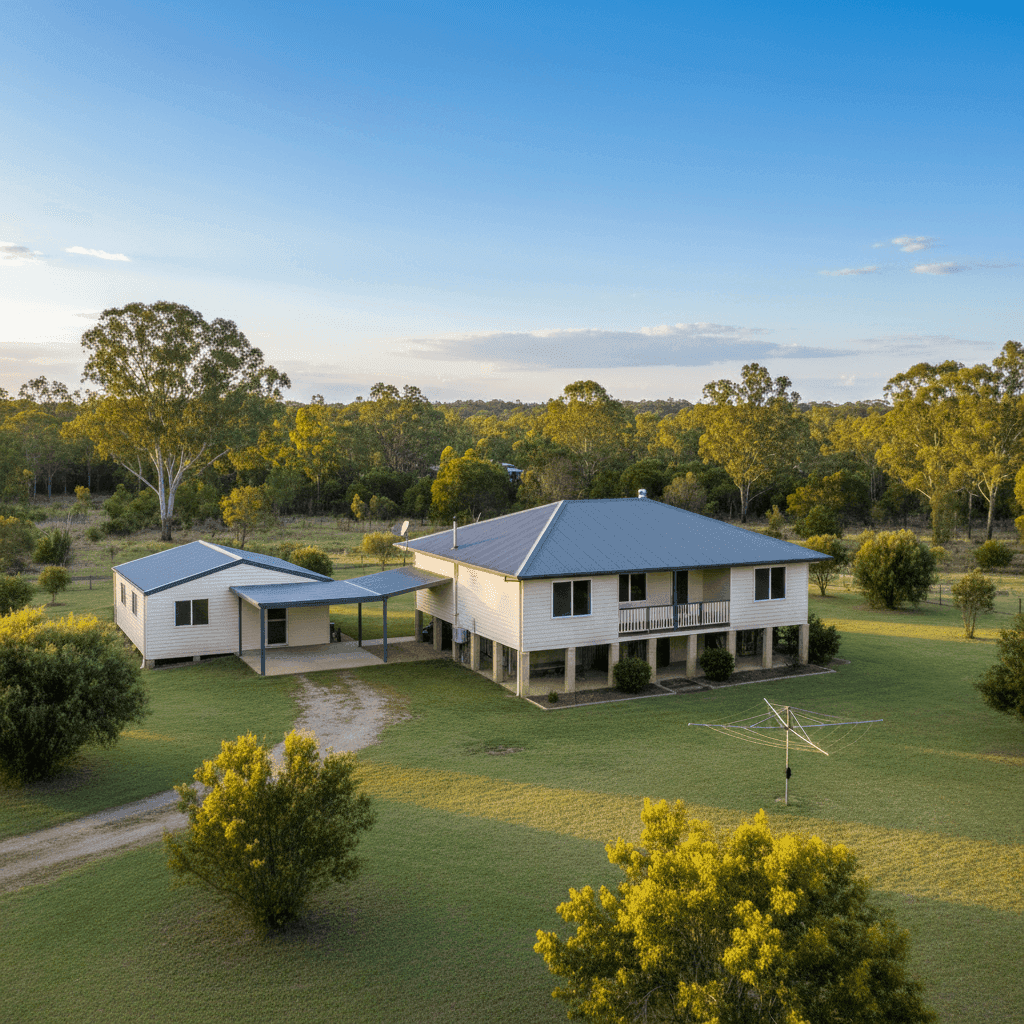
If you own a free standing home in South East Nanango, QLD 4615, you're likely aware that finding the right home insurance at a fair price takes a bit of research. This article breaks down a real home and contents insurance quote for a three-bedroom, one-bathroom property in the area — examining whether the price is competitive, how it stacks up against state and national benchmarks, and what property features are influencing the premium.
---
Is This Quote Fair?
The quote in question comes in at $3,700 per year (or $375 per month) for combined home and contents cover, with a building sum insured of $600,000 and contents valued at $100,000. The building excess is set at $3,000, while the contents excess is a more modest $500.
Based on our pricing data, this quote is rated CHEAP — below average for the area. That's genuinely good news for the homeowner. In a state where premiums can vary wildly depending on flood zones, storm exposure, and construction type, landing below the average benchmark is a result worth noting.
To put it in perspective: the Queensland state average premium sits at $9,129 per year, and the state median is $3,903 per year. This quote comes in under both figures, suggesting the homeowner is getting reasonable value relative to what many Queenslanders are paying. You can explore broader Queensland home insurance statistics here.
---
How South East Nanango Compares
Benchmarking a quote properly requires looking at multiple layers of data. Here's how this property's premium compares across different geographic levels:
| Benchmark | Annual Premium |
|---|---|
| This Quote | $3,700 |
| LGA Average (Gympie) | $5,581 |
| QLD State Median | $3,903 |
| QLD State Average | $9,129 |
| National Average | $5,347 |
| National Median | $2,764 |
A few things stand out here. While this quote sits below the Gympie LGA average of $5,581 and well below the Queensland state average, it does come in slightly above the national median of $2,764. That's not unusual — Queensland properties, particularly in regional and semi-rural areas, often carry higher base premiums due to elevated weather-related risk profiles compared to southern states.
It's also worth noting that the national average of $5,347 is significantly higher than this quote, reinforcing the "cheap" rating. For a property of this size and age, with a granny flat on site and a $600,000 building sum insured, a sub-$4,000 annual premium represents solid value.
Suburb-level comparison data for South East Nanango is limited, but you can check the latest available figures at the South East Nanango insurance stats page. For a broader national picture, visit our national home insurance statistics page.
---
Property Features That Affect Your Premium
Every property is different, and insurers assess a range of construction and location factors when calculating your premium. Here's how the key features of this particular home play into the pricing:
Hardiplank / Hardiflex Cladding
Fibre cement cladding like Hardiplank and Hardiflex is generally viewed favourably by insurers. It's resistant to rot, termites, and fire — all meaningful risk factors in Queensland's climate. This construction type typically attracts more competitive premiums compared to weatherboard or timber-clad homes.
Steel / Colorbond Roof
A Colorbond steel roof is another tick in the right column. It's durable, low-maintenance, and performs well in high-wind and hail events. Insurers tend to price steel roofing more favourably than older materials like terracotta tiles or asbestos sheeting, particularly in storm-prone regions.
Stump Foundation
The home sits on stumps, which is common for properties built in the 1980s across Queensland. While this construction style can be more susceptible to movement and flood inundation (since the underfloor space can be affected by rising water), it also allows for airflow and is well-suited to the local climate. Insurers will factor in the local flood and storm risk when pricing stump-foundation homes.
Timber and Laminate Flooring
Timber and laminate floors can be costly to replace or repair following water damage, which may influence the contents and building replacement estimates. Ensuring your sum insured accurately reflects the cost of reinstatement — including flooring — is important.
Granny Flat on Site
The presence of a granny flat adds complexity to the insurance equation. Depending on the policy, a granny flat may or may not be automatically covered under the main dwelling policy. It's worth confirming with your insurer whether the granny flat structure and any contents within it are included in the existing cover — or whether a separate endorsement or policy is needed.
1982 Construction
Homes built in the early 1980s may have older electrical wiring, plumbing systems, or roofing materials that could require updating. Some insurers apply loading to older homes, though this property's modern cladding and Colorbond roof likely offset some of that concern.
---
Tips for Homeowners in South East Nanango
Whether you're reviewing an existing policy or shopping for new cover, here are four practical steps to make sure you're getting the best outcome:
- Confirm your granny flat is covered. Don't assume it's automatically included. Check your policy schedule carefully and speak to your insurer about whether the granny flat structure and its contents are covered — particularly if it's tenanted or used as a separate dwelling.
- Review your building sum insured annually. Construction costs have risen significantly in recent years. A $600,000 sum insured may have been appropriate when the policy was first taken out, but it's worth checking that it still reflects the true cost of rebuilding your home (including the granny flat) to current standards. Underinsurance is one of the most common — and costly — mistakes homeowners make.
- Check your flood and storm cover. South East Nanango sits in the Gympie LGA, a region that has experienced significant flood and storm events historically. Make sure your policy explicitly includes flood cover, and understand what your excess obligations are in the event of a weather-related claim.
- Compare quotes before renewal. Your current premium may be below average today, but that can change at renewal time. Using a comparison service like CoverClub takes the guesswork out of knowing whether your renewal offer is still competitive.
---
Get a Quote for Your Home
Whether you're in South East Nanango or anywhere else in Australia, comparing home insurance quotes is one of the simplest ways to make sure you're not overpaying. CoverClub makes it easy to see what's available for your specific property — just enter your address to get started.