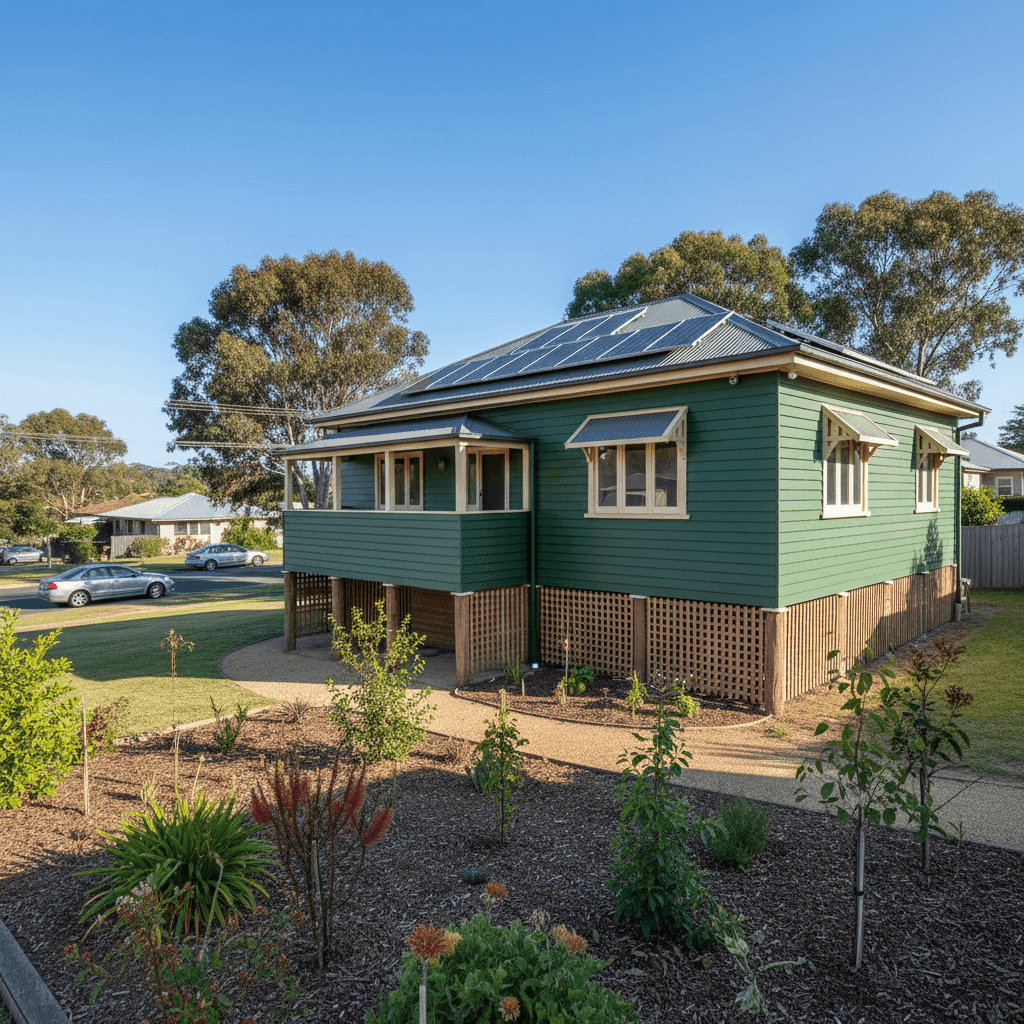
If you own a free standing home in South Grafton, NSW 2460, you've probably noticed that home insurance can feel like a moving target. Premiums vary wildly depending on your property's age, construction, location risk profile, and the insurer you choose. This article breaks down a real home and contents insurance quote for a 3-bedroom weatherboard home in South Grafton — and puts it in context against suburb, state, and national benchmarks — so you can judge whether you're getting a fair deal.
---
Is This Quote Fair?
The quote in question comes in at $1,420 per year (or $149/month) for combined home and contents cover, with a building sum insured of $530,000 and contents valued at $65,000. The building excess is $4,000 and the contents excess is $1,000.
Our price rating for this quote is CHEAP — Below Average, which is genuinely good news for the homeowner.
To put that in perspective, based on 52 quotes collected for the South Grafton area:
- The suburb average sits at $4,505/yr
- The suburb median is $3,217/yr
- Even the 25th percentile — meaning 75% of quotes are more expensive — comes in at $1,950/yr
At $1,420/yr, this quote sits below the suburb's 25th percentile, meaning it's cheaper than at least three-quarters of comparable quotes in the postcode. That's a strong result.
It's worth noting that the higher excess on the building ($4,000) is likely contributing to the lower premium. Choosing a higher excess reduces the insurer's risk exposure, which is typically passed on as a discount. Whether that trade-off works for you depends on your financial buffer — but for homeowners who can absorb a larger out-of-pocket cost in a claim, it's a legitimate way to keep annual premiums down.
---
How South Grafton Compares
South Grafton sits in the Richmond Valley LGA, a region that carries some of the most elevated insurance pricing in the country. The LGA average premium is a staggering $41,437/yr — a figure heavily skewed by flood-exposed and high-risk properties in the broader region.
Here's how the numbers stack up across different benchmarks:
| Benchmark | Average Premium | Median Premium |
|---|---|---|
| South Grafton (2460) | $4,505/yr | $3,217/yr |
| New South Wales | $9,528/yr | $3,770/yr |
| National | $5,347/yr | $2,764/yr |
Compared to the NSW state average of $9,528/yr, the South Grafton suburb average of $4,505/yr is notably lower — suggesting that while the broader LGA carries significant risk (largely flood-related), the South Grafton suburb itself is priced more moderately. Compared to the national average of $5,347/yr, South Grafton also fares reasonably well.
The wide spread between the suburb's 25th percentile ($1,950/yr) and 75th percentile ($4,822/yr) tells an important story: where exactly your property sits, and how it's built, can make an enormous difference to what you pay. This is why comparing multiple quotes is so important — the range is simply too large to assume your first quote is competitive.
---
Property Features That Affect Your Premium
Several characteristics of this particular property will influence how insurers assess and price the risk:
Weatherboard timber construction (1960s build) Older weatherboard homes are generally considered higher risk by insurers than modern brick or rendered homes. Timber is more susceptible to fire, termite damage, and general wear over time. A home built in 1960 is now over 65 years old, which means electrical wiring, plumbing, and structural elements may be ageing — factors insurers weigh carefully when setting premiums.
Steel/Colorbond roof On the plus side, a Colorbond steel roof is viewed favourably by insurers. It's durable, low-maintenance, fire-resistant, and performs well in extreme weather. This likely helps offset some of the risk associated with the older timber frame construction.
Stumps foundation Homes on stumps (also known as raised or pier foundations) are common in older Queensland and northern NSW builds. While they offer good ventilation and some flood resilience, they can be more vulnerable to subfloor damage and may attract scrutiny around structural integrity in older properties.
Timber/laminate flooring Flooring type has a modest impact on contents and building replacement cost estimates. Timber flooring in particular can be expensive to replace, which is factored into building sum insured calculations.
Solar panels This property has solar panels installed. Solar panels add value to a home but also increase the replacement cost in the event of damage — particularly from hail, fire, or storm. Homeowners should ensure their building sum insured explicitly accounts for the cost of replacing the solar system, as some policies treat this differently.
Standard fittings quality Standard-grade fittings mean the replacement cost estimate is more straightforward and less subject to the premium loading that comes with high-end or custom fixtures. This keeps the building sum insured — and therefore the premium — more predictable.
---
Tips for Homeowners in South Grafton
1. Review your building sum insured regularly At $530,000, the building sum insured needs to reflect the full cost of rebuilding — not the market value of the property. Construction costs have risen sharply in recent years, and underinsurance is a real risk. Use a building cost calculator or speak to a quantity surveyor to verify your figure is still adequate, especially given the solar panels and the age-related complexity of the build.
2. Understand your flood exposure South Grafton is located near the Clarence River, which has a documented history of flooding. Even if your specific property is not in a mapped flood zone, it's worth checking your insurer's flood definitions carefully. Some policies distinguish between riverine flood, flash flooding, and storm surge — and exclusions can catch homeowners off guard at claim time.
3. Consider the excess trade-off carefully The $4,000 building excess on this quote is higher than average and is almost certainly part of why the premium is so competitive. Before locking in, think about whether you could comfortably cover that amount if you needed to make a claim. If not, it may be worth requesting a quote with a lower excess and comparing the premium difference.
4. Don't set and forget Insurance markets shift, and so do your property's risk factors. It's worth shopping around at renewal time — even if you're happy with your current insurer. The spread of quotes in South Grafton is wide enough that switching could save you hundreds of dollars annually without sacrificing meaningful cover.
---
Compare Your Home Insurance Quote Today
Whether you're renewing or buying cover for the first time, the best way to know if you're getting a fair deal is to compare. CoverClub makes it easy to see how your quote stacks up against real data from your suburb, your state, and across Australia. Get a quote now at CoverClub and find out if your premium is truly competitive — or if there's a better deal waiting for you.