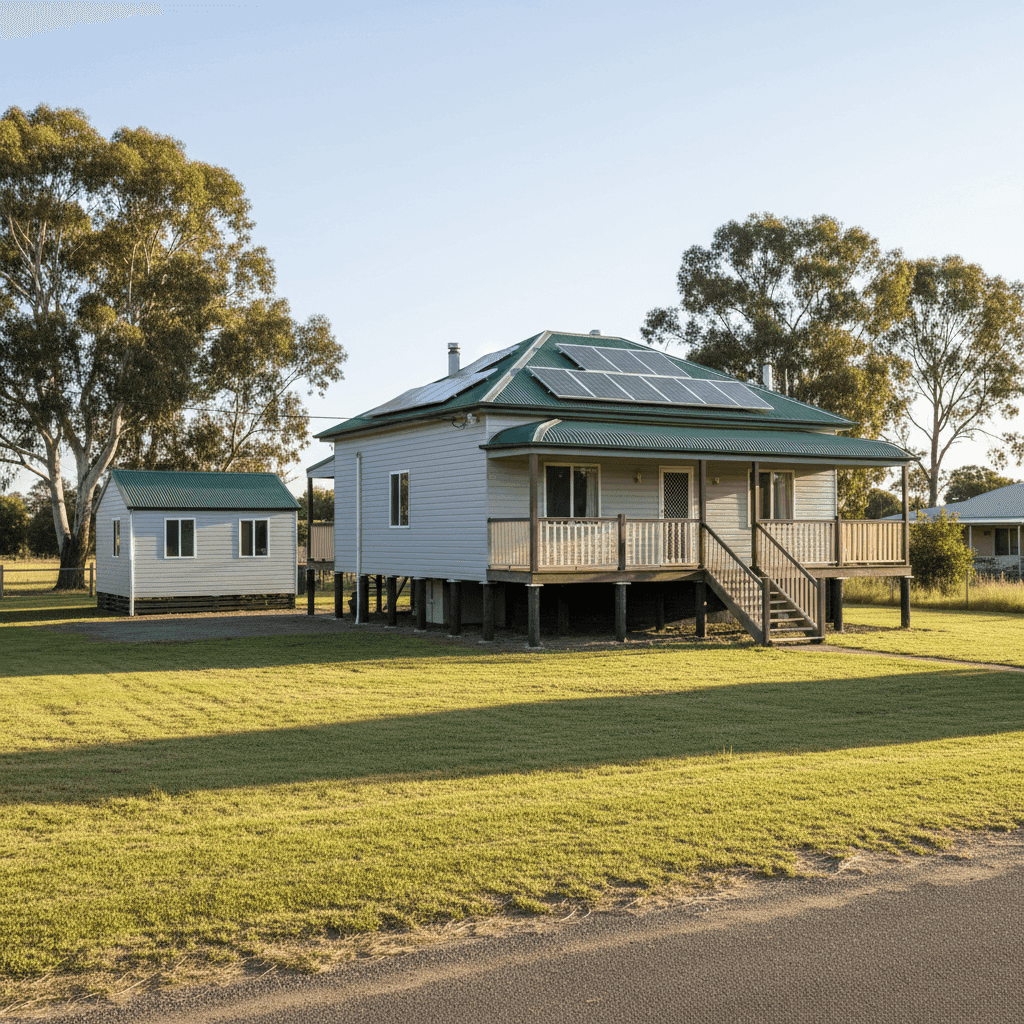
South Gundagai is a quiet riverside locality in the Snowy Valleys region of New South Wales, sitting along the Murrumbidgee River corridor roughly halfway between Sydney and Melbourne. It's the kind of place where properties tend to have character — older homes on stumps, generous blocks, and a relaxed rural atmosphere. For owners of a free-standing home here, understanding what a fair home insurance premium looks like is an important part of protecting what is likely your most valuable asset.
This article breaks down a recent home and contents insurance quote for a 3-bedroom, 1-bathroom free-standing home in South Gundagai (postcode 2722), examines how it stacks up against state and national benchmarks, and offers practical tips for homeowners in the area.
---
Is This Quote Fair?
The quote in question came in at $1,274 per year (or about $121 per month) for combined home and contents cover, with a building sum insured of $450,000 and contents cover of $80,000. The building excess is $4,000 and the contents excess is $1,000.
Our pricing analysis rates this quote as CHEAP — below average — which is genuinely good news for the homeowner. To put it in perspective:
- The NSW state average premium sits at $3,801/yr, with a median of $3,410/yr
- The national average is $2,965/yr, with a median of $2,716/yr
- The Snowy Valleys LGA average is $2,748/yr
At $1,274/yr, this quote is roughly 66% below the NSW average and about 57% below the national average. Even compared to the local Snowy Valleys LGA average, it comes in at less than half the typical cost. That's a meaningful saving — potentially over $2,500 per year compared to what many NSW homeowners are paying.
It's worth noting that the higher building excess of $4,000 does contribute to the lower premium. Accepting a larger out-of-pocket cost in the event of a claim is one way insurers reduce upfront costs, so homeowners should weigh whether that trade-off suits their financial situation.
---
How South Gundagai Compares
While no suburb-level data is available specifically for South Gundagai, we can draw useful comparisons using state, LGA, and national figures. You can explore the full NSW insurance statistics and national home insurance data on CoverClub.
| Benchmark | Average Premium |
|---|---|
| This quote | $1,274/yr |
| Snowy Valleys LGA average | $2,748/yr |
| NSW average | $3,801/yr |
| National average | $2,965/yr |
The relatively low premium for this property likely reflects a combination of factors: the regional location away from high-density urban risk areas, no cyclone risk designation, no swimming pool, and the specific characteristics of the home itself. Regional NSW properties can sometimes attract lower premiums than their coastal or metropolitan counterparts, though flood and bushfire risk can complicate that picture depending on the specific address.
For more localised data as it becomes available, check the South Gundagai suburb stats page.
---
Property Features That Affect Your Premium
Every home is different, and insurers assess a range of building characteristics when calculating your premium. Here's how the features of this particular property are likely influencing the quote:
Hardiplank / Hardiflex Cladding
Fibre cement cladding like Hardiplank and Hardiflex is generally viewed favourably by insurers. It's durable, resistant to rot and termites, and performs reasonably well in fire conditions compared to timber weatherboard. This is likely a neutral-to-positive factor in the premium calculation.
Steel / Colorbond Roof
Colorbond steel roofing is one of the most common and well-regarded roofing materials in Australia. It's lightweight, long-lasting, and performs well in high-wind events. Insurers generally price this material favourably compared to older tile or corrugated iron roofs.
Stump Foundation (Elevated Less Than 1m)
The home sits on stumps and is elevated by less than 1 metre. Stump foundations are common in older regional NSW homes and can be a double-edged sword for insurance. On the positive side, they allow airflow beneath the home and can reduce moisture-related damage. However, they may be assessed more carefully for flood risk depending on the property's proximity to waterways — relevant given South Gundagai's location near the Murrumbidgee River.
Timber / Laminate Flooring
These flooring types are standard for the region and era of construction. They don't typically attract a premium loading, though they can be more susceptible to water damage than concrete slab floors — something worth keeping in mind for contents cover.
Solar Panels
The presence of solar panels is noted on this property. Most home insurance policies cover rooftop solar panels as part of the building, but it's worth confirming this with your insurer. Damage to panels from storms, hail, or fire should ideally be included in your building sum insured.
Granny Flat
This property includes a granny flat, which adds complexity to the insurance picture. Depending on the policy, a granny flat may or may not be automatically included under the main building cover. Homeowners should explicitly confirm with their insurer whether the granny flat structure and any contents within it are covered — and whether rental income protection applies if it's tenanted.
1986 Construction
At nearly 40 years old, this home falls into a category where insurers may factor in the age of plumbing, wiring, and other systems. Homes of this era can carry higher risk of internal water damage or electrical faults. Keeping maintenance up to date is both a practical and insurance-wise decision.
---
Tips for Homeowners in South Gundagai
1. Review your granny flat coverage explicitly Don't assume your main home policy automatically extends to a granny flat. Contact your insurer and ask specifically whether the structure, fixtures, and any contents are covered — and under what circumstances. If the flat is rented out, you may need landlord insurance or a specific policy endorsement.
2. Check your flood and bushfire risk South Gundagai sits near the Murrumbidgee River, which has a history of flooding. Verify whether your policy includes flood cover (not just storm damage) and review any bushfire risk ratings for your specific address. Some insurers treat flood and fire as optional extras, so read the Product Disclosure Statement carefully.
3. Reassess your building sum insured regularly With construction costs rising significantly across Australia in recent years, a sum insured set a few years ago may no longer reflect the true cost of rebuilding. $450,000 may be appropriate for a 130 sqm home in a regional area, but it's worth running the numbers through a building cost calculator annually to avoid being underinsured.
4. Consider whether your excess is right for you The $4,000 building excess on this policy is on the higher side. While it helps keep the annual premium low, it means you'd need to cover the first $4,000 of any building claim yourself. If you don't have that readily available as an emergency fund, it may be worth requesting a quote with a lower excess to compare the premium difference.
---
Compare Home Insurance Quotes in South Gundagai
Whether you're a long-time local or new to the area, it pays to shop around. Premiums for the same property can vary significantly between insurers — and as this quote shows, there are genuinely competitive options available in regional NSW. Head to CoverClub to compare home and contents insurance quotes for your South Gundagai property and make sure you're getting the right cover at the right price.