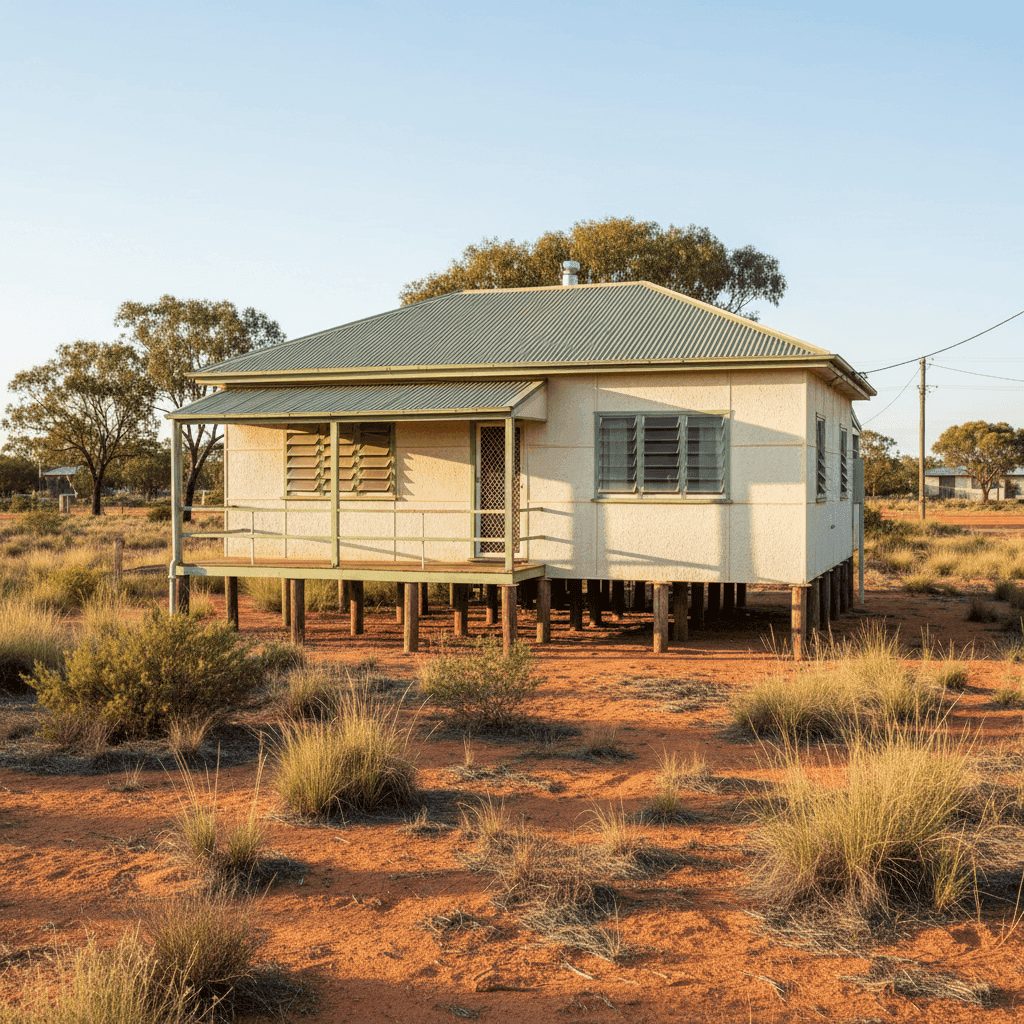
Insuring a home in South Hedland, WA 6722 comes with its own set of challenges — and costs. This analysis looks at a building-only insurance quote for a three-bedroom, one-bathroom free standing home in the suburb, breaking down whether the premium stacks up against local, state-wide, and national benchmarks. If you own or are thinking of buying in South Hedland, this is worth reading before you renew.
---
Is This Quote Fair?
The annual premium for this property came in at $6,683 per year (or $635/month), covering the building only with a sum insured of $520,000 and a building excess of $5,000.
Our price rating for this quote is FAIR — around average for the area. That assessment is backed by the numbers: the suburb median sits at $6,892/yr, meaning this quote is actually slightly below the midpoint for South Hedland. It also falls comfortably within the interquartile range of quotes we've seen in the postcode — between the 25th percentile of $6,166/yr and the 75th percentile of $8,848/yr.
In practical terms, this homeowner isn't being gouged, but they're also not getting a bargain. There's a reasonable spread of pricing in the suburb, and with the right insurer and policy configuration, there may be room to push closer to that lower quartile.
---
How South Hedland Compares
To put this quote in context, it helps to zoom out and look at the broader South Hedland suburb insurance data, as well as WA state averages and national benchmarks.
| Benchmark | Average Premium | Median Premium |
|---|---|---|
| South Hedland (6722) | $7,643/yr | $6,892/yr |
| LGA – Port Hedland | $7,643/yr | — |
| Western Australia | $2,811/yr | $2,127/yr |
| National | $5,347/yr | $2,764/yr |
The contrast is stark. South Hedland homeowners pay, on average, 2.7 times more than the typical WA homeowner, and around 40% more than the national average. Even compared to the national median of $2,764/yr, this quote is more than double — a reflection of the very real and very elevated risks that come with insuring property in the Pilbara region.
This isn't a market anomaly. It's the cost of geography. South Hedland sits in a declared cyclone risk zone, which fundamentally changes how insurers price policies in this area. The sample of 45 quotes we collected locally confirms that high premiums are the norm here, not the exception.
---
Property Features That Affect Your Premium
Several characteristics of this particular home play a significant role in how insurers assess and price the risk.
Cyclone Risk Zone
This is the single biggest premium driver. South Hedland falls within a high-risk cyclone corridor in north-west WA. Insurers apply substantial loadings to properties in these zones to account for the potential cost of storm damage, roof loss, and structural failure during severe weather events. There's no getting around this — it affects every home in the area.
Fibro Asbestos Walls
The external walls of this home are constructed from fibro asbestos — a material common in homes built before the 1980s, and this property dates to 1970. Asbestos-containing materials are treated cautiously by insurers because any damage (particularly storm or impact damage) can trigger expensive, highly regulated remediation and disposal processes. This almost certainly contributes to the higher-than-average excess of $5,000 and may influence the overall premium loading.
Elevated on Stumps
The home sits on stump foundations and is elevated by less than one metre. Elevated homes can be more vulnerable to wind uplift during cyclones, but they also offer some protection from surface flooding. Insurers weigh both factors when calculating risk in tropical and semi-arid zones like the Pilbara.
Steel/Colorbond Roof
On the positive side, a steel Colorbond roof is generally viewed favourably by insurers. It's durable, resistant to ember attack, and performs well in high-wind events compared to older tile or fibrous cement roofing. This may help moderate what would otherwise be an even higher premium.
Ducted Climate Control
The presence of ducted air conditioning adds to the replacement value of the home and is factored into the sum insured. In a region where temperatures regularly exceed 40°C, it's a non-negotiable fixture — but it does nudge the insured value (and therefore the premium) upward.
Timber/Laminate Flooring
Timber and laminate floors can be costly to replace, particularly if water damage occurs. In a cyclone-prone region, this is a relevant consideration for insurers assessing potential claims costs.
---
Tips for Homeowners in South Hedland
1. Review your sum insured carefully With a building sum insured of $520,000 on a 130 sqm home, it's worth stress-testing that figure against current construction costs in the Pilbara. Building in remote WA is expensive — labour, materials, and logistics all carry a premium. Underinsurance is a real risk, and in the event of a total loss, the gap between your payout and actual rebuild cost can be devastating.
2. Ask about cyclone-specific policy terms Not all policies treat cyclone damage the same way. Some have separate cyclone excesses, exclusions for certain wind-driven damage, or sub-limits on temporary accommodation. Read the Product Disclosure Statement (PDS) carefully, or ask your insurer directly how cyclone events are handled under your policy.
3. Get multiple quotes — every year The $1,477/yr gap between the cheapest and most expensive quotes in this suburb (25th vs 75th percentile) is significant. Loyalty rarely pays in home insurance. Shopping around at renewal time — even if you end up staying with your current insurer — keeps you informed and gives you negotiating leverage.
4. Consider the impact of your excess A $5,000 building excess is on the higher end. While a higher excess typically reduces your premium, it also means a larger out-of-pocket cost when you make a claim. In a cyclone-prone area where claims are more likely, it's worth modelling whether a lower excess (at a slightly higher premium) makes financial sense for your situation.
---
Compare Your Quote with CoverClub
Whether you're renewing your policy or shopping for the first time, it pays to know where your quote sits in the market. CoverClub aggregates real insurance data from across Australia so you can benchmark your premium against your neighbours — not just a national average that doesn't reflect your local risk.
Get a home insurance quote today at CoverClub and see how your property compares in seconds.