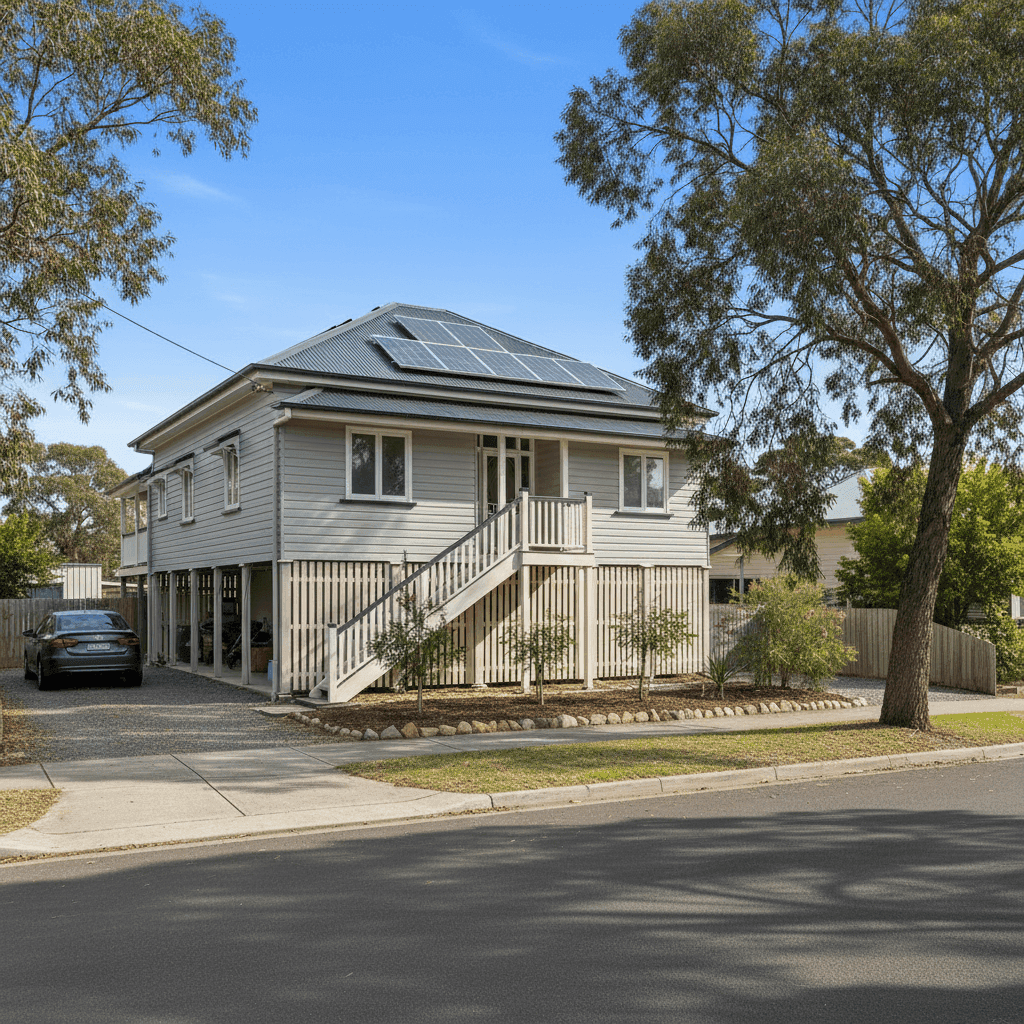
South Maitland is a quiet residential suburb in the Hunter Valley region of New South Wales, sitting just outside the historic city of Maitland. It's home to a mix of older character properties and more modest family homes — and if you own a free-standing home here, you've likely wondered whether you're getting a fair deal on your home insurance. We recently analysed a quote for a 3-bedroom, 1-bathroom free-standing home in South Maitland (NSW 2320) and the results are well worth unpacking.
---
Is This Quote Fair?
The short answer: yes — and then some. This property received an annual premium of $2,962 per year (or $277/month) for combined Home and Contents cover, with a building sum insured of $400,000 and contents valued at $50,000. Our pricing engine rates this quote as CHEAP, meaning it sits well below the average for the area.
To put that in perspective, the suburb average premium in South Maitland sits at $6,495 per year, and the median is even higher at $7,069. That means this quote comes in at less than half of what most comparable properties in the suburb are paying. Even at the 25th percentile — where the cheapest quarter of quotes sit — the benchmark is $5,081 per year, still significantly more than what this homeowner is paying.
For a property of this age and construction type, landing a premium this low is a genuinely strong outcome. The $5,000 excess on both building and contents is on the higher side, which does help bring the premium down — but even accounting for that, the overall value here is solid.
---
How South Maitland Compares
Understanding your premium in isolation only tells part of the story. Context is everything in insurance pricing, and South Maitland's numbers paint an interesting picture when stacked against broader benchmarks.
| Benchmark | Premium |
|---|---|
| This Quote | $2,962/yr |
| Suburb Average (2320) | $6,495/yr |
| Suburb Median (2320) | $7,069/yr |
| LGA Average (Dungog) | $4,832/yr |
| NSW Average | $9,528/yr |
| NSW Median | $3,770/yr |
| National Average | $5,347/yr |
| National Median | $2,764/yr |
A couple of things stand out here. First, the NSW state average of $9,528 is strikingly high — driven in part by elevated premiums in flood-prone, bushfire-affected, and coastal areas across the state. The NSW median of $3,770 tells a more grounded story, and this quote sits just below that figure, confirming its competitiveness.
Nationally, the median premium is $2,764 per year, which is remarkably close to this quote — suggesting that, despite South Maitland's higher suburb-level averages, this homeowner is paying roughly what you'd expect for a well-priced policy anywhere in Australia.
It's also worth noting that the suburb sample size here is 11 quotes, so the local averages should be interpreted with some caution. A small sample can be skewed by a handful of high-risk or high-value properties. That said, the gap between this quote and the suburb average is large enough to be meaningful regardless.
---
Property Features That Affect Your Premium
Several characteristics of this property are likely influencing the premium — some favourably, some less so.
Weatherboard timber construction (1919) is one of the most significant factors. Older homes built with weatherboard walls carry higher replacement costs and are considered more susceptible to fire, rot, and storm damage than brick veneer or double-brick construction. Insurers typically price this risk into the premium, so it's notable that this quote remains competitive despite the age and material.
Steel/Colorbond roof is a positive. Colorbond roofing is durable, low-maintenance, and performs well in high-wind and hail events. Compared to terracotta tiles or older corrugated iron, it's generally viewed favourably by underwriters.
Stump foundations and elevated structure add complexity. Homes elevated by at least one metre on stumps — common in older Hunter Valley and Queensland-style homes — can be more vulnerable to underfloor damage and require specific considerations around access and repair costs. However, elevation can also provide a degree of flood mitigation, which may be relevant in parts of the Maitland area given its proximity to the Hunter River floodplain.
Timber and laminate flooring is a factor worth noting. Timber floors in older homes can be costly to repair or replace following water ingress or fire, which is reflected in how insurers assess internal finishes.
Solar panels are present on this property. While solar systems add value and can increase the cost to rebuild or repair, many insurers include them under standard building cover — it's always worth confirming this is the case with your specific policy.
No pool and no ducted climate control both work in the homeowner's favour, reducing the complexity and replacement cost of the property overall.
---
Tips for Homeowners in South Maitland
1. Review your building sum insured regularly. A $400,000 building sum insured is the figure used here, but construction costs have risen sharply in recent years. Underinsurance is a real risk — especially for older homes where heritage materials or custom joinery can be expensive to source and replace. Use a building replacement cost calculator annually to make sure your cover keeps pace.
2. Understand your flood and water risk. Parts of Maitland and its surrounds have well-documented flood exposure, particularly near the Hunter River. Check whether your policy includes flood cover as standard or as an optional add-on, and review your property's flood overlay on the NSW Planning Portal. Even if your home sits on higher ground, stormwater and flash flooding can still pose a risk.
3. Consider the trade-off on excess. This policy carries a $5,000 excess on both building and contents — a meaningful out-of-pocket cost in the event of a claim. If you'd prefer a lower excess, it's worth requesting alternative quotes with a $1,000 or $2,500 excess to see how much the premium increases. For some homeowners, the peace of mind is worth the extra cost.
4. Don't overlook your contents cover. A $50,000 contents value may be sufficient for a modest household, but it's easy to underestimate what you own. Do a room-by-room audit of your furniture, appliances, electronics, clothing, and valuables. The cost of replacing everything after a total loss is often higher than people expect.
---
Compare Your Own Quote at CoverClub
Whether you're a South Maitland local or simply curious about what you should be paying for home insurance, CoverClub makes it easy to see where your premium sits relative to your suburb, state, and the national market. Get a quote today at CoverClub and find out if you're getting a fair deal — or if there's a better option waiting for you.