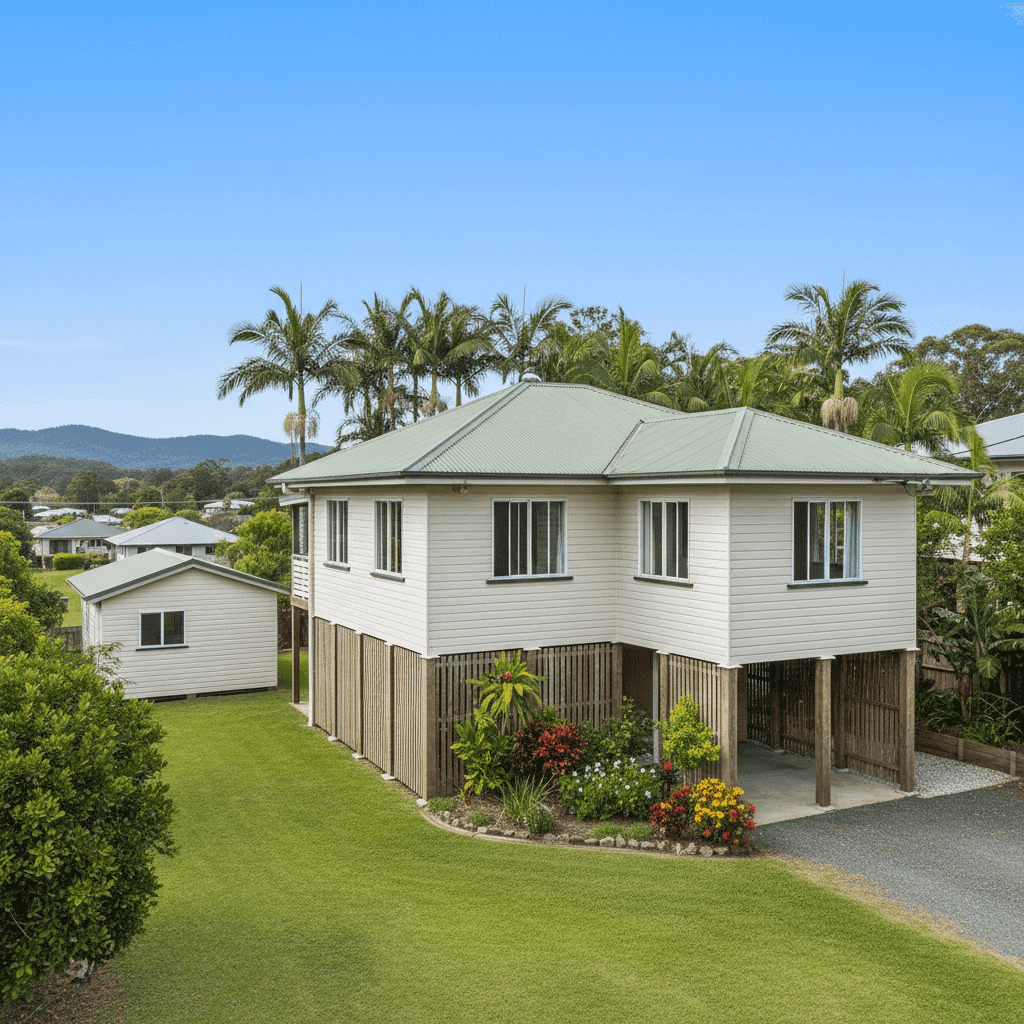
South Murwillumbah is a quiet residential locality in the Tweed Valley, nestled in far northern New South Wales near the Queensland border. It's a region of genuine natural beauty — but that scenic setting comes with its own set of insurance considerations. This article breaks down a recent home and contents insurance quote for a five-bedroom free standing home in South Murwillumbah (postcode 2484), comparing it against local, state, and national benchmarks to help you understand whether you're paying a fair price.
---
Is This Quote Fair?
The quote in question came in at $21,009 per year (or $2,059/month), covering a building sum insured of $967,000 and $50,000 in contents. Our price rating for this quote is EXPENSIVE — Above Average.
To put that in perspective, the average home and contents premium across South Murwillumbah sits at around $7,087 per year, with a median of $6,677. This quote is nearly three times the suburb average — a significant gap that warrants a closer look.
It's worth noting that the suburb sample is based on 15 quotes, so while the data is directionally useful, a larger sample would give an even clearer picture. That said, the premium here is well above even the 75th percentile for the area ($9,753/yr), meaning it's more expensive than at least 75% of comparable quotes in the suburb. That's a strong signal that there may be room to shop around.
The high building sum insured of $967,000 is likely one of the primary drivers of the elevated premium. For a 153 sqm home, that works out to roughly $6,320 per square metre — which is on the higher end and could indicate the sum insured has been set conservatively (or even generously). It's worth reviewing whether your building replacement cost estimate is accurate, as over-insuring can significantly inflate your annual premium.
---
How South Murwillumbah Compares
When you zoom out and look at the broader picture, the cost of insuring a home in South Murwillumbah is already above average — even before factoring in the specifics of this particular quote.
| Benchmark | Average Premium | Median Premium |
|---|---|---|
| South Murwillumbah (2484) | $7,087/yr | $6,677/yr |
| LGA (Kyogle) | $5,204/yr | — |
| NSW State | $3,801/yr | $3,410/yr |
| National | $2,965/yr | $2,716/yr |
As the table shows, South Murwillumbah's average premium is roughly 87% higher than the NSW state average and more than double the national average. Even the LGA average of $5,204/yr (covering the broader Kyogle area) is notably higher than state and national figures.
This elevated baseline reflects the risk profile of the region — flood-prone river valleys, ageing housing stock, and the general challenges of insuring properties in regional and semi-rural northern NSW. You can explore more localised data on the South Murwillumbah insurance stats page, compare it against NSW averages, or view national benchmarks to see how your area stacks up.
---
Property Features That Affect Your Premium
Several characteristics of this property are likely contributing to the higher-than-average premium. Here's what insurers typically weigh up:
Weatherboard Timber Construction
Weatherboard wood external walls are common in older Australian homes, but they carry a higher fire risk than brick or rendered masonry. Insurers generally price timber-framed and clad homes at a premium, particularly when combined with a construction year of 1950 — meaning the home is over 70 years old. Older homes can have ageing wiring, plumbing, and structural elements that increase the likelihood of a claim.
Pole (Stump) Foundation
A home built on poles or stumps — typical of Queensland-style construction that spills over into northern NSW — is more vulnerable to certain types of damage, including flooding and foundation movement. Insurers factor this in, especially in low-lying areas near river systems like the Tweed.
Colorbond Steel Roof
On the positive side, a steel/Colorbond roof is generally viewed favourably by insurers. It's durable, fire-resistant, and performs well in severe weather. This may help offset some of the premium loading from the timber construction.
Timber and Laminate Flooring
Timber flooring adds to the replacement cost of the home and can be susceptible to water damage — a relevant consideration in a flood-risk region like the Tweed Valley.
Granny Flat
The presence of a granny flat increases the total insurable value of the property, which is likely reflected in the $967,000 building sum insured. Additional structures on a property add complexity and cost to any rebuild, and insurers price accordingly.
High Building Sum Insured
As noted earlier, $967,000 for a 153 sqm home is substantial. While it's always better to be adequately insured than under-insured, it's worth obtaining an independent building replacement cost estimate to ensure the figure is accurate rather than inflated.
---
Tips for Homeowners in South Murwillumbah
If you're looking to manage your home insurance costs without compromising on cover, here are four practical steps worth considering:
- Review your building sum insured. Use a professional quantity surveyor or an online replacement cost calculator to verify your building's rebuild value. If your current sum insured is higher than necessary, reducing it to an accurate figure could meaningfully lower your premium — while still keeping you fully protected.
- Compare quotes from multiple insurers. Home insurance pricing varies enormously between providers, especially for older timber homes in regional NSW. What one insurer considers high-risk, another may price more competitively. Get a comparison quote at CoverClub to see what other insurers are offering for your property.
- Consider a higher excess. The current building excess is $2,000 and contents excess is $1,000. Opting for a higher voluntary excess can reduce your annual premium, provided you're comfortable covering more of the cost in the event of a claim. This can be a smart trade-off if you have a solid emergency fund.
- Ask about flood cover specifically. Given the Tweed Valley's history with flooding, make sure your policy explicitly includes flood cover — and understand what the insurer's definition of "flood" includes. Some policies distinguish between riverine flooding, storm surge, and flash flooding. Knowing exactly what you're covered for is just as important as the price you pay.
---
Ready to Find a Better Deal?
If this quote feels steep, you're not alone — and you don't have to accept the first number you're given. CoverClub makes it easy to compare home and contents insurance quotes from multiple Australian insurers, all in one place. Whether you're in South Murwillumbah or anywhere else in the country, start your free comparison today and make sure you're getting the right cover at a price that makes sense.