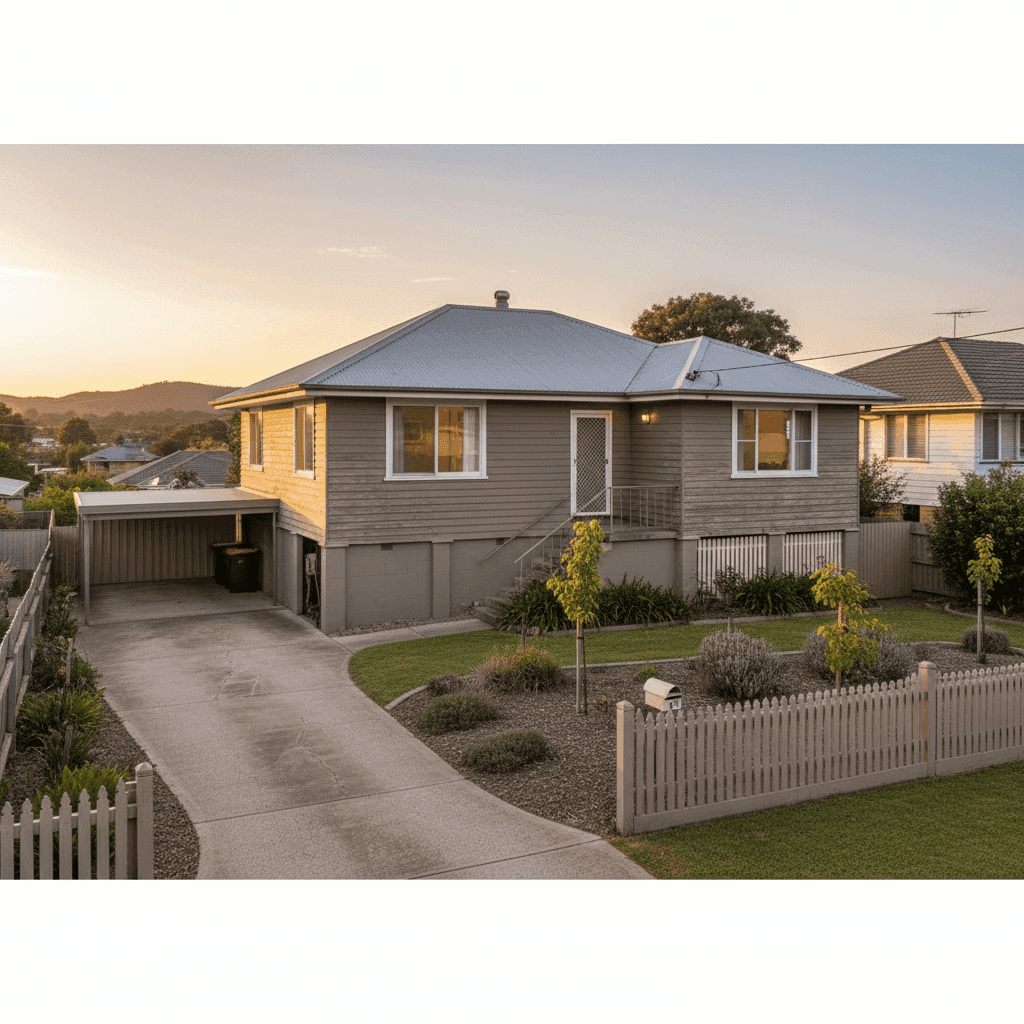
If you own a free standing home in South Tamworth, NSW 2340, you're probably curious about what a fair home insurance premium looks like — and whether you're paying too much or getting a genuine deal. This article breaks down a real home and contents insurance quote for a three-bedroom weatherboard property in the suburb, comparing it against local, state, and national benchmarks to help you make a more informed decision.
---
Is This Quote Fair?
The short answer: yes — this is an exceptionally competitive quote.
At $1,077 per year (or roughly $107 per month), this home and contents policy covers a building sum insured of $430,000 and contents valued at $50,000. Based on our pricing data, this quote sits firmly in the "Cheap" category — well below what most homeowners in South Tamworth are paying.
To put that in perspective, the suburb average premium sits at $3,585 per year, and the median is $3,012. Even the cheapest quarter of quotes in the area (the 25th percentile) comes in at $2,084 — nearly double what this policy costs. That means this quote is significantly undercutting the lower end of the local market, which is a strong signal that the homeowner has either found a very competitive insurer, or their specific property profile is attracting favourable pricing.
The building excess of $3,000 is on the higher side and is worth factoring in — a higher excess is one way insurers reduce your upfront premium. The contents excess of $1,000 is more typical. These trade-offs are worth weighing up depending on your financial situation and how likely you are to make a claim.
---
How South Tamworth Compares
Understanding where South Tamworth sits in the broader insurance landscape is useful context for any homeowner in the area. Here's how the numbers stack up:
| Benchmark | Annual Premium |
|---|---|
| This Quote | $1,077 |
| South Tamworth Suburb Average | $3,585 |
| South Tamworth Suburb Median | $3,012 |
| South Tamworth 25th Percentile | $2,084 |
| LGA (Liverpool Plains) Average | $2,851 |
| NSW State Average | $9,528 |
| NSW State Median | $3,770 |
| National Average | $5,347 |
| National Median | $2,764 |
A few things stand out here. First, NSW home insurance premiums are remarkably skewed — the state average of $9,528 is more than double the median of $3,770, which suggests a relatively small number of very high-risk or high-value properties are pulling the average up significantly. Coastal flood zones, bushfire-prone areas, and high-value Sydney properties all contribute to this.
Second, nationally, the average of $5,347 versus a median of $2,764 tells a similar story. The median is a more reliable guide to what a "typical" Australian homeowner pays.
For South Tamworth specifically, the local suburb data is based on 32 quotes — a reasonable sample size — and shows that the typical homeowner in the area is paying somewhere between $2,084 and $3,894 per year. At $1,077, this quote is a genuine outlier on the affordable end.
---
Property Features That Affect Your Premium
Several characteristics of this particular property will be influencing the premium, both positively and negatively.
Weatherboard timber walls are one of the most significant risk factors for insurers. Timber is more susceptible to fire damage than brick veneer or double brick construction, and this typically attracts a higher premium. It's a common wall type in older homes across regional NSW, so insurers in this market are well-acquainted with pricing it — but it's rarely a discount factor.
The steel/Colorbond roof is a positive. Colorbond is durable, low-maintenance, and performs well in both heat and moderate weather events. Compared to terracotta or concrete tiles, it's generally viewed favourably by insurers.
Stump foundations (also called stumped or raised foundations) are common in homes built during the mid-20th century across regional NSW and Queensland. They can be associated with some additional risk — particularly around subsidence and pest access — but they also provide good underfloor ventilation and can actually reduce flood damage in low-lying areas.
Construction year of 1974 means this home is over 50 years old. Older homes can carry higher premiums due to ageing wiring, plumbing, and structural components that may be more likely to fail. However, a well-maintained 1970s home with updated systems can still attract competitive pricing.
Ducted climate control is worth noting as a contents or fixtures consideration. Ducted systems are expensive to repair or replace, and their presence can increase the replacement value of the home — which is already reflected in the $430,000 building sum insured.
On the positive side, the absence of a pool and solar panels simplifies the risk profile. Pools add liability considerations, and solar panels — while increasingly common — can complicate roof claims and add to replacement costs.
---
Tips for Homeowners in South Tamworth
1. Review your building sum insured regularly. At $430,000 for a 130 sqm home, the sum insured works out to roughly $3,308 per square metre. Given rising construction costs across regional NSW, it's worth checking this figure against current building cost estimates annually. Being underinsured at claim time is a costly mistake.
2. Consider whether your excess level suits your situation. The $3,000 building excess on this policy is high. If you're unlikely to have the cash on hand to cover that in an emergency, it may be worth requesting a lower excess — even if it means a slightly higher premium. The $1,077 annual cost suggests there may be room to reduce the excess without blowing the budget.
3. Maintain your weatherboard exterior proactively. Timber weatherboard homes require regular upkeep — repainting, checking for rot, and ensuring the cladding is sealed against moisture. Insurers can dispute claims if damage is attributed to gradual deterioration rather than a sudden event. Staying on top of maintenance protects both your home and your ability to claim.
4. Shop around at renewal time. Even if you're already on a great rate, insurance premiums can shift significantly year to year. Insurers often reserve their best pricing for new customers. Use a comparison tool like CoverClub at each renewal to make sure you're not quietly drifting into an overpriced policy.
---
Find Your Best Rate with CoverClub
Whether you're a South Tamworth local or researching home insurance anywhere in Australia, comparing multiple quotes is the single most effective way to avoid overpaying. The data above shows just how wide the spread can be — even within a single suburb. Head to CoverClub to compare home and contents quotes tailored to your property in minutes.