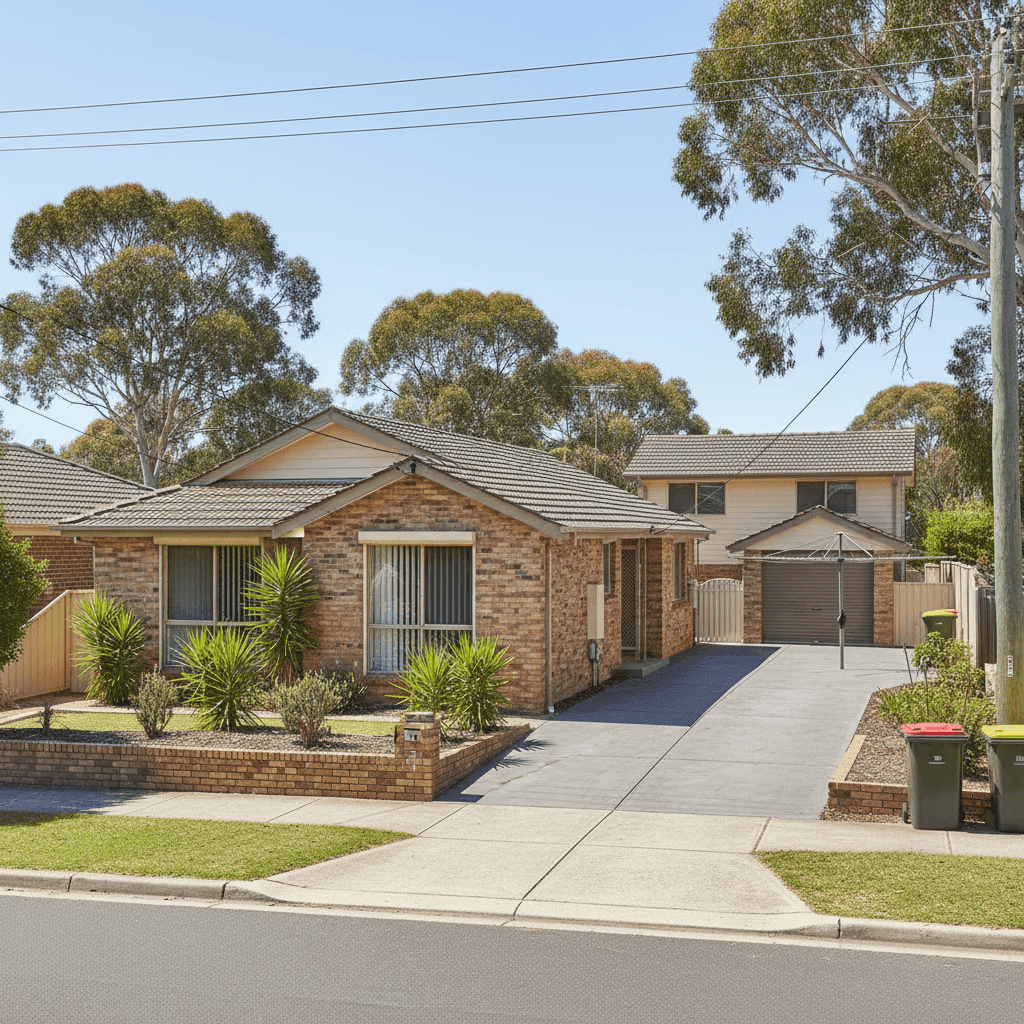
If you own a semi detached home in South Wentworthville, NSW 2145, you might be wondering whether you're paying a fair price for home and contents insurance — or leaving money on the table. This article breaks down a recent quote for a four-bedroom, three-bathroom semi detached property in the suburb, comparing it against local, state, and national benchmarks to help you make an informed decision.
---
Is This Quote Fair?
The quote in question came in at $2,240 per year (or roughly $215 per month) for combined home and contents cover, with a building sum insured of $839,000 and contents valued at $81,000. Both the building and contents excess are set at $1,000.
Our pricing analysis rates this quote as CHEAP — below average for the area. That's genuinely good news for the homeowner. When stacked against the South Wentworthville suburb average of $4,609 per year, this premium is roughly 51% lower than what many neighbours are paying. Even compared to the suburb's 25th percentile — meaning the cheapest quarter of quotes — of $3,117 per year, this policy still comes in well under the mark.
In practical terms, this homeowner is saving over $2,300 annually compared to the average quote in their postcode. That's a significant figure, and it underscores just how much variation can exist between insurers for what is essentially the same property type in the same street.
---
How South Wentworthville Compares
To put this quote in proper context, it helps to zoom out and look at the broader pricing landscape.
| Benchmark | Premium |
|---|---|
| This quote | $2,240/yr |
| Suburb average (2145) | $4,609/yr |
| Suburb median (2145) | $3,993/yr |
| Suburb 25th percentile | $3,117/yr |
| LGA average (Parramatta) | $2,031/yr |
| NSW average | $9,528/yr |
| NSW median | $3,770/yr |
| National average | $5,347/yr |
| National median | $2,764/yr |
A few things stand out here. The NSW state average of $9,528 per year is extraordinarily high compared to the median of $3,770 — a sign that a small number of very expensive policies (often in high-risk flood or bushfire zones) are skewing the mean upward. This is a common pattern in New South Wales, where geographic risk varies enormously from the coast to the mountains to Western Sydney.
At the national level, the average sits at $5,347 but the median is a more modest $2,764. This quote, at $2,240, sits just below the national median — which is a solid result for a property of this size and value.
The Parramatta LGA average of $2,031 is notably lower than the suburb average, suggesting that South Wentworthville's postcode may attract slightly higher premiums than some neighbouring areas within the same local government area. This could relate to localised risk factors such as storm water drainage, proximity to waterways, or claims history in the area.
It's worth noting that the suburb sample size here is 12 quotes, so while directionally useful, these figures may shift as more data comes in. You can explore the latest figures on the South Wentworthville stats page.
---
Property Features That Affect Your Premium
Several characteristics of this property are likely working in the homeowner's favour when it comes to pricing.
Brick veneer construction is generally viewed favourably by insurers. While not as robust as full double-brick, brick veneer offers solid fire resistance and structural integrity compared to lightweight cladding or weatherboard, which can attract higher premiums. Combined with a tiled roof, this property sits in a relatively low-risk construction category — tiles are durable, fire-resistant, and less susceptible to storm damage than corrugated iron in most conditions.
The slab foundation is another plus. Slab-on-ground construction is common in Western Sydney and tends to be straightforward for insurers to assess, with fewer concerns about subsidence or underfloor moisture compared to older pier-and-beam homes.
The property was built in 2006, which puts it in a comfortable middle ground — modern enough to comply with updated building codes but not so new that replacement costs are at a premium. At 214 square metres, it's a generously sized semi detached home, and the inclusion of ducted climate control adds some value to the building sum insured.
One feature worth flagging is the granny flat. Depending on the insurer and the policy wording, a granny flat may or may not be automatically covered under a standard home insurance policy. Some insurers include it within the main dwelling sum insured, while others treat it as a separate structure requiring additional cover. Homeowners should confirm this with their insurer explicitly — particularly if the granny flat is rented out, as this can affect both the policy terms and the premium.
The absence of a pool and solar panels keeps things simpler. Pools introduce liability considerations, and solar panel systems can complicate replacement cost calculations, so their absence here likely contributes to the competitive premium.
---
Tips for Homeowners in South Wentworthville
1. Confirm your granny flat is covered Before assuming your policy covers the granny flat, read the product disclosure statement carefully or call your insurer. If the flat is used for rental income, you may need landlord insurance or a specific endorsement on your home policy.
2. Review your sum insured regularly Building costs in Western Sydney have risen significantly in recent years. A sum insured of $839,000 for a 214 sqm brick veneer home should be revisited annually to ensure it reflects current construction costs. Underinsurance is one of the most common — and costly — mistakes homeowners make.
3. Don't set and forget your premium This quote is competitively priced today, but insurers adjust their rates each year at renewal. It's worth comparing quotes annually rather than simply accepting the renewal offer. Even a 30-minute comparison exercise can save hundreds of dollars.
4. Check for flood and storm cover Parts of the Parramatta LGA have experienced significant storm and flash flooding events. Make sure your policy explicitly includes storm surge and flood cover, and understand any specific exclusions that may apply to your property's location.
---
Ready to Compare Your Own Quote?
Whether you're renewing your policy or buying for the first time, comparing quotes is the smartest way to make sure you're not overpaying. CoverClub makes it easy to see what insurers are offering for your specific property — enter your address and get started today.