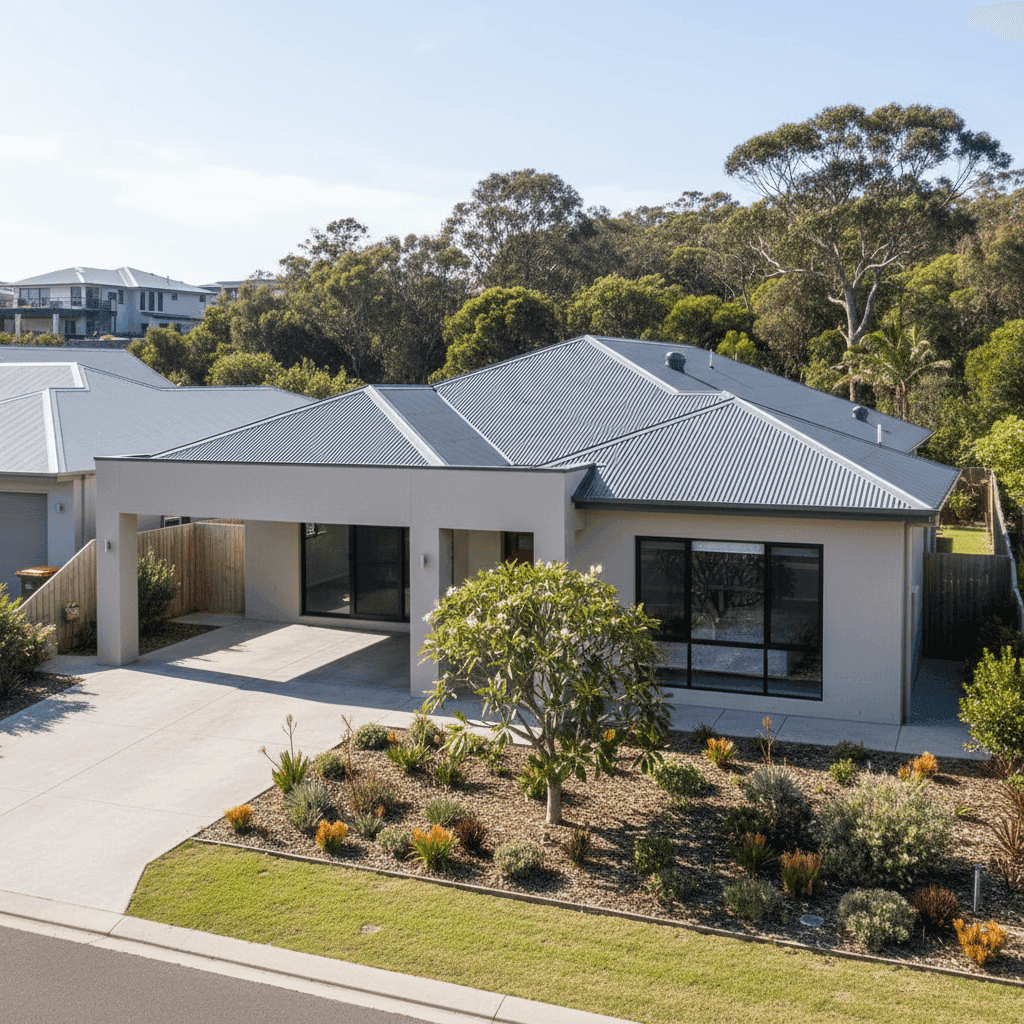
Nestled along the stunning Mid North Coast of New South Wales, South West Rocks is a sought-after coastal town known for its beaches, national parks, and relaxed lifestyle. But owning a free standing home in this picturesque postcode (2431) comes with its own set of insurance considerations — and if you've recently received a quote, it's worth understanding exactly what you're paying for and whether the price stacks up.
This article breaks down a recent home and contents insurance quote for a 2-bedroom, 2-bathroom free standing home in South West Rocks, comparing it against local, state, and national benchmarks to help you make a more informed decision.
---
Is This Quote Fair?
The quote in question comes in at $3,553 per year (or $341/month), covering a building sum insured of $591,000 and $15,000 in contents, with a $500 excess on both building and contents claims.
Our price rating for this quote is EXPENSIVE — Above Average.
To put that in context, the average home insurance premium across South West Rocks sits at $2,348 per year, with a median of $2,030. This quote is roughly 51% above the suburb average and nearly 75% above the suburb median — a significant gap that's worth investigating before simply accepting the renewal or going ahead with this insurer.
Even compared to the suburb's 75th percentile of $2,642 per year, this quote exceeds that threshold by over $900. That means this premium is more expensive than approximately 75% of comparable quotes sourced in the area — a strong signal that shopping around could yield meaningful savings.
---
How South West Rocks Compares
Understanding where South West Rocks sits in the broader insurance landscape helps put individual quotes in perspective. You can explore the full data on our South West Rocks insurance stats page.
| Benchmark | Premium |
|---|---|
| This Quote | $3,553/yr |
| Suburb Average (2431) | $2,348/yr |
| Suburb Median (2431) | $2,030/yr |
| LGA Average (Kempsey) | $2,564/yr |
| NSW State Median | $3,770/yr |
| NSW State Average | $9,528/yr |
| National Median | $2,764/yr |
| National Average | $5,347/yr |
A few things stand out here. First, the NSW state average of $9,528 is heavily skewed by high-risk and high-value properties across the state — the median of $3,770 is a far more representative figure. Interestingly, this quote actually sits below the NSW state median, which provides some reassurance that it's not outlandishly priced in a statewide context.
However, when benchmarked against the national median of $2,764 and the local suburb median of $2,030, the quote does look elevated. The Kempsey LGA average of $2,564 further reinforces that premiums in this region tend to be more moderate — making this quote stand out as above the norm for the area.
---
Property Features That Affect Your Premium
Several characteristics of this property will be influencing the premium, some favourably and some less so.
Newer construction (2021): A home built in 2021 is relatively new and should benefit from modern building codes, better structural integrity, and updated safety standards. Insurers generally view newer builds more favourably, which can help keep premiums down.
Steel/Colorbond roof: This is considered a durable and low-maintenance roofing material that performs well in coastal environments. It's resistant to corrosion and fire, which insurers typically reward with more competitive pricing compared to older or more vulnerable roofing types.
Slab foundation: A concrete slab is a stable and widely used foundation type in Australia. It's generally viewed as low-risk by insurers compared to suspended timber or older foundation styles.
Timber/Laminate flooring: While aesthetically popular, timber and laminate flooring can be more expensive to replace or repair than tiles following a water or flood event. This may contribute marginally to the contents or building valuation.
"Other" external walls: The classification of "Other" for external wall material introduces a degree of uncertainty. Non-standard wall materials — such as composite panels, rendered finishes, or alternative cladding — can sometimes attract higher premiums due to less predictable repair costs or fire ratings. It's worth clarifying with your insurer exactly how this is classified and whether it's affecting your quote.
Building sum insured of $591,000: For a 139 sqm home, this equates to roughly $4,252 per square metre — on the higher end for a standard build, though coastal construction costs in NSW can be elevated. It's worth verifying this figure with a building cost estimator to ensure you're not over-insured, which directly impacts your premium.
Low contents value ($15,000): The relatively modest contents cover is unlikely to be a major driver of the overall premium, though it's worth reviewing whether this amount adequately reflects the value of your belongings.
---
Tips for Homeowners in South West Rocks
1. Compare multiple quotes before committing With this quote sitting above the suburb average and 75th percentile, there's a real opportunity to find more competitive pricing. Use a comparison platform like CoverClub to get multiple quotes side by side — even saving $500–$1,000 per year is well worth 15 minutes of your time.
2. Review your building sum insured At $591,000 for a 139 sqm home, it's worth double-checking your rebuild cost estimate. Over-insuring means you're paying a higher premium than necessary, while under-insuring leaves you exposed in the event of a total loss. Many insurers offer free building calculators, or you can consult a quantity surveyor for a more precise figure.
3. Clarify your wall construction type The "Other" wall category can be a grey area with insurers. Ask your insurer specifically how they've classified your external walls and whether a different classification might be more accurate — this could potentially reduce your premium.
4. Ask about discounts and bundling Some insurers offer discounts for things like security systems, claim-free history, or paying annually rather than monthly. It's also worth asking whether bundling home and contents with the same insurer (which this quote already does) is delivering a meaningful discount compared to insuring them separately.
---
Ready to Find a Better Deal?
If this quote feels a little steep, you're not alone — and the data backs you up. CoverClub makes it easy to compare home and contents insurance quotes from multiple Australian insurers in one place, so you can see exactly where your money is going and find a policy that suits your home and your budget.