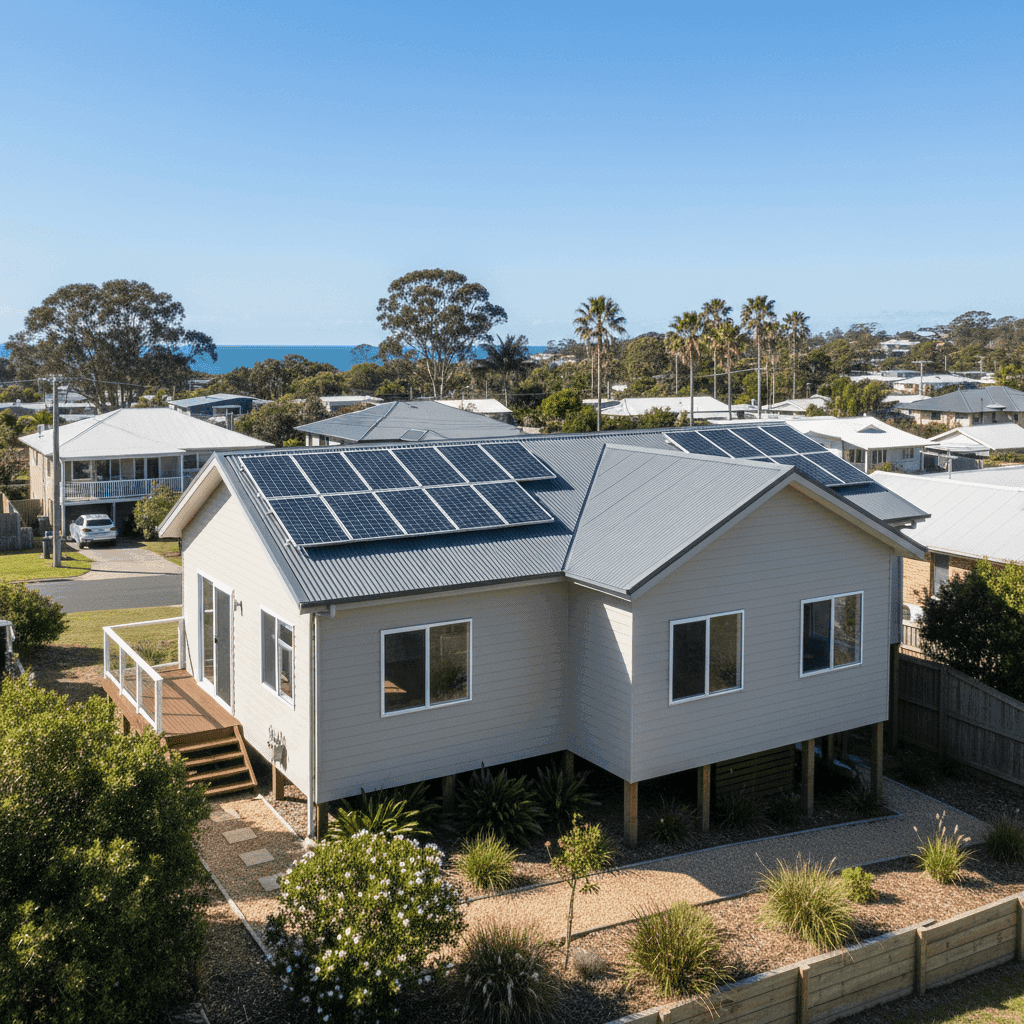
South West Rocks is a coastal gem on the Mid North Coast of New South Wales — known for its pristine beaches, relaxed lifestyle, and a tight-knit community. It's also the kind of location where home insurance deserves careful attention. This article breaks down a real home and contents insurance quote for a two-bedroom free-standing home in South West Rocks (postcode 2431), helping you understand whether the price stacks up and what factors are shaping the premium.
---
Is This Quote Fair?
The annual premium for this property came in at $2,234 per year (or $218/month), covering a building sum insured of $538,000 and contents valued at $50,000. The building excess is $2,000 and the contents excess is $1,000.
Our pricing analysis rates this quote as Fair — Around Average. That's actually a reasonably positive result for a coastal NSW property. Here's why:
- The quote sits below the suburb average of $2,853/yr and the suburb median of $2,830/yr for South West Rocks.
- It falls within the 25th–75th percentile range for the suburb ($1,925/yr to $3,589/yr), landing comfortably in the lower-middle band.
- Compared to the NSW state average of $3,801/yr, this quote is approximately $1,567 cheaper — a meaningful saving.
- Against the national average of $2,965/yr, the quote is also below par, coming in around $731 less per year.
In short, while there's always room to find a better deal, this quote is competitive relative to both local and broader benchmarks. Homeowners in coastal NSW often face elevated premiums due to weather exposure and proximity to water, so landing below the suburb average is a solid outcome.
---
How South West Rocks Compares
To put this quote in proper context, it helps to zoom out and look at the bigger picture. Based on data from 57 quotes collected for South West Rocks (NSW 2431):
| Benchmark | Premium |
|---|---|
| This Quote | $2,234/yr |
| Suburb Average | $2,853/yr |
| Suburb Median | $2,830/yr |
| Suburb 25th Percentile | $1,925/yr |
| Suburb 75th Percentile | $3,589/yr |
| LGA (Kempsey) Average | $3,539/yr |
| NSW State Average | $3,801/yr |
| National Average | $2,965/yr |
What stands out here is the significant gap between the NSW state average ($3,801/yr) and the national average ($2,965/yr). NSW homeowners generally pay more for insurance than the national norm, largely driven by extreme weather events, bushfire risk corridors, and flood-prone coastal zones. The Kempsey LGA average of $3,539/yr further underscores that this part of the Mid North Coast carries above-average risk in the eyes of insurers.
Given all that, a quote of $2,234/yr for a coastal property in this region is genuinely competitive.
---
Property Features That Affect Your Premium
Every property is different, and insurers assess a wide range of characteristics when calculating your premium. Here's how the features of this particular home likely influence its pricing:
Construction Materials
The home is built with Hardiplank/Hardiflex external walls and a steel/Colorbond roof — both of which are viewed favourably by insurers. Fibre cement cladding (like Hardie products) is durable, fire-resistant, and low-maintenance. Colorbond steel roofing is similarly robust, resistant to corrosion, and well-suited to coastal environments where salt air can degrade lesser materials. These are genuine premium-reducing factors.
Stump Foundation
The property sits on stumps, which is common in coastal and flood-adjacent areas of NSW. While stumped foundations can offer some resilience in minor flood events (by elevating the floor level), they can also be a consideration for insurers assessing structural risk. The impact here is likely modest but worth noting.
Timber and Laminate Flooring
Timber and laminate floors are moderately susceptible to water damage, which can push contents and building repair costs higher in the event of a flood or burst pipe. This may be a minor upward factor on the premium.
Solar Panels
The presence of solar panels adds to the replacement value of the home and can slightly increase premiums — but it also signals a modern, well-maintained property, which insurers generally view positively. It's worth confirming with your insurer that solar panels are explicitly covered under your building policy.
Construction Year
Built in 2014, this is a relatively modern home. Newer builds typically comply with more recent Australian Standards for construction, which can reduce risk in the eyes of underwriters and contribute to a more competitive premium.
No Pool, No Ducted Climate Control
The absence of a pool and ducted air conditioning removes two common sources of liability and mechanical breakdown claims — both of which can nudge premiums upward. Keeping the property's risk profile simple works in the homeowner's favour here.
---
Tips for Homeowners in South West Rocks
Whether you're reviewing an existing policy or shopping around for the first time, here are four practical tips tailored to homeowners in this area:
- Review your sum insured annually. Building costs in regional NSW have risen significantly in recent years. Make sure your $538,000 building sum insured reflects current rebuild costs — not the purchase price or last year's estimate. Underinsurance is one of the most common and costly mistakes homeowners make.
- Ask about solar panel coverage explicitly. Not all standard home insurance policies automatically cover solar panel systems as part of the building. Confirm with your insurer that your panels, inverter, and associated wiring are included — and check whether storm or hail damage is covered.
- Consider your excess settings carefully. This policy carries a $2,000 building excess. A higher excess typically lowers your annual premium, but make sure you can comfortably cover that amount out of pocket if you need to make a claim. For contents, the $1,000 excess is more standard.
- Compare quotes regularly — at least once a year. The insurance market shifts constantly, and loyalty doesn't always pay. The suburb data shows a wide spread between the 25th and 75th percentile ($1,925/yr to $3,589/yr), which means there's real money to be saved by shopping around. Use a comparison tool to see what multiple insurers would charge for the same coverage.
---
Find a Better Deal with CoverClub
Whether this quote is your current policy or one you're considering, it pays to see what else is out there. CoverClub makes it easy to compare home and contents insurance quotes across multiple insurers — so you can be confident you're getting the right cover at a competitive price. Get a quote today and see how much you could save on your South West Rocks home insurance.