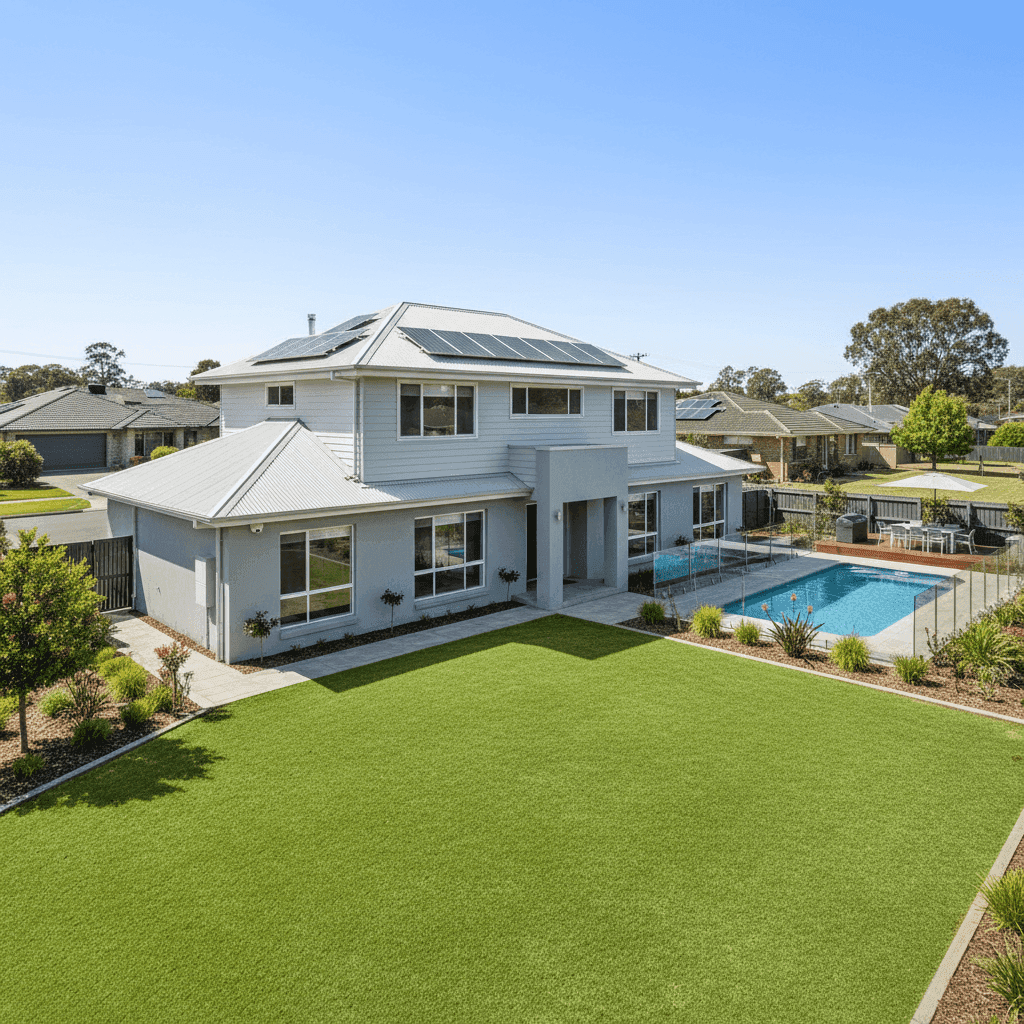
South Windsor, nestled in the Hawkesbury region of New South Wales, is a well-established suburb with a mix of older character homes and more modern builds. This analysis looks at a building-only insurance quote for a four-bedroom, two-bathroom free standing home in the area — a property that carries a few unique characteristics worth unpacking when it comes to understanding your premium.
---
Is This Quote Fair?
The quote in question comes in at $2,243 per year (or roughly $215 per month) for building-only cover, with a $1,000 building excess and a sum insured of $200,000.
Our price rating for this quote is FAIR — Around Average, and the data backs that up. The suburb average premium for South Windsor sits at $2,198 per year, meaning this quote lands just $45 above the local average. It's comfortably within the middle of the pack — above the suburb median of $1,720 but well below the 75th percentile of $2,606. In plain terms: roughly half of comparable properties in the area are quoted less, but a quarter are quoted noticeably more.
For a home of this age (built in 1953), with stump foundations, timber flooring, and fibre cement cladding, a premium in this range is broadly reasonable. Older homes with non-standard construction features often attract higher premiums, so landing near the suburb average is actually a positive outcome here.
---
How South Windsor Compares
To put this quote in proper context, it helps to zoom out and look at the broader picture. You can explore the full data on the South Windsor suburb stats page, the NSW state stats page, and national home insurance statistics.
| Benchmark | Average Premium | Median Premium |
|---|---|---|
| South Windsor (2756) | $2,198/yr | $1,720/yr |
| NSW (State) | $9,528/yr | $3,770/yr |
| National | $5,347/yr | $2,764/yr |
| Hawkesbury LGA | $11,842/yr | — |
A few things stand out immediately. The NSW state average of $9,528 is extraordinarily high — heavily skewed by flood-prone and bushfire-risk areas across regional New South Wales. The Hawkesbury LGA average of $11,842 is even more striking, reflecting the significant flood risk across much of the broader Hawkesbury area.
South Windsor's suburb average of $2,198 is considerably more moderate, suggesting that this particular pocket of the suburb carries a lower risk profile than many surrounding areas. The national median of $2,764 is actually higher than the South Windsor median of $1,720, which is a reassuring sign for local homeowners — though individual property features can push premiums in either direction.
At $2,243, this quote sits just above the national median, which is a reasonable outcome given the property's age and construction characteristics.
---
Property Features That Affect Your Premium
Several features of this property are worth discussing, as they each play a role in how insurers assess and price the risk.
Age and construction (built 1953): Homes built in the 1950s are generally considered higher risk by insurers. Ageing electrical wiring, plumbing, and structural components can increase the likelihood of a claim. That said, many older homes have been significantly updated over the decades, which can partially offset this risk.
Hardiplank / Hardiflex external walls: Fibre cement cladding is generally well-regarded by insurers — it's fire-resistant, durable, and less susceptible to rot than timber weatherboards. This is a positive factor that likely keeps the premium more competitive than it might otherwise be for a home of this era.
Steel / Colorbond roof: Colorbond roofing is a popular and insurer-friendly choice in Australia. It's lightweight, durable, and performs well in both fire and storm conditions. This is another feature that works in the homeowner's favour.
Stump foundations: Homes on stumps can be more vulnerable to movement, particularly in areas with reactive soils or moisture variation. Insurers may factor this in, especially for older properties where the stumps themselves may be original timber rather than concrete or steel.
Timber and laminate flooring: These materials are generally straightforward to insure but can be more costly to replace or repair after a water damage event compared to tiles.
Swimming pool: Pools add replacement cost to the sum insured calculation and can also introduce liability considerations. They're a standard feature in many Australian backyards, but they do contribute to overall premium.
Solar panels: Solar systems are increasingly common and most insurers now include them as part of the building sum insured. They add to the replacement value of the home and may slightly increase the premium, though the effect is usually modest.
Ducted climate control: Ducted systems are a significant fixed installation and add to the cost of rebuilding or repairing the home. This is factored into the sum insured and can nudge premiums upward.
---
Tips for Homeowners in South Windsor
1. Review your sum insured carefully A sum insured of $200,000 for a 130 sqm home may be on the lower end, depending on local building costs. Construction costs in NSW have risen sharply in recent years. Use a building cost calculator or speak to a quantity surveyor to ensure you're not underinsured — the consequences of underinsurance after a total loss can be severe.
2. Consider the flood risk context While this particular suburb appears to carry a lower flood risk than many parts of the Hawkesbury LGA, it's worth confirming your policy's flood cover status. The broader Hawkesbury region has experienced significant flood events, and some insurers may apply flood exclusions or loadings depending on the specific location. Always read the Product Disclosure Statement carefully.
3. Maintain your home's older components For a home built in 1953, proactive maintenance of electrical systems, plumbing, and roof penetrations can reduce the risk of a claim — and in some cases, evidence of good maintenance may support a more favourable renewal premium. Some insurers also offer discounts for homes with updated wiring or plumbing.
4. Shop around at renewal time Loyalty doesn't always pay in home insurance. Premiums can vary significantly between insurers for the same property, and the market shifts from year to year. Using a comparison platform like CoverClub at renewal time takes only a few minutes and can surface meaningfully cheaper options without sacrificing cover quality.
---
Compare Your Home Insurance Quote Today
Whether you're assessing a new quote or reviewing your current policy, CoverClub makes it easy to see how your premium stacks up against real data from your suburb, state, and across Australia. Get a home insurance quote now and find out if you're paying a fair price — or if there's a better deal waiting for you.