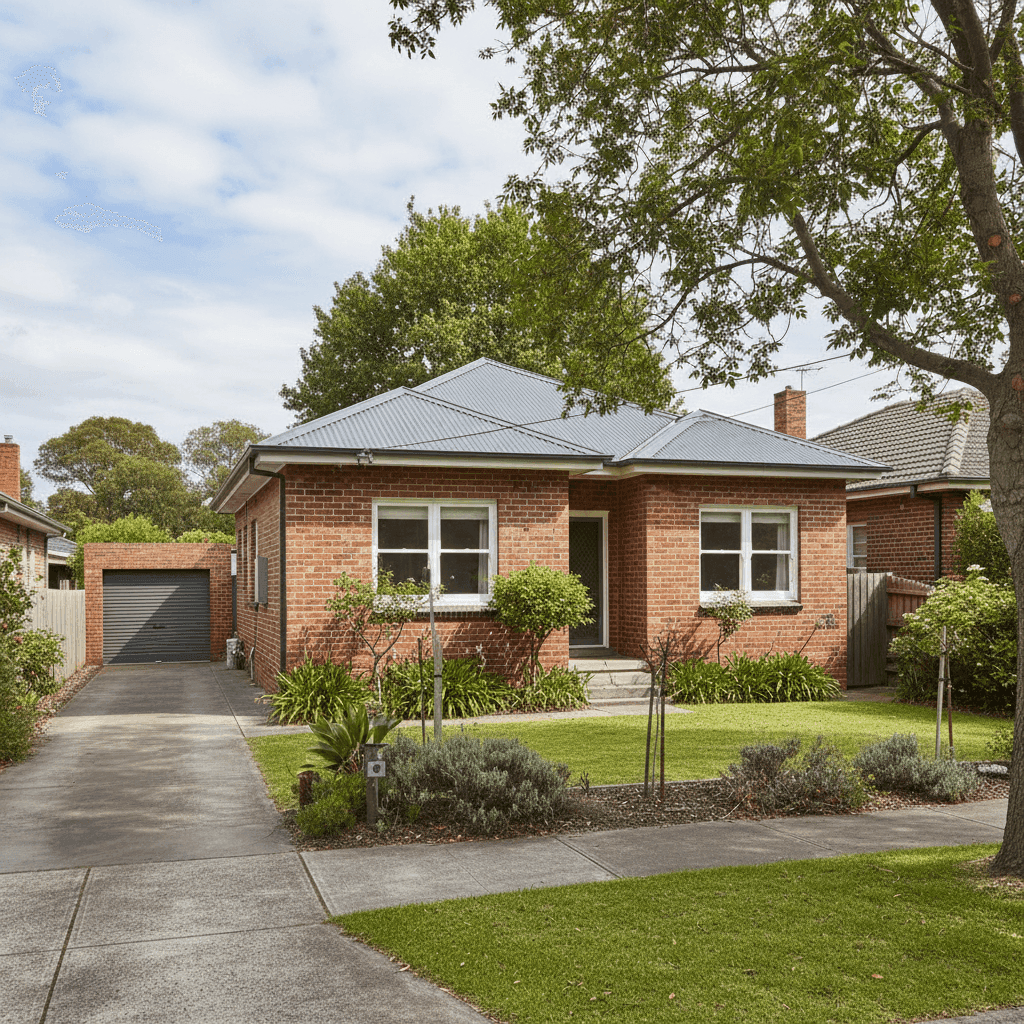
South Yarra is one of Melbourne's most sought-after inner suburbs — a leafy, cosmopolitan pocket of Victoria where period homes sit comfortably alongside modern developments. If you own a free standing home here, you already know the suburb commands a premium. But should your home insurance bill reflect that same prestige pricing? This article breaks down a recent building-only insurance quote for a 2-bedroom, 1-bathroom free standing home in South Yarra (VIC 3141) and puts the numbers into context so you can make a more informed decision.
---
Is This Quote Fair?
The quote in question comes in at $2,402 per year (or $230 per month) for building-only cover, with a sum insured of $894,669 and a standard $1,000 excess. Our price rating for this quote is Expensive — Above Average.
That rating isn't arbitrary. Based on comparison data for South Yarra, the suburb average annual premium sits at $1,889, and the median is $2,016. This quote lands above the 75th percentile threshold of $2,191 — meaning it's pricier than at least three-quarters of comparable quotes in the area.
In plain terms: most South Yarra homeowners with similar properties are paying less. That doesn't necessarily mean this quote is wrong — factors like the specific insurer, the sum insured, and individual underwriting criteria all play a role — but it does suggest there's room to shop around.
---
How South Yarra Compares
To put this quote in broader perspective, here's how South Yarra stacks up against Victorian and national benchmarks:
| Benchmark | Average Premium | Median Premium |
|---|---|---|
| South Yarra (3141) | $1,889/yr | $2,016/yr |
| LGA (Melbourne) | $2,815/yr | — |
| Victoria | $3,000/yr | $2,718/yr |
| National | $5,347/yr | $2,764/yr |
A few things stand out here. First, South Yarra premiums are notably lower than the broader Victorian state average of $3,000 per year — a reflection of the suburb's relatively low exposure to natural hazards like bushfire, flooding, and cyclones. Inner Melbourne suburbs tend to benefit from this in their insurance pricing.
Second, the national average of $5,347 looks eye-watering by comparison, but it's heavily influenced by high-risk regions in Queensland, Western Australia, and Northern Australia where cyclone and flood exposure significantly inflates premiums. The national median of $2,764 is a more representative figure for the typical Australian homeowner.
At $2,402, this quote sits above the South Yarra suburb average and median, but comfortably below both the Victorian and national averages. It's worth noting that the suburb sample size is 11 quotes — a reasonable dataset, though a larger sample would provide even greater confidence in those benchmarks.
---
Property Features That Affect Your Premium
Every property has its own risk profile, and insurers weigh a range of characteristics when calculating your premium. Here's how the features of this particular home factor in:
Brick Veneer Walls Brick veneer is one of the more common wall constructions across Melbourne's postwar housing stock, and insurers generally view it favourably. It offers solid fire resistance and structural durability, which can help keep premiums reasonable compared to weatherboard or timber-clad homes.
Steel / Colorbond Roof A Colorbond steel roof is considered a low-maintenance, durable option. It performs well in fire conditions and is resistant to the kind of storm damage that can affect older terracotta or slate tiles. This is a positive factor from an underwriting perspective.
Construction Year: 1957 At nearly 70 years old, this home sits firmly in the postwar era. Older properties can attract slightly higher premiums due to the potential for aging electrical wiring, plumbing, and structural components. Insurers may also factor in the cost of restoring period features to their original standard, which can push the sum insured — and therefore the premium — higher.
Slab Foundation A concrete slab foundation is structurally sound and generally well-regarded by insurers. It eliminates the underfloor moisture and pest risks associated with older stumped or suspended foundations, which are common in homes of this era.
Timber / Laminate Flooring Timber flooring is a premium feature that contributes to the overall rebuild cost. While it adds character and value, it also means higher material and labour costs in the event of a claim — something that flows through to the sum insured calculation.
Ducted Climate Control The presence of ducted heating and cooling adds to the overall replacement value of the home. These systems are expensive to install and are factored into the building sum insured, which at $894,669 is substantial for a 105 sqm home — though not unusual for South Yarra given local construction costs.
No Pool, No Solar Panels The absence of a pool and solar panels simplifies the risk profile. Both features can add complexity and cost to an insurance policy, so their absence here may have a modest downward effect on the premium.
---
Tips for Homeowners in South Yarra
If you're looking to ensure you're getting the best value on your building insurance, here are a few practical steps worth considering:
- Compare at least three quotes. The spread between the 25th percentile ($1,610/yr) and 75th percentile ($2,191/yr) in South Yarra is significant. Shopping around — even just across three insurers — could save you several hundred dollars annually without reducing your level of cover.
- Review your sum insured carefully. At $894,669 for a 105 sqm home, the building sum insured is a key driver of the premium. Make sure it reflects the actual cost to rebuild (not the market value), and use a building cost calculator to verify the figure. Over-insuring unnecessarily inflates your premium; under-insuring leaves you exposed.
- Ask about your excess options. A $1,000 excess is fairly standard, but some insurers offer the ability to increase your excess in exchange for a lower annual premium. If you're unlikely to make small claims, this trade-off can be worthwhile.
- Check what's included in building cover. Building-only policies vary in what they cover beyond the structure itself — some include fixed appliances, in-ground services, and retaining walls, while others don't. Understanding exactly what your policy covers helps you avoid nasty surprises at claim time.
---
Ready to Find a Better Deal?
Whether this quote is your first or your fifth, it pays to compare. CoverClub makes it easy to see how your premium stacks up against real data from your suburb, your state, and across Australia. Get a building insurance quote today and find out whether you're paying a fair price — or whether it's time to switch.