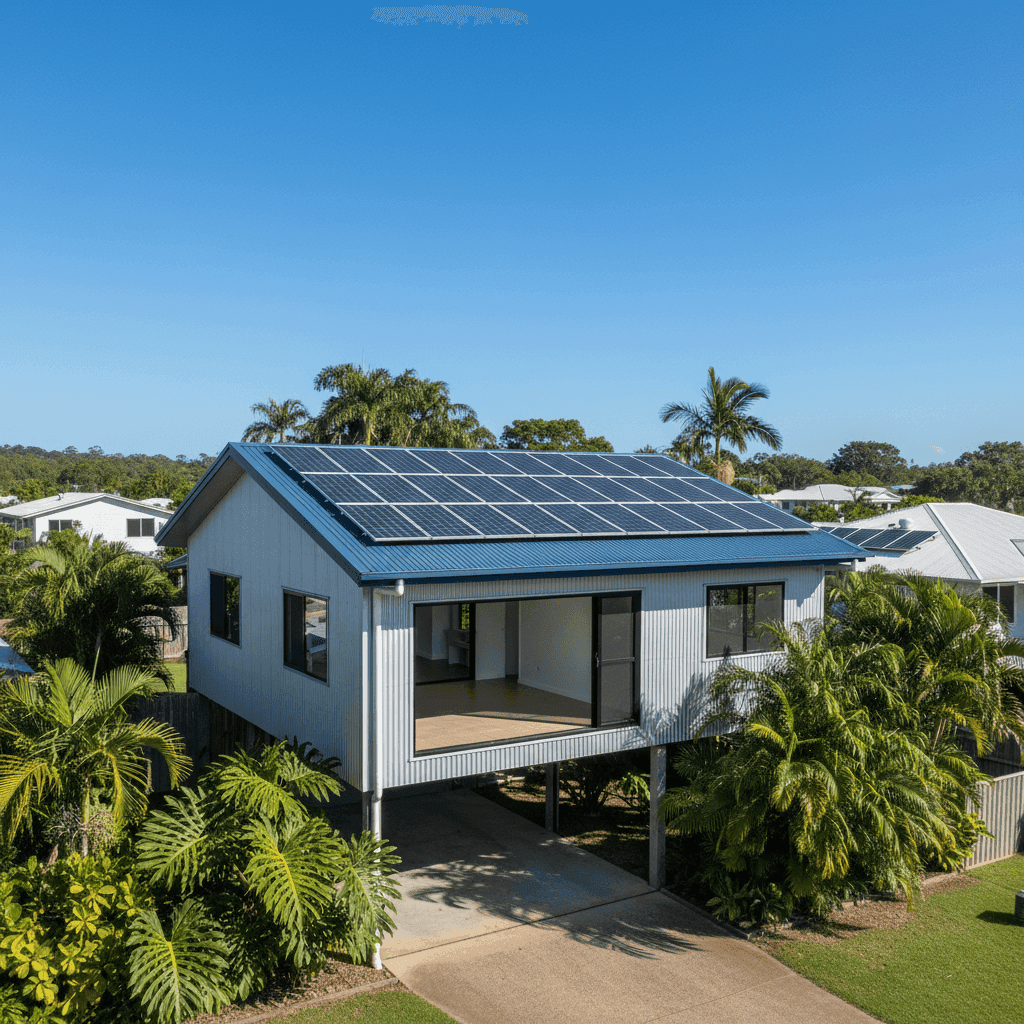
If you own a free standing home in Southport, NT 0822, you already know that insuring a property in the Northern Territory comes with its own unique set of challenges — and costs. This article breaks down a real home and contents insurance quote for a 2-bedroom, 2-bathroom free standing home in Southport, helping you understand what's driving the premium and whether there's room to save.
---
Is This Quote Fair?
The quote in question comes in at $3,964 per year (or $380/month) for combined home and contents cover, with a building sum insured of $800,000 and contents valued at $50,000. Both the building and contents excess are set at $1,000.
Our price rating for this quote is EXPENSIVE — above average. That assessment is based on how the premium stacks up against comparable properties in the area. The suburb's average annual premium sits at $3,165, and the median is $2,949 — meaning this quote is running roughly $800 above the local average and over $1,000 above the suburb median.
That's a meaningful gap. While no two properties are identical and insurers weigh risk factors differently, a premium this far above the local benchmark is a signal worth investigating. It doesn't necessarily mean the cover is wrong for your situation, but it does suggest that shopping around could yield a more competitive price.
---
How Southport Compares
To put this quote in proper context, here's how Southport stacks up across different benchmarks:
| Benchmark | Annual Premium |
|---|---|
| This Quote | $3,964 |
| Suburb Average (Southport) | $3,165 |
| Suburb Median (Southport) | $2,949 |
| Suburb 25th Percentile | $2,709 |
| Suburb 75th Percentile | $3,463 |
| LGA Average (Palmerston) | $3,477 |
| NT State Average | $3,709 |
| NT State Median | $3,580 |
| National Average | $2,965 |
| National Median | $2,716 |
A few things stand out here. First, even the NT state average of $3,709 is below this quote — so the premium isn't just expensive for Southport, it's above the broader Northern Territory benchmark too. Second, the quote exceeds the 75th percentile for the suburb ($3,463), meaning it's pricier than at least three-quarters of comparable quotes in the area.
Compared to the national average of $2,965, this quote is roughly 34% more expensive. That said, it's worth acknowledging that NT premiums are generally elevated compared to many other parts of Australia, largely due to the region's exposure to extreme weather events.
You can explore more local data on the Southport insurance stats page, compare it against NT-wide figures, or see where it sits against national benchmarks.
---
Property Features That Affect Your Premium
Several characteristics of this property have a direct bearing on what insurers will charge. Understanding these factors can help you have a more informed conversation with your insurer — or when comparing alternatives.
Cyclone Risk Zone
This is arguably the single biggest premium driver for properties in Southport. The NT is one of Australia's most cyclone-exposed regions, and insurers price that risk heavily into their calculations. Cyclone cover typically includes damage from high winds, storm surge, and associated flooding — all of which are costly to underwrite in this part of the country.
Construction Materials
The home features aluminium external walls and a steel/Colorbond roof. Both materials are generally well-regarded by insurers for their durability and resistance to fire and corrosion. Colorbond roofing in particular holds up well in tropical climates. These features may actually be working in the homeowner's favour to some degree — a less resilient construction could push premiums even higher.
Stump Foundation
The property sits on stumps, which is common in older NT homes built to allow airflow beneath the structure and manage moisture in tropical conditions. While stumps are a practical and widely accepted foundation type in the region, some insurers factor in the age and condition of the stumps when assessing risk, particularly for homes built in 1991.
Solar Panels
With solar panels installed, there's an added layer of complexity for insurers. Panels represent a significant asset on the roof and can be damaged by hail, wind, or falling debris. It's important to confirm with your insurer whether the solar system is covered under the building policy and, if so, to what value.
Building Age and Size
Built in 1991, the home is over 30 years old. Older homes can attract higher premiums due to the increased likelihood of wear-related claims and the cost of sourcing period-appropriate materials for repairs. At 105 sqm, the building size is modest, but the $800,000 sum insured reflects current rebuild costs in the NT, where labour and materials are more expensive than in many southern states.
Tile Flooring and Standard Fittings
Tile flooring is a practical and durable choice for tropical climates — easy to clean and resistant to moisture damage. Combined with standard fittings, the interior fit-out doesn't significantly inflate the premium, which is a positive.
---
Tips for Homeowners in Southport
1. Compare Multiple Quotes Annually
Insurance premiums in the NT can vary significantly between providers, particularly for cyclone-exposed properties. Don't assume your renewal price is the best available — use a comparison tool like CoverClub to benchmark your quote each year.
2. Review Your Sum Insured Carefully
An $800,000 building sum insured for a 105 sqm home reflects the genuine cost of rebuilding in the NT, but it's worth reviewing this figure annually. Underinsurance is a serious risk — if rebuild costs rise and your sum insured doesn't keep pace, you could face a shortfall at claim time.
3. Confirm Solar Panel Coverage
Ask your insurer explicitly whether your solar panels are covered, under what circumstances, and up to what value. Some policies include panels as part of the building; others require a separate endorsement. Given the cost of replacing a solar system, this is not a detail to overlook.
4. Ask About Cyclone Mitigation Discounts
Some insurers offer reduced premiums for homes that have been cyclone-proofed or upgraded to meet current building standards. If the home has had any structural improvements — such as roof tie-downs, reinforced windows, or upgraded fixings — it's worth raising this with your insurer to see if it affects your premium.
---
Ready to Find a Better Deal?
If this quote feels steep, you're not alone — and you're not stuck with it. CoverClub makes it easy to compare home and contents insurance quotes from multiple providers so you can see exactly where your money is going and whether a better option exists. Get a quote today and find out what Southport homeowners are actually paying for cover.