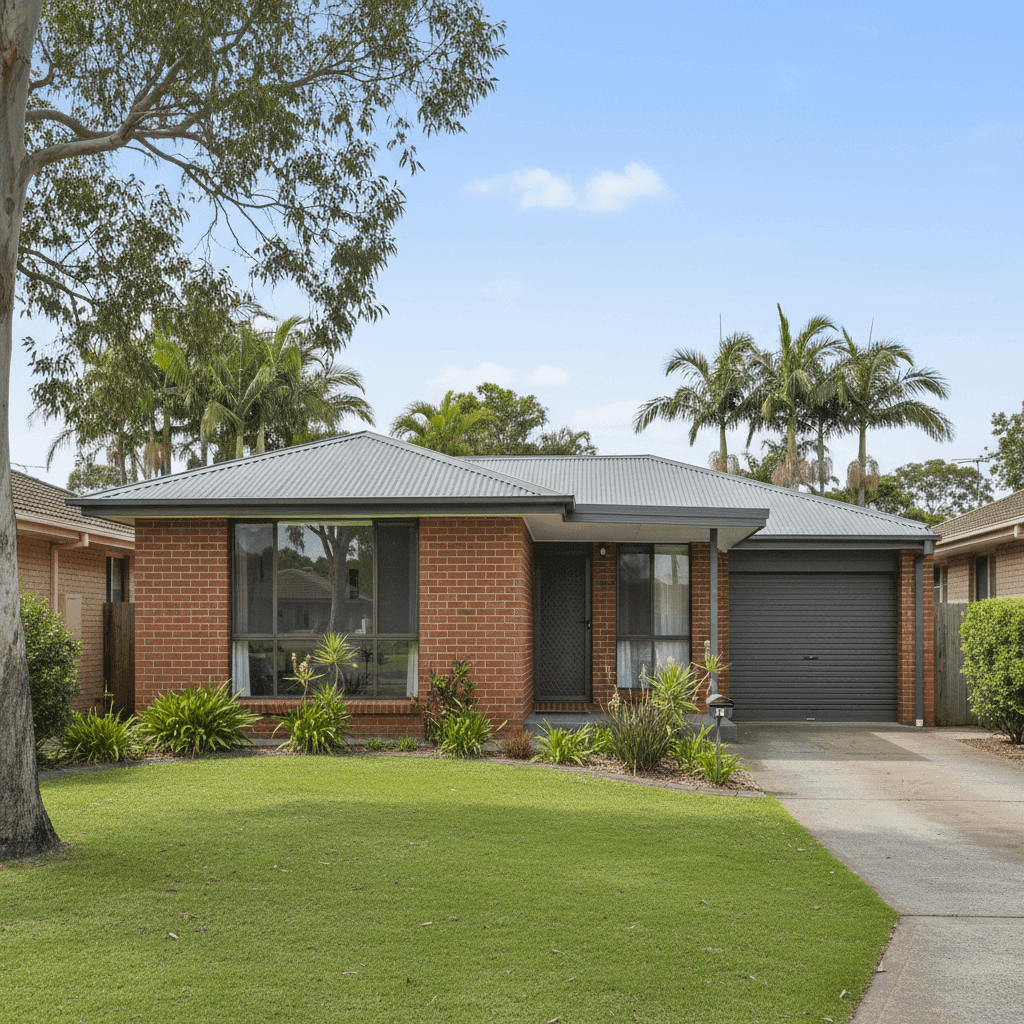
If you own a free standing home in Southport, QLD 4215, you're likely aware that insurance costs on the Gold Coast can vary enormously. This article breaks down a real home and contents insurance quote for a three-bedroom, brick veneer property in the suburb — and puts that number in context against local, state, and national benchmarks so you can judge whether you're getting a fair deal.
---
Is This Quote Fair?
The quote in question comes in at $1,323 per year (or $132/month) for combined home and contents cover, with a building sum insured of $450,000 and contents valued at $20,000. The building excess sits at $3,000, while the contents excess is a more modest $500.
Our price rating for this quote is CHEAP — below average for the Southport area. That's genuinely good news for the homeowner. To put it plainly: this premium sits well below the suburb's 25th percentile of $1,863/year, meaning it's cheaper than at least three-quarters of comparable quotes collected in the area. In a suburb where the average annual premium reaches $4,415 and the median lands at $2,903, paying $1,323 represents a significant saving.
It's worth noting that a higher building excess of $3,000 does contribute to keeping the premium lower — you'd be covering more out of pocket in the event of a building claim. Whether that trade-off suits your financial situation is a personal decision, but for homeowners with strong emergency savings, it's a sensible lever to pull.
---
How Southport Compares
To appreciate just how competitive this quote is, it helps to zoom out and look at the broader picture. You can explore the full data on the Southport insurance stats page, the Queensland stats page, and national insurance statistics.
| Benchmark | Annual Premium |
|---|---|
| This quote | $1,323 |
| Southport 25th percentile | $1,863 |
| Southport median | $2,903 |
| Southport average | $4,415 |
| Gold Coast LGA average | $8,161 |
| QLD state average | $9,129 |
| QLD state median | $3,903 |
| National average | $5,347 |
| National median | $2,764 |
A few things stand out here. First, the Gold Coast LGA average of $8,161 is striking — nearly six times the cost of this particular quote. This reflects the significant flood, storm surge, and severe weather exposure across many parts of the Gold Coast, which pushes premiums up considerably for higher-risk properties. Second, Queensland's state average of $9,129 is the highest in the country, driven largely by cyclone-prone northern regions and flood-affected inland areas. Southport's own median of $2,903 is more moderate, sitting close to the national median of $2,764 — suggesting it's a reasonably insurable suburb by Queensland standards.
---
Property Features That Affect Your Premium
Several characteristics of this property work in the homeowner's favour when it comes to pricing.
Brick veneer construction is generally viewed favourably by insurers. While not as robust as full double-brick, brick veneer offers solid fire resistance and durability compared to weatherboard or fibre cement cladding — factors that can meaningfully reduce premiums.
Steel/Colorbond roofing is another positive. Colorbond is lightweight, corrosion-resistant, and performs well in storm conditions, making it a preferred roofing material for insurers operating in South East Queensland.
Slab foundation is standard and low-risk from an insurer's perspective, presenting fewer concerns around subsidence or moisture ingress compared to older timber stumps.
Timber and laminate flooring is worth keeping in mind for contents cover. These floor types can be susceptible to water damage, so it's sensible to check that your policy covers internal water damage events adequately.
The 1970 construction year is a mild consideration. Homes of this era may have older electrical wiring, plumbing, or roofing materials that haven't been updated. Insurers sometimes apply loadings to pre-1980 homes, though this property's modern Colorbond roof likely mitigates some of that concern.
Notably, this property has no pool, no solar panels, and no ducted climate control — all of which can add complexity and cost to a policy. Their absence helps keep things straightforward. The property is also outside a designated cyclone risk area, which is a meaningful factor in Queensland; cyclone cover can add hundreds of dollars to annual premiums for properties further north.
---
Tips for Homeowners in Southport
1. Review your building sum insured regularly. A $450,000 building sum insured for a 130 sqm home in Southport is worth double-checking against current construction costs. Building costs have risen sharply in recent years, and being underinsured at claim time can leave you significantly out of pocket. Use a building replacement cost calculator to verify your figure annually.
2. Consider whether your excess level suits your situation. The $3,000 building excess on this policy is on the higher side. While it keeps premiums down, make sure you have that amount readily accessible. If a major weather event causes building damage, you'll need to cover that excess before your insurer contributes.
3. Don't overlook contents coverage. A $20,000 contents sum may be sufficient for a modestly furnished home, but it's easy to underestimate the replacement value of furniture, appliances, clothing, and electronics. Walk through each room and tally up replacement costs — many Australians find they're underinsured on contents.
4. Shop around at renewal time. Even with a competitive quote like this one, premiums can shift significantly year to year. Insurers adjust their risk models, and loyalty doesn't always pay. Comparing quotes annually through a platform like CoverClub ensures you're not quietly slipping into a higher price bracket without realising it.
---
Ready to Compare?
Whether you're a first-time buyer or a long-term Southport resident, it pays to see what the market is offering. Get a home insurance quote at CoverClub and compare options side by side — it only takes a few minutes and could save you thousands each year.