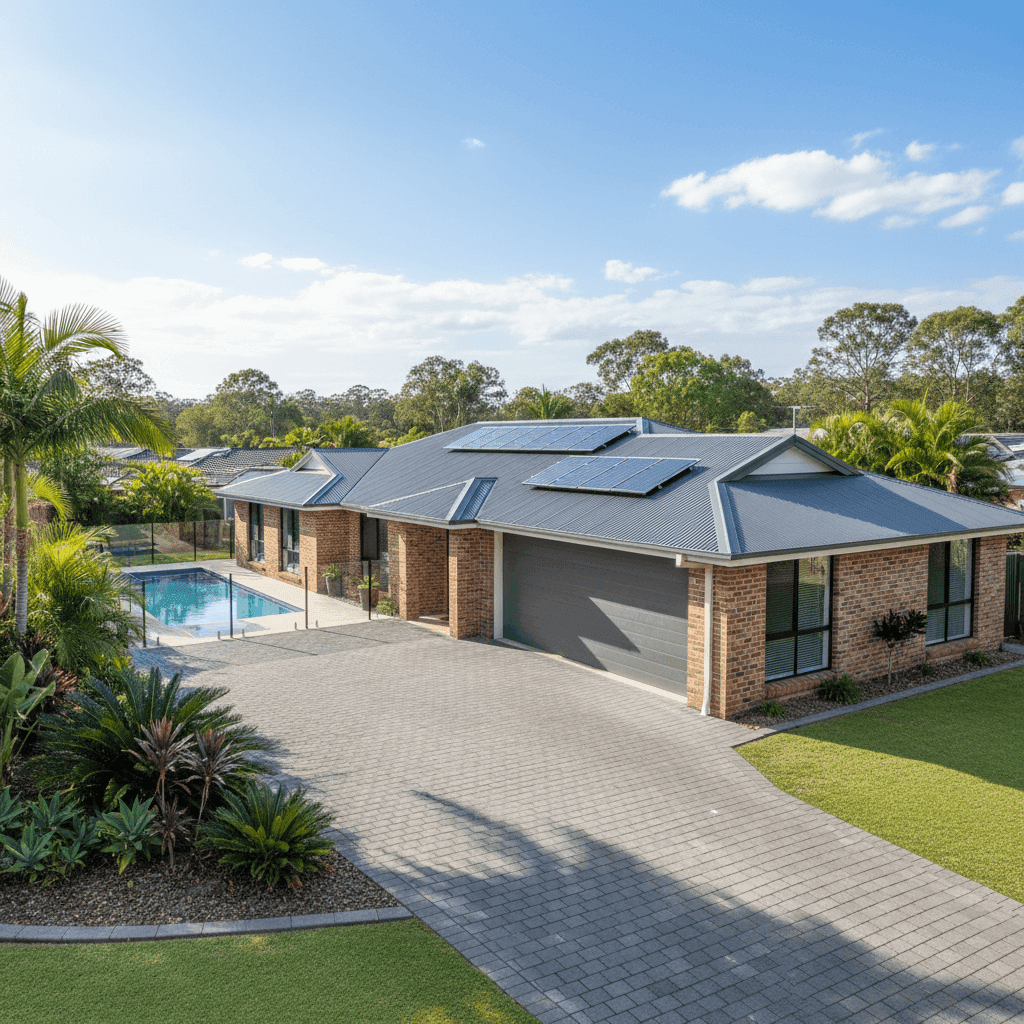
Southport, sitting at the heart of the Gold Coast, is one of Queensland's most dynamic and sought-after suburbs. Whether you're drawn by its proximity to the broadwater, its thriving retail precinct, or its strong rental market, owning a free standing home here is a significant investment — and protecting it with the right insurance matters. This article breaks down a recent building insurance quote for a five-bedroom, three-bathroom free standing home in Southport (QLD 4215), and puts that number in context against local, state, and national benchmarks.
---
Is This Quote Fair?
The annual premium for this property came in at $3,046 per year (or roughly $311 per month), covering building only with a sum insured of $935,000 and a building excess of $3,000.
CoverClub's pricing engine has rated this quote as FAIR — Around Average, and the data backs that up. Based on 54 quotes collected for Southport (4215), the suburb average sits at $4,415 per year, while the median — a more reliable indicator that isn't skewed by extreme outliers — lands at $2,903 per year. This quote of $3,046 sits comfortably between those two figures, placing it in the middle of the pack for the area.
The 25th percentile for Southport is $1,863/yr, meaning one quarter of comparable quotes come in below that figure — typically for smaller properties, lower sums insured, or policies with higher excesses. The 75th percentile is $4,469/yr, so this quote is well clear of the more expensive end of the market. In short, there's room to find cheaper cover, but this isn't an overpriced policy by any stretch.
---
How Southport Compares
To really understand whether this quote represents value, it helps to zoom out and look at the broader picture.
| Benchmark | Average Premium | Median Premium |
|---|---|---|
| Southport (4215) | $4,415/yr | $2,903/yr |
| Gold Coast LGA | $8,161/yr | — |
| Queensland | $9,129/yr | $3,903/yr |
| National | $5,347/yr | $2,764/yr |
The contrast between Southport's suburb-level figures and the broader Queensland state average of $9,129/yr is striking. Queensland as a whole carries significant insurance risk — driven largely by cyclone-prone regions in the north, flood-affected inland areas, and storm-exposed coastal zones. Southport benefits from its position in South East Queensland, which is generally considered lower risk than Far North Queensland. This likely explains why premiums in the suburb track considerably lower than the state average.
Compared to the national average of $5,347/yr, Southport's median of $2,903 is also favourable. The national median of $2,764 is close to the suburb median, suggesting that Southport — despite being a coastal Gold Coast suburb — sits broadly in line with typical Australian home insurance costs.
The Gold Coast LGA average of $8,161/yr is notably higher than Southport's suburb average, which suggests that other parts of the Gold Coast (particularly those with greater flood, storm surge, or inundation exposure) are pulling that LGA figure upward.
---
Property Features That Affect Your Premium
Several characteristics of this property will have influenced the final premium, both positively and negatively.
Brick veneer construction is generally viewed favourably by insurers. It offers solid fire resistance and durability, and is one of the more common wall types across Queensland's older suburbs. Homes built with full brick or brick veneer typically attract lower premiums than those clad in timber weatherboard or lightweight materials.
Steel/Colorbond roofing is another positive. Colorbond is a popular and well-regarded roofing material in Australia — it handles heat, wind, and rain effectively, and is considered lower risk than older materials like terracotta tiles (which can crack or dislodge) or fibrous cement sheeting.
Stump foundations are worth noting. This home, built in 1978, sits on stumps — a very common construction method in Queensland that allows airflow beneath the floor and helps manage moisture in the subtropical climate. However, insurers may factor in the age of the stumps and the potential for subsidence or movement over time, which can add a small loading to premiums.
Timber and laminate flooring is a standard feature in many Queensland homes. While not a major premium driver on its own, it can influence claims costs if water damage occurs — something insurers factor into their risk modelling.
The swimming pool adds replacement value and liability considerations to the policy. Pools are an insurable structure, and their presence can nudge premiums upward slightly, particularly if the pool equipment and surrounds are included in the sum insured.
Solar panels are increasingly common on Australian rooftops. They add value to the property and, if included in the building sum insured, contribute to the overall replacement cost. Some insurers cover solar panels automatically under building policies; others treat them as an optional extra — worth confirming with your insurer.
At 286 sqm, this is a generously sized home. Building size is one of the most direct drivers of sum insured — and a $935,000 sum insured reflects both the size and the cost of rebuilding a five-bedroom, three-bathroom home to a standard finish in today's construction market.
Notably, this property is not in a cyclone risk zone, which is a meaningful advantage for South East Queensland homeowners. Cyclone loading can significantly inflate premiums for properties further north.
---
Tips for Homeowners in Southport
1. Review your sum insured regularly. Construction costs in South East Queensland have risen sharply in recent years. A sum insured that was accurate three years ago may now fall short of actual rebuild costs. Use a building cost calculator or speak to a quantity surveyor to make sure your $935,000 figure still reflects current market rates — underinsurance is one of the most common and costly mistakes homeowners make.
2. Check what's included for your pool and solar panels. Not all building policies treat pools and solar panels the same way. Some insurers include them automatically; others require you to list them separately or pay an additional premium. Read your Product Disclosure Statement (PDS) carefully and confirm with your insurer that both are covered for their full replacement value.
3. Consider your excess carefully. This policy carries a $3,000 building excess. A higher excess typically reduces your annual premium — but it also means more out-of-pocket expense when you do make a claim. Think about what you could comfortably afford in the event of a significant weather event or accidental damage, and set your excess accordingly.
4. Shop around at renewal time. A "Fair" rating means this quote is competitive, but it doesn't mean it's the best available. The insurance market is dynamic, and premiums can vary significantly between providers for the same property. Making it a habit to compare quotes annually — especially before your renewal date — can save hundreds of dollars over time.
---
Compare Your Home Insurance with CoverClub
Whether you're reviewing an existing policy or shopping for the first time, CoverClub makes it easy to see how your premium stacks up. Get a quote today at CoverClub and compare real pricing data for your suburb — so you can make a confident, informed decision about protecting your home.