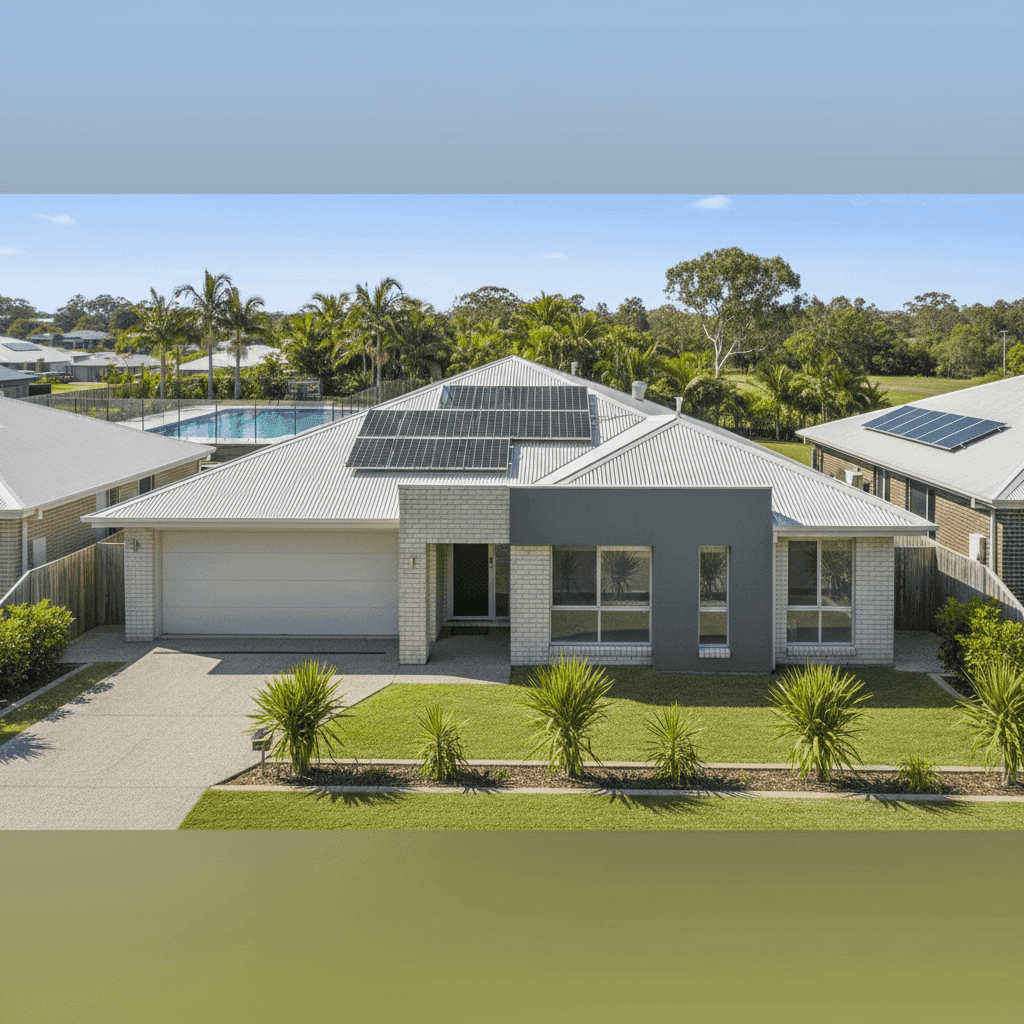
If you own a free standing home in Southside, QLD 4570, you might be wondering whether your home and contents insurance premium is competitive — or whether you're quietly paying too much. We recently analysed a quote for a four-bedroom, three-bathroom brick veneer home in Southside, and the result is genuinely impressive. At $1,951 per year (or $193 per month), this policy sits well below what most homeowners in the area are paying. Here's a full breakdown of what that quote covers, how it stacks up against local and national benchmarks, and what you can do to keep your own premiums in check.
---
Is This Quote Fair?
Short answer: yes — it's better than fair. This quote has been rated CHEAP, meaning it falls below the average for the Southside suburb. Based on a sample of 54 quotes collected for the Southside area, the suburb average sits at $4,137 per year, and the median is $3,464 per year. At $1,951, this policy comes in at roughly 53% below the suburb average — a significant saving that would put hundreds of dollars back in a homeowner's pocket every year.
Even compared to the 25th percentile for the suburb (meaning the cheapest quarter of quotes), which sits at $2,735 per year, this quote still undercuts it by nearly $800. That's a strong indicator that the combination of property characteristics, sum insured, and insurer pricing has aligned in this homeowner's favour.
---
How Southside Compares
To put this quote in proper context, it helps to zoom out and look at the broader picture across Queensland and nationally.
| Benchmark | Premium |
|---|---|
| This quote | $1,951/yr |
| Southside suburb average | $4,137/yr |
| Southside suburb median | $3,464/yr |
| Fraser Coast LGA average | $4,810/yr |
| QLD state average | $9,129/yr |
| QLD state median | $3,903/yr |
| National average | $5,347/yr |
| National median | $2,764/yr |
A few things stand out here. Queensland's state average of $9,129 per year is extraordinarily high compared to the national average — a reflection of the elevated flood, storm, and cyclone risk that affects large parts of the state. The median tells a more nuanced story; at $3,903 for QLD and $2,764 nationally, it's clear that a small number of very high-risk properties are pulling the average upward significantly.
Southside, sitting within the Fraser Coast LGA, benefits from a relatively moderate risk profile compared to coastal or far-north Queensland locations. The LGA average of $4,810 per year confirms that insurance costs in this region are meaningful but not extreme. Against all of these benchmarks, this quote at $1,951 per year is a standout result.
---
Property Features That Affect Your Premium
Several characteristics of this particular property work in the homeowner's favour when it comes to insurance pricing.
Brick veneer construction is generally viewed favourably by insurers. It offers solid fire resistance and structural durability, which can translate to lower premiums compared to timber-framed or clad homes.
A Colorbond steel roof is another positive. Steel roofing is resilient, lightweight, and performs well in storms — a key consideration in Queensland. Unlike older tile roofs, there's no risk of cracking or moss degradation, and replacement costs are relatively predictable.
Slab foundation construction is typically considered low-risk from an insurer's perspective, as it eliminates the underfloor moisture and pest access issues associated with raised or timber-stumped foundations.
Built in 2013, the property is modern enough to comply with updated building codes but old enough to have a well-established structural track record. Newer builds often attract lower premiums because they're constructed to more rigorous standards.
The home also features a swimming pool, solar panels, and ducted climate control — all of which add value to the property and are reflected in the building sum insured of $777,700. It's worth noting that pools and solar systems can add complexity to a claim, so it's important to confirm these are explicitly covered under your policy. At 214 sqm, the home is a comfortable family size, and the standard fittings quality means rebuild costs are straightforward to estimate without luxury finishes inflating the sum insured.
The contents are insured for $29,000, which is on the modest side for a four-bedroom home. Homeowners should review whether this figure accurately reflects the replacement value of their furniture, appliances, electronics, and personal belongings — underinsurance is a common issue that only becomes apparent at claim time.
---
Tips for Homeowners in Southside
1. Review your contents sum insured regularly $29,000 for a four-bedroom, three-bathroom home may not be sufficient to replace everything in the event of a total loss. Walk through each room and estimate the replacement cost of your belongings — not what you paid for them, but what it would cost to buy equivalent items new today. Many Australians are underinsured on contents without realising it.
2. Confirm your pool and solar panels are covered Not all home insurance policies automatically extend cover to in-ground pools or rooftop solar systems. Check your Product Disclosure Statement (PDS) to ensure these features are explicitly included, and that the sum insured accounts for their replacement value.
3. Don't let your building sum insured fall behind Construction costs in Queensland have risen considerably in recent years. If your building sum insured was set several years ago and hasn't been reviewed, it may no longer reflect the true cost of rebuilding your home. Use a building cost calculator or speak with a quantity surveyor to get an up-to-date estimate.
4. Compare quotes at renewal time Even if your current premium is competitive — as this one clearly is — it pays to compare at renewal. Insurers adjust their pricing models regularly, and the gap between providers can be substantial. Loyalty doesn't always pay in insurance; shopping around can save you thousands over the life of your policy.
---
Ready to Find Your Best Rate?
Whether you're a first-time buyer or a long-term homeowner in Southside, comparing quotes is the single most effective way to make sure you're not overpaying. CoverClub makes it easy to see how your premium stacks up against real data from your suburb and across Queensland. Get a quote today at CoverClub and find out if your home insurance is as competitive as it should be. You can also explore detailed pricing data for your area at our Southside suburb stats page.