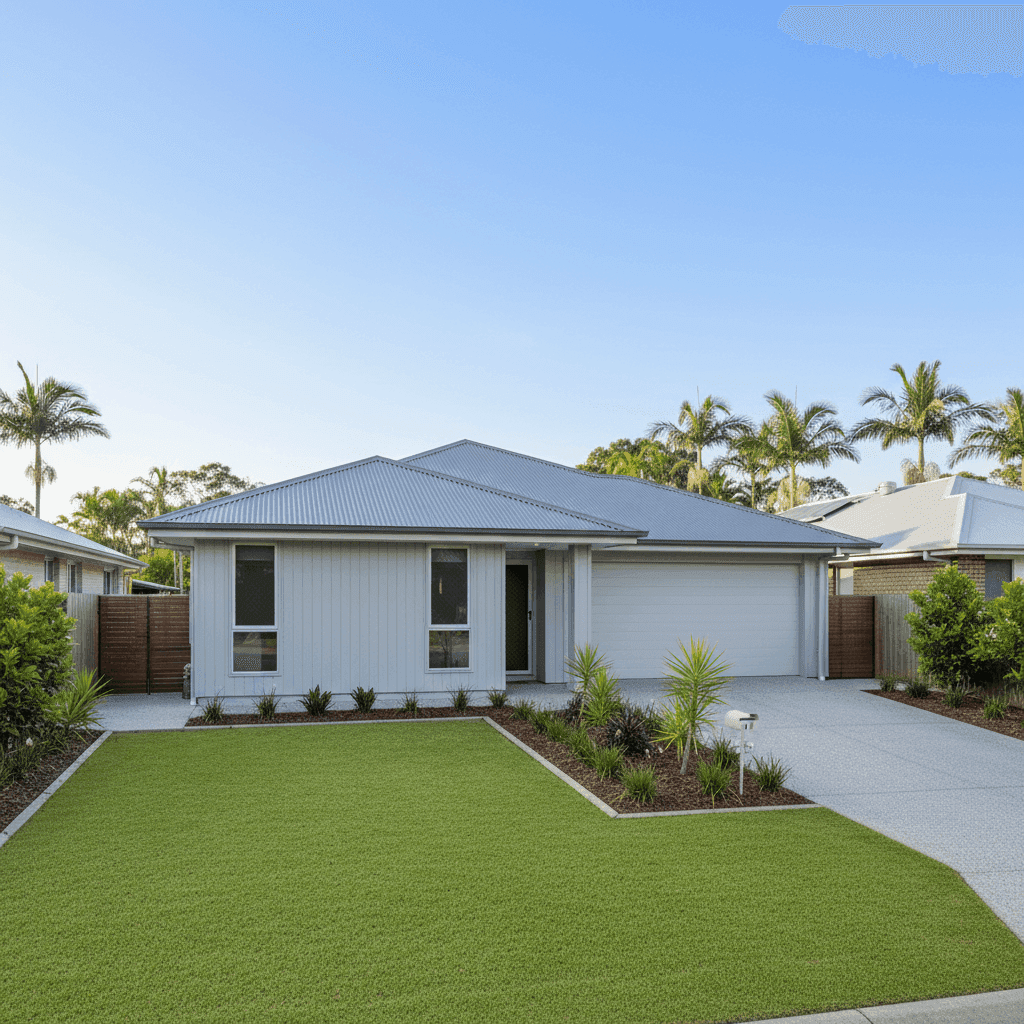
If you own a free standing home in Southside, QLD 4570, you've probably wondered whether you're paying too much — or too little — for home and contents insurance. This article breaks down a real quote for a three-bedroom, two-bathroom home in the suburb, compares it against local, state, and national benchmarks, and offers practical tips to help you get the best value cover.
---
Is This Quote Fair?
The annual premium for this property came in at $1,864 per year (or roughly $187 per month), covering both building ($509,000 sum insured) and contents ($50,000). CoverClub's pricing engine rates this as CHEAP — below average for the area.
That's a meaningful finding. Based on a sample of 54 quotes collected for the Southside 4570 postcode, the suburb average sits at $4,137 per year, and the median is $3,464. This quote lands well beneath even the 25th percentile of $2,735 — meaning it's cheaper than at least 75% of comparable quotes in the suburb. For a homeowner in Southside, that represents significant savings of over $2,000 annually compared to what many neighbours are likely paying.
So yes — on the numbers, this is a genuinely competitive quote, not just marginally so.
---
How Southside Compares
To put this quote in broader context, here's how Southside stacks up against Queensland and national benchmarks:
| Benchmark | Average Premium | Median Premium |
|---|---|---|
| Southside 4570 | $4,137/yr | $3,464/yr |
| Fraser Coast LGA | $4,810/yr | — |
| Queensland | $9,129/yr | $3,903/yr |
| National | $5,347/yr | $2,764/yr |
A few things stand out here. Queensland's average premium of $9,129 is extraordinarily high — one of the most expensive states in Australia for home insurance. This is largely driven by properties in cyclone-prone coastal and far-north regions, which push the state average up dramatically. The median of $3,903 is a more representative figure for most QLD homeowners.
Southside's suburb average of $4,137 is broadly in line with the state median and sits below the Fraser Coast LGA average of $4,810, suggesting the suburb carries moderate rather than extreme risk. The Southside suburb stats page shows the full spread of quotes collected for the area.
Against the national median of $2,764, this particular quote of $1,864 is still below average — a strong result by any measure.
---
Property Features That Affect Your Premium
Several characteristics of this property likely contribute to its competitive premium. Here's what insurers tend to look at:
Modern Construction (Built 2020)
A home built in 2020 benefits from compliance with contemporary Australian building codes, which require stronger structural standards — particularly relevant in Queensland. Newer builds are generally viewed as lower risk by insurers, which can translate directly into lower premiums.
Hardiplank/Hardiflex Cladding
Fibre cement cladding like Hardiplank and Hardiflex is considered a solid, fire-resistant external wall material. Unlike timber weatherboard, it doesn't rot or warp easily, and it performs well in humid Queensland conditions. Insurers tend to rate it favourably compared to older or less durable materials.
Steel/Colorbond Roof
A Colorbond steel roof is one of the most insurer-friendly roofing materials in Australia. It's durable, fire-resistant, low-maintenance, and handles Queensland's intense UV and storm conditions well. Homes with tile roofs can sometimes attract higher premiums due to hail and breakage risk — this property avoids that.
Slab Foundation
Concrete slab foundations are structurally sound and widely preferred by insurers over older stumped or timber-frame sub-floor designs. They're less susceptible to movement, termite damage, and flooding ingress in many scenarios.
No Pool, No Solar
While solar panels and pools aren't necessarily expensive additions from an insurance standpoint, their absence does simplify the risk profile. Pools introduce liability considerations, and solar panels can complicate roof claims.
Not in a Cyclone Risk Zone
This is significant. Many Queensland properties — particularly those further north or on the coast — attract substantial cyclone loading on their premiums. Southside's classification as outside a cyclone risk area removes one of the largest premium drivers in the state.
Ducted Climate Control
Ducted air conditioning is a higher-value fixed inclusion that may marginally increase the building sum insured needed, but it's a standard feature in modern Queensland homes and doesn't typically cause concern for underwriters.
---
Tips for Homeowners in Southside
1. Don't Underinsure Your Building
At $509,000, this quote's building sum insured should reflect the full cost to rebuild — not the market value of the property. Construction costs in regional Queensland have risen sharply in recent years. It's worth using a building cost calculator annually to make sure your coverage keeps pace with inflation and material costs.
2. Review Your Contents Value Regularly
$50,000 in contents cover is a reasonable starting point for a three-bedroom home, but it's easy to accumulate more than you realise. Electronics, furniture, appliances, clothing, and whitegoods add up quickly. Do a room-by-room audit every year or two to ensure you're not underinsured.
3. Compare Before You Renew
Even if your current premium seems low, insurers regularly adjust their pricing. The gap between the cheapest and most expensive quotes in Southside spans from under $2,735 (25th percentile) to over $5,370 (75th percentile) — a difference of over $2,600 per year. Comparing quotes at CoverClub takes minutes and could save you significantly.
4. Consider Your Excess Carefully
This quote carries a $2,000 excess for both building and contents. A higher excess typically lowers your premium, but make sure you can comfortably cover that amount out of pocket if you need to make a claim. If $2,000 would be a financial stretch, consider whether a lower excess (with a slightly higher premium) might suit you better.
---
Ready to Compare Your Own Quote?
Whether you're a first-time buyer in Southside or a long-term homeowner wondering if you're overpaying, it pays to see what's available. CoverClub aggregates real insurance data to help Australians make smarter decisions about their cover.
Get a home insurance quote at CoverClub and see how your premium stacks up against your neighbours — you might be surprised by what you find.