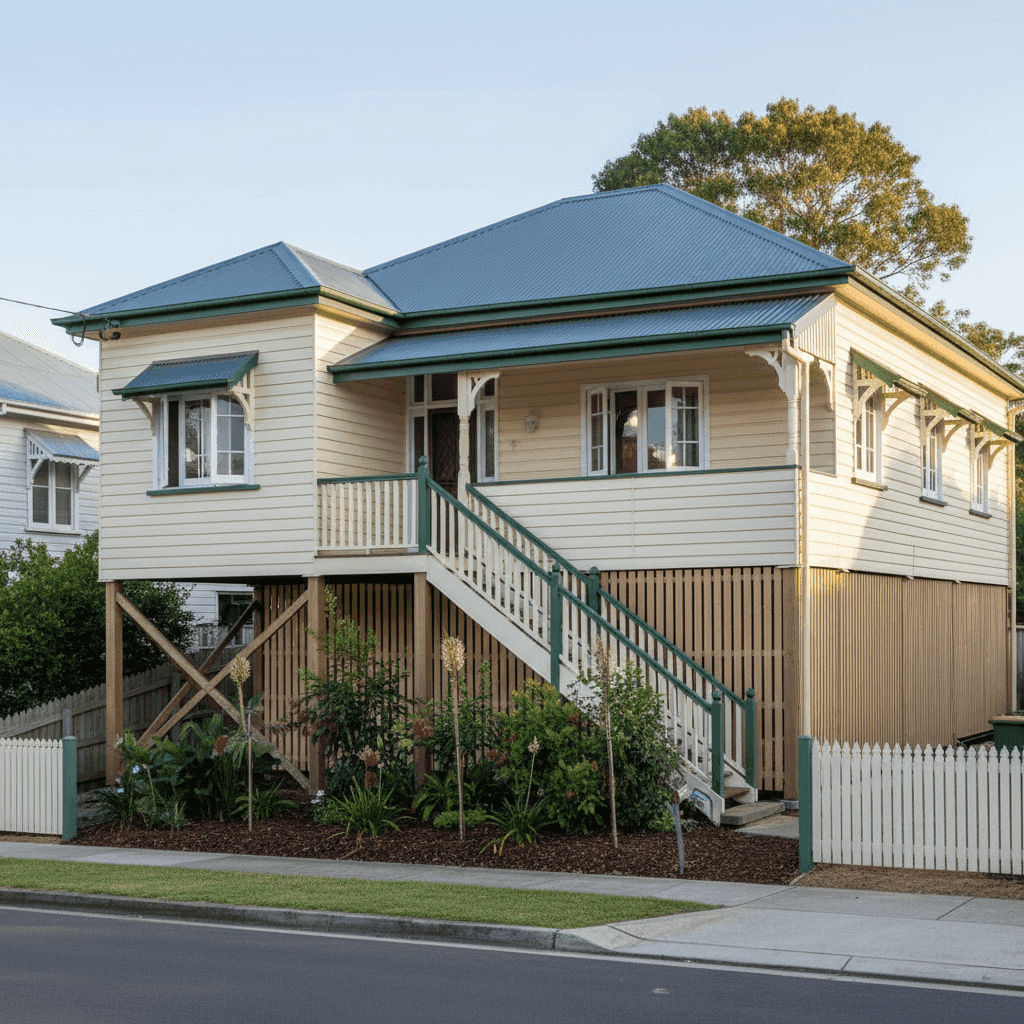
If you own a free standing home in Southside, QLD 4570, you're probably all too familiar with the sting of home insurance premiums in South-East Queensland. Located within the Fraser Coast Local Government Area, Southside sits in a region where insurers price risk carefully — and for good reason. This article breaks down a real building insurance quote for a 3-bedroom, 2-bathroom weatherboard home in the suburb, and puts it in context against local, state, and national benchmarks to help you understand what you should — and shouldn't — be paying.
---
Is This Quote Fair?
The quote in question comes in at $2,462 per year (or $243/month) for building-only cover on a free standing home with a sum insured of $641,000 and a standard $1,000 excess. Our rating? Cheap — below average. That's genuinely good news for the homeowner.
To put it plainly: this premium sits well below the suburb average of $5,426/yr and even comfortably under the suburb median of $3,152/yr. It also falls just below the suburb's 25th percentile of $2,532/yr — meaning fewer than 25% of the 57 quotes sampled in Southside came in this low. In a suburb where the spread between the cheapest and most expensive quotes is enormous (the 75th percentile hits $5,946/yr), landing a premium at this level is a meaningful financial win.
Compared to the Queensland state average of $4,547/yr and the national average of $2,965/yr, this quote is performing strongly on both fronts. Even relative to the national median of $2,716/yr, this premium undercuts it — which is notable given that Queensland is one of Australia's most expensive states for home insurance.
In short: if you're holding this quote, it represents real value.
---
How Southside Compares
The pricing gap between Southside and the rest of the country tells an important story about insuring homes in Queensland's regional centres.
| Benchmark | Premium |
|---|---|
| This Quote | $2,462/yr |
| Suburb 25th Percentile | $2,532/yr |
| Suburb Median | $3,152/yr |
| National Average | $2,965/yr |
| National Median | $2,716/yr |
| QLD State Median | $3,931/yr |
| QLD State Average | $4,547/yr |
| Fraser Coast LGA Average | $4,810/yr |
| Suburb Average | $5,426/yr |
The Southside suburb average of $5,426/yr is nearly double the national average — a stark illustration of the premium loading that affects many Queensland homeowners. The Queensland state average of $4,547/yr is itself well above the national average of $2,965/yr, reflecting the elevated risk profile of insuring homes in a state prone to cyclones, flooding, and severe storms.
The Fraser Coast LGA average of $4,810/yr sits even higher than the state figure, suggesting that properties in this region carry additional risk factors that insurers are pricing in. Against that backdrop, a quote of $2,462/yr is genuinely exceptional.
---
Property Features That Affect Your Premium
Several characteristics of this particular property have a direct influence on what insurers charge — some working in the owner's favour, others adding complexity.
Weatherboard Timber Walls
Weatherboard construction is one of the most common wall types in older Queensland homes, but it does carry a higher replacement cost and fire risk compared to brick or rendered block. Insurers typically view timber-clad homes with more caution, which can push premiums upward. The fact that this quote is still competitive despite weatherboard walls is a positive sign.
Steel/Colorbond Roof
Colorbond roofing is generally well-regarded by insurers. It's durable, resistant to corrosion, and performs well in high-wind events compared to older tile or fibrous cement roofing. This is likely contributing favourably to the premium outcome here.
Elevated on Poles (At Least 1 Metre)
This is perhaps the most significant feature from a flood and storm risk perspective. Homes elevated by at least one metre — classic Queenslander-style construction — are substantially less vulnerable to inundation during heavy rainfall events. For a property in South-East Queensland, this elevation can make a meaningful difference to how insurers assess flood and storm surge risk, often resulting in noticeably lower premiums. It's a key reason this quote likely performs so well against the suburb average.
Construction Year: 1975
A home built in 1975 is now 50 years old. While well-maintained older homes can be insured competitively, age does introduce some uncertainty around the condition of wiring, plumbing, and structural elements. Insurers may factor in the cost of bringing older materials up to current building codes when calculating the sum insured and premium.
No Pool, No Solar, No Ducted Climate Control
The absence of a swimming pool, solar panel system, and ducted air conditioning simplifies the risk profile and keeps the sum insured manageable. Each of these additions can increase both replacement costs and premium loading, so their absence here is a contributing factor to the competitive quote.
Standard Fittings
Standard-quality fittings (as opposed to premium or high-end finishes) help keep the sum insured at a realistic level, reducing the likelihood of over-insurance while still ensuring adequate cover.
---
Tips for Homeowners in Southside
Whether you're reviewing your current policy or shopping for the first time, here are four practical steps to make sure you're getting the best deal on home insurance in Southside.
- Don't accept your renewal without comparing. The wide spread between the 25th percentile ($2,532/yr) and 75th percentile ($5,946/yr) in Southside shows that the same property can attract vastly different quotes from different insurers. Shopping around — even once a year — can save you thousands. Start comparing quotes at CoverClub.
- Check your sum insured annually. With building costs rising across Queensland, the cost to rebuild your home may have increased significantly since your policy was written. An underinsured property can leave you seriously out of pocket after a claim. Use a building calculator or speak with a quantity surveyor to validate your sum insured.
- Highlight your elevation when applying. If your home is elevated on poles, make sure this is accurately reflected in your application. Some online quote tools may not fully capture this detail, and it can have a meaningful impact on flood and storm risk assessments. Being precise about your foundation type could help you secure a lower premium.
- Review your excess strategy. This policy carries a $1,000 excess, which is fairly standard. If you're financially comfortable absorbing a higher out-of-pocket cost in the event of a claim, opting for a higher voluntary excess (e.g., $2,000 or $2,500) can reduce your annual premium further — a worthwhile trade-off for many homeowners who rarely claim.
---
Ready to Compare?
Whether this quote is yours or you're simply benchmarking what a fair price looks like in Southside, the data is clear: premiums in this suburb vary enormously, and there's real money to be saved by comparing your options. At CoverClub, we make it easy to see how your quote stacks up against real data from your suburb, LGA, and state. Get a quote today and find out if you're paying too much.