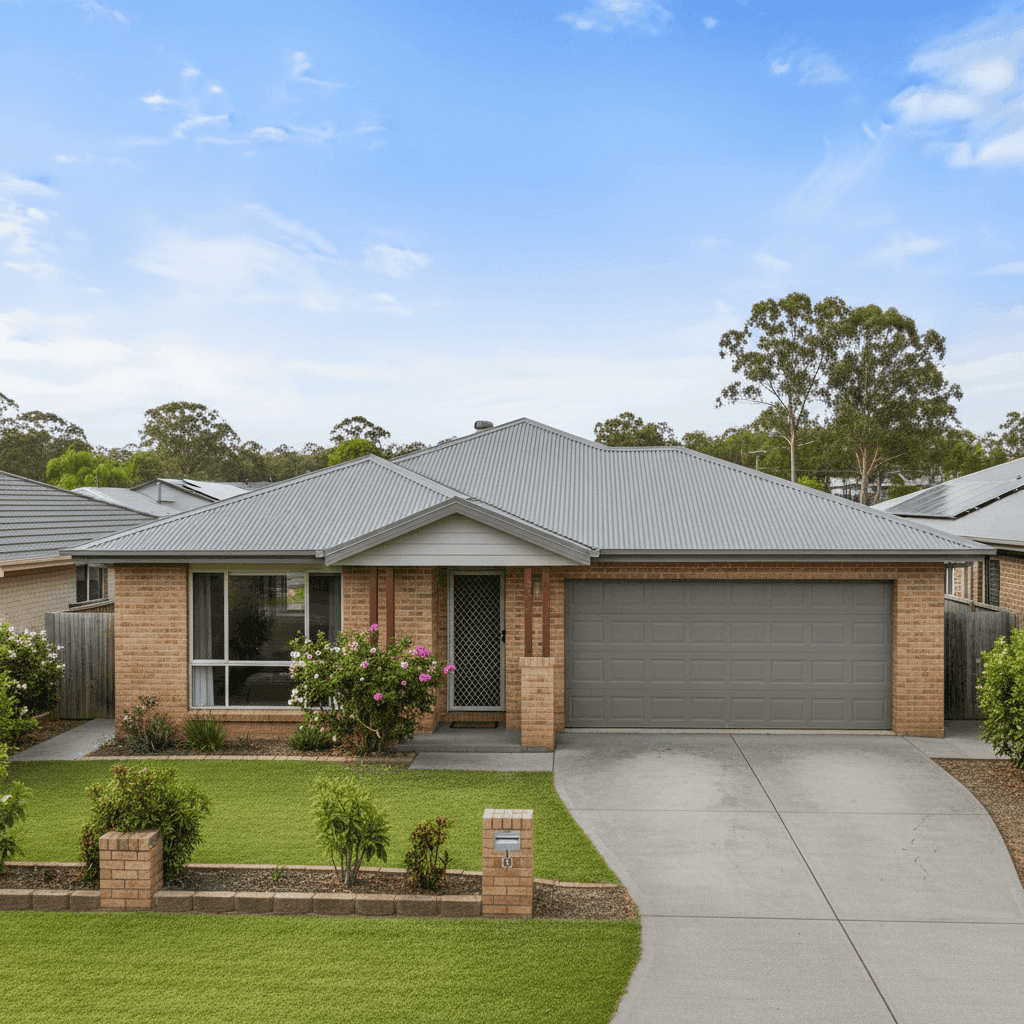
If you own a free standing home in Southside, QLD 4570, you've probably noticed that insurance premiums can vary enormously — even between neighbours on the same street. This article breaks down a real home and contents insurance quote for a four-bedroom brick veneer home in Southside, examines how it stacks up against local, state, and national benchmarks, and offers practical tips to help you get the best value cover.
---
Is This Quote Fair?
The quote in question comes in at $3,255 per year (or $305 per month) for combined home and contents insurance, covering a building sum insured of $650,000 and contents valued at $120,000. Both the building and contents excess are set at $1,000.
Our price rating for this quote is FAIR — around average.
That assessment holds up well under scrutiny. The suburb median premium for Southside (4570) sits at $3,464 per year, meaning this quote comes in roughly $209 below the local median — a modest but meaningful saving. Against the suburb average of $4,137, the quote looks even more competitive, sitting around 21% below what many Southside homeowners are paying.
It's worth noting the spread of premiums in this postcode is quite wide. The 25th percentile sits at $2,735/yr, while the 75th percentile jumps to $5,370/yr — a difference of nearly $2,635 between the cheaper and more expensive end of the market. That kind of range underscores just how much insurer pricing can diverge for essentially similar properties. At $3,255, this quote sits comfortably in the second quartile, which is a reasonable outcome for a well-built 2009 home with standard fittings.
---
How Southside Compares
To put this quote in broader context, here's how Southside premiums compare across different geographic levels:
| Benchmark | Average Premium | Median Premium |
|---|---|---|
| Southside (4570) | $4,137/yr | $3,464/yr |
| Fraser Coast LGA | $4,810/yr | — |
| Queensland | $9,129/yr | $3,903/yr |
| National | $5,347/yr | $2,764/yr |
A few things stand out here. Queensland's average premium of $9,129 is eye-wateringly high — but that figure is heavily skewed by cyclone-prone coastal and far-north Queensland postcodes, where insurers price in significant catastrophe risk. The state median of $3,903 is a far more representative figure for most Queensland homeowners, and Southside's median of $3,464 sits just below that, which is encouraging.
Nationally, the average premium of $5,347 is also distorted by high-risk regions, while the national median of $2,764 reflects that many Australians in lower-risk areas pay considerably less. Southside's median is above the national median, which is typical for Queensland given the state's exposure to severe weather events, even in areas not formally classified as cyclone zones.
You can explore detailed premium data for this postcode at our Southside suburb stats page, or compare across the state on our Queensland insurance stats page. For a broader picture, our national home insurance statistics offer useful context.
---
Property Features That Affect Your Premium
Every property is different, and insurers weigh up a range of characteristics when calculating your premium. Here's how the features of this particular home are likely influencing its price:
Brick Veneer Walls Brick veneer is one of the more favourable wall constructions from an insurer's perspective. It's durable, fire-resistant, and performs well in storms compared to lightweight cladding or weatherboard. Homes with brick veneer typically attract lower premiums than those with timber or fibre cement exteriors.
Steel/Colorbond Roof Colorbond roofing is highly regarded in Australia for its resilience against wind, rain, and fire. It's a common choice in Queensland and generally viewed positively by insurers. Unlike terracotta or concrete tiles, Colorbond is less prone to cracking or dislodging in high winds.
Concrete Slab Foundation A slab foundation reduces the risk of subsidence and pest-related structural damage compared to elevated or timber-framed subfloors. This is a neutral-to-positive factor for insurers.
Construction Year: 2009 A home built in 2009 benefits from modern building codes, which introduced improved cyclone and storm standards across Queensland following significant weather events in earlier decades. This relatively recent construction date is likely working in the homeowner's favour.
Ducted Climate Control The presence of ducted air conditioning adds meaningful value to the home and is factored into the building sum insured. It can also slightly increase the premium, as it represents a significant asset to repair or replace in the event of a claim.
No Pool, No Solar Panels The absence of a swimming pool removes a common liability risk from the equation. Similarly, no solar panels means no added complexity around electrical system coverage — both factors that can nudge premiums upward when present.
Standard Fittings Standard-quality fittings mean the cost to rebuild or repair is more predictable and generally lower than homes with high-end or bespoke finishes. This helps keep the premium reasonable relative to the building sum insured.
---
Tips for Homeowners in Southside
1. Review your sum insured regularly Building costs in Queensland have risen sharply in recent years due to labour shortages and material price increases. Make sure your $650,000 building sum insured still reflects the actual cost to rebuild your home — not just its market value. Underinsurance is one of the most common and costly mistakes Australian homeowners make.
2. Compare quotes at renewal time The wide premium spread in Southside (from $2,735 to $5,370) shows that different insurers price this suburb very differently. Don't auto-renew without checking what else is available. Even a small amount of time spent comparing can save hundreds of dollars annually.
3. Consider your excess strategically Both the building and contents excess on this policy are set at $1,000. Opting for a higher excess (say, $2,500) can reduce your annual premium noticeably — but make sure you could comfortably cover that amount out of pocket if you needed to make a claim.
4. Document your contents thoroughly With $120,000 in contents cover, it's worth maintaining an up-to-date home inventory — photos, receipts, and serial numbers for high-value items. This makes the claims process significantly smoother and helps ensure you're not underinsured on the contents side.
---
Ready to Compare?
Whether you're reviewing your current policy or shopping around for the first time, CoverClub makes it easy to see how your quote stacks up. Get a home insurance quote today and find out if you're paying a fair price — or if there's a better deal waiting for you.