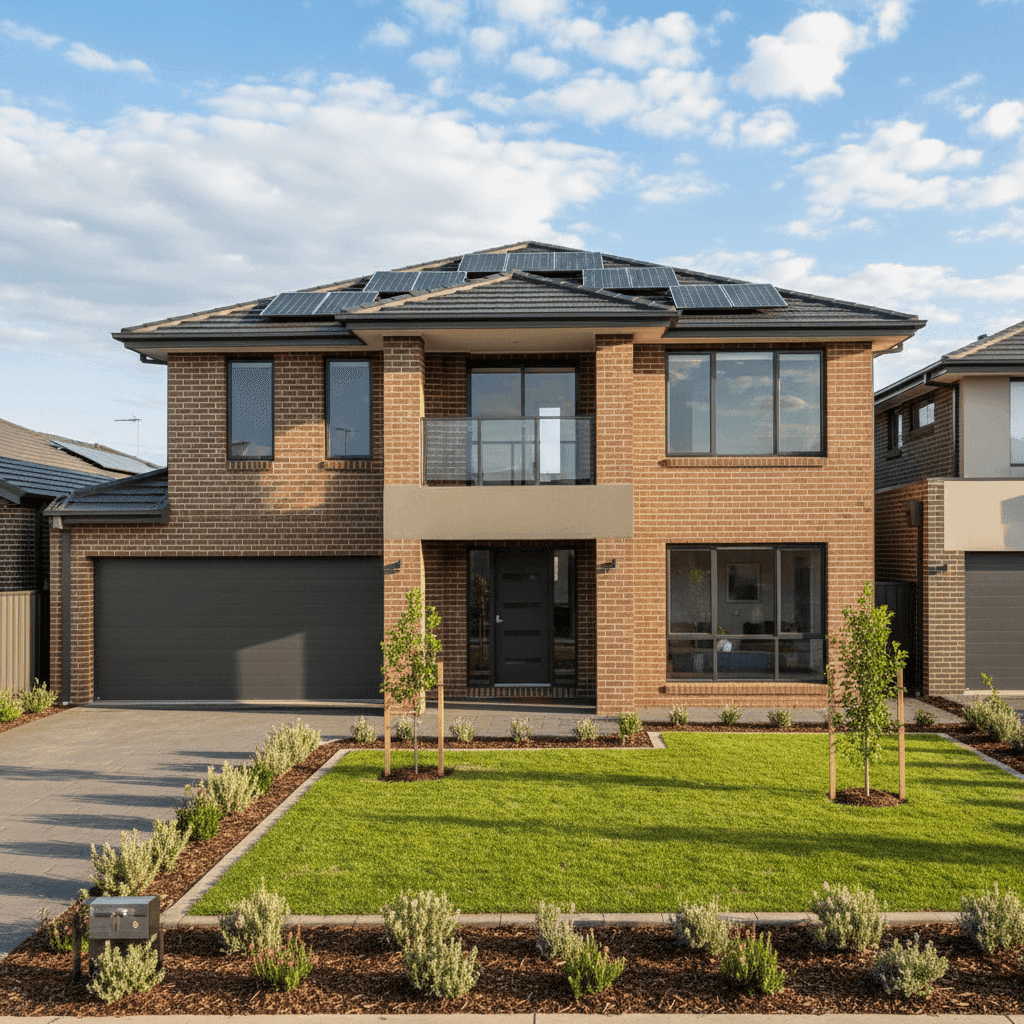
Spring Farm, nestled in the Wollondilly local government area on Sydney's south-western fringe, has grown rapidly over the past decade into one of the region's most sought-after residential pockets. Its newer housing stock, family-friendly streetscapes, and relative affordability compared to inner Sydney make it a popular destination for first-home buyers and upsizers alike. If you own — or are thinking of insuring — a free standing home here, understanding what a competitive premium looks like is a smart first step.
This article breaks down a real home and contents insurance quote for a four-bedroom, three-bathroom free standing home in Spring Farm, and puts the numbers into context against local, state, and national benchmarks.
---
Is This Quote Fair?
The annual premium in this quote comes in at $1,194 per year (or about $117 per month), covering both building (insured at $590,000) and contents ($30,000). CoverClub's pricing engine rates this quote as Fair — Around Average.
That rating is well-supported by the data. The suburb average for Spring Farm sits at $1,529 per year, with a median of $1,603. This quote lands comfortably below both figures, meaning the homeowner is paying less than most of their neighbours for comparable cover. It also falls within the interquartile range — between the 25th percentile ($813/yr) and the 75th percentile ($1,788/yr) — which confirms it's a reasonable market price rather than an outlier in either direction.
In short: this isn't the cheapest quote available in the suburb, but it's a solid, competitive result. Homeowners paying closer to $1,788 or beyond should seriously consider shopping around.
---
How Spring Farm Compares
One of the most striking takeaways from this quote is just how affordable Spring Farm is relative to broader benchmarks.
| Benchmark | Average Premium |
|---|---|
| Spring Farm (suburb avg) | $1,529/yr |
| Wollondilly LGA avg | $3,670/yr |
| NSW state average | $3,801/yr |
| National average | $2,965/yr |
The suburb average of $1,529 is less than half the NSW state average of $3,801 and well below the national average of $2,965. Even the Wollondilly LGA average of $3,670 dwarfs what Spring Farm residents typically pay — a reminder that averages across a large LGA can be skewed by higher-risk rural and semi-rural properties within the same council boundary.
Why is Spring Farm so comparatively affordable? A few factors are likely at play. The suburb's housing stock is predominantly modern — many homes, including this one, were built in 2020 or later — which reduces the risk of structural issues and makes properties easier and cheaper to insure. The area is also not classified as a cyclone risk zone, and its urban planning generally keeps it away from the worst flood and bushfire exposure that affects other parts of the Wollondilly LGA.
That said, with only 17 quotes in CoverClub's current Spring Farm sample, these figures should be treated as indicative rather than definitive. As the dataset grows, the picture will sharpen.
---
Property Features That Affect Your Premium
Several characteristics of this particular home work in the owner's favour from an insurance pricing perspective.
Modern construction (built 2020): Newer homes are generally cheaper to insure. Building codes have tightened considerably over the past two decades, meaning this home was constructed to higher standards for fire resistance, structural integrity, and waterproofing. Insurers price this favourably.
Brick veneer external walls: Brick veneer is one of the most common — and insurer-friendly — wall types in Australian suburban construction. It offers solid fire resistance and durability, which typically results in lower premiums compared to timber or lightweight cladding.
Tiled roof: Like brick veneer walls, a tiled roof is a well-regarded construction type that holds up well against hail, wind, and general weathering. It's a positive factor for pricing.
Concrete slab foundation: Slab-on-ground foundations are standard in newer NSW developments and are generally considered low-risk by insurers, particularly in areas without significant soil movement or flood exposure.
Solar panels: This property has solar panels installed, which is worth noting. Solar panels can slightly increase the insured replacement value of a home, and some policies treat them as part of the building sum insured while others may require separate consideration. It's worth confirming with your insurer exactly how your panels are covered.
Ducted climate control: A ducted air conditioning system is a significant fixed asset. It's typically covered under the building sum insured, but homeowners should ensure their building replacement estimate accounts for the cost of reinstalling a full ducted system, which can run into tens of thousands of dollars.
Above-average fittings: The home features above-average quality fittings, which is reflected in the $590,000 building sum insured for a 214 sqm property. Higher-quality finishes cost more to replace, so it's important the sum insured genuinely reflects what it would cost to rebuild — not just the market value of the land and structure.
---
Tips for Homeowners in Spring Farm
1. Review your building sum insured annually. Construction costs have risen sharply across Australia in recent years. A sum insured that was accurate in 2022 may now fall short of actual rebuild costs. Use an independent building calculator or speak to a quantity surveyor to ensure your $590,000 figure keeps pace with current labour and materials pricing.
2. Don't underestimate your contents. A $30,000 contents value is on the modest side for a four-bedroom, three-bathroom home with above-average fittings. Walk through each room and consider the replacement cost — not the secondhand value — of furniture, appliances, clothing, electronics, and personal items. Many homeowners find their contents are worth significantly more than they initially estimated.
3. Understand your excess structure. This policy carries a $3,000 building excess and a $600 contents excess. A higher building excess typically lowers your premium, but make sure you can comfortably cover that amount out of pocket if you need to make a claim. If $3,000 feels like a stretch, consider whether a lower excess (at a slightly higher premium) better suits your financial position.
4. Compare quotes at renewal — every year. Insurance pricing shifts constantly. The fact that this quote is below the suburb average is a good sign, but the market may look different in 12 months. Use CoverClub to benchmark your renewal quote against current suburb data before automatically accepting your insurer's renewal offer.
---
Ready to Compare?
Whether you're reviewing an existing policy or shopping for cover for the first time, CoverClub makes it easy to see how your quote stacks up. Get a home insurance quote today and instantly compare it against real suburb, state, and national data — so you always know if you're getting a fair deal.