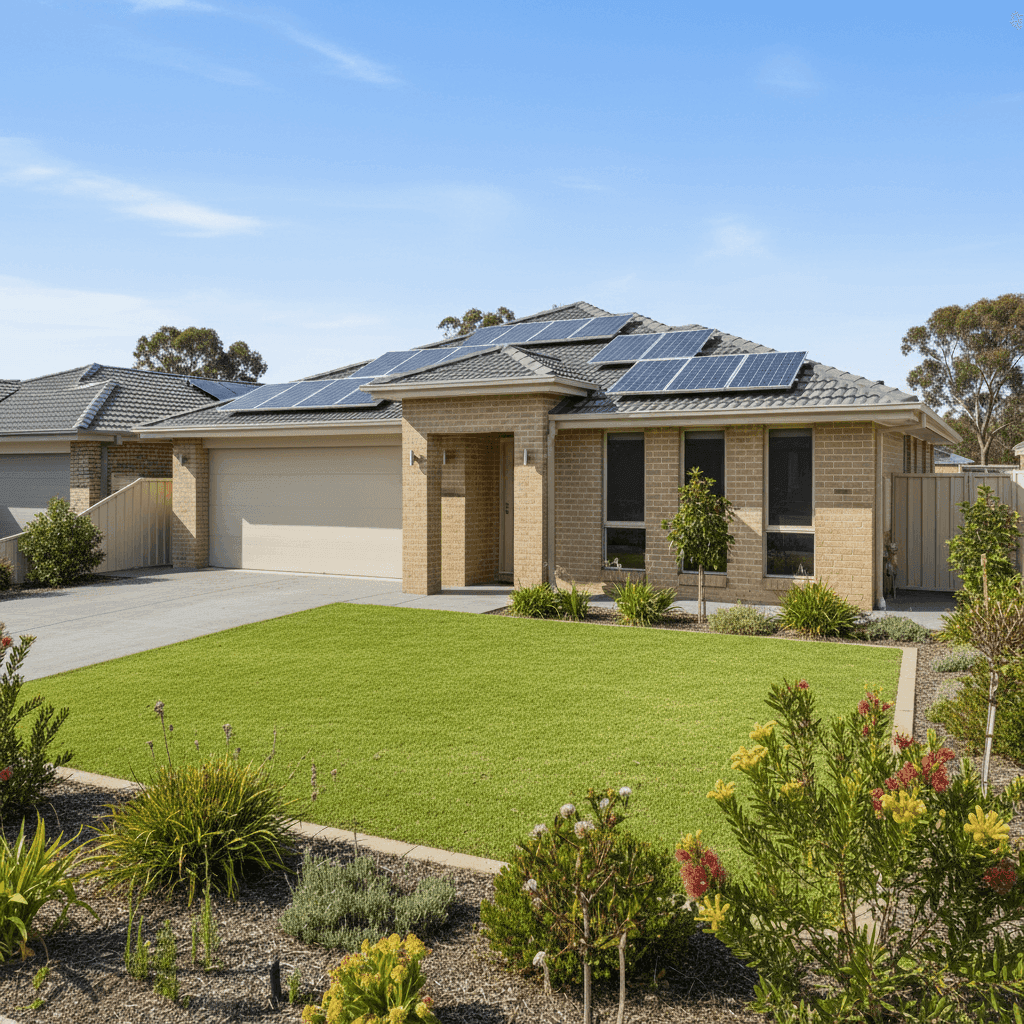
Springfield Lakes is a well-established master-planned suburb in the City of Ipswich, roughly 35 kilometres south-west of Brisbane's CBD. With its lakes, parklands, and predominantly modern housing stock, it's a popular choice for families looking for space without straying too far from the city. This article breaks down a real home insurance quote for a four-bedroom, two-bathroom free-standing home in the area — and puts that number in context so you can judge whether you're getting a fair deal.
---
Is This Quote Fair?
The quote in question comes in at $1,785 per year (or $178 per month) for combined home and contents cover, with a building sum insured of $454,000 and contents valued at $50,000. Both the building and contents excess are set at $1,000.
Our pricing engine rates this quote as Fair — Around Average, and the data backs that up. The suburb average for Springfield Lakes sits at $1,884 per year, meaning this quote is roughly $99 below the local average — a modest but meaningful saving. It also comes in just under the suburb median of $1,854, placing it comfortably in the lower half of what locals are paying.
That said, "fair" doesn't necessarily mean "the best available." The 25th percentile for the suburb is $1,337 per year, which tells us that around a quarter of Springfield Lakes homeowners are securing cover for notably less. There's clearly room to shop around if price is a priority.
---
How Springfield Lakes Compares
One of the most striking takeaways from this data is just how much cheaper Springfield Lakes is compared to the rest of Queensland — and the country.
| Benchmark | Annual Premium |
|---|---|
| This Quote | $1,785 |
| Springfield Lakes suburb average | $1,884 |
| Springfield Lakes suburb median | $1,854 |
| Ipswich LGA average | $3,034 |
| QLD state average | $4,547 |
| QLD state median | $3,931 |
| National average | $2,965 |
| National median | $2,716 |
The contrast with the broader Queensland market is stark. The state average premium in QLD is $4,547 per year — more than 2.5 times what this Springfield Lakes homeowner is paying. Much of that disparity is driven by high-risk areas in regional and far-north Queensland, where cyclone exposure and flooding push premiums to eye-watering levels.
Even against the national average of $2,965, this quote looks competitive, sitting about 40% below the Australian benchmark. And within the Ipswich LGA, where the average is $3,034, Springfield Lakes homeowners appear to benefit from the suburb's newer housing stock and relatively lower flood exposure compared to parts of the broader council area.
You can explore more local data on the Springfield Lakes suburb stats page.
---
Property Features That Affect Your Premium
Several characteristics of this particular property work in the homeowner's favour from an insurance pricing perspective.
Construction year (2015): A home built in 2015 is relatively modern and was constructed under more stringent building codes than older dwellings. Newer homes tend to attract lower premiums because they're less likely to have ageing wiring, plumbing issues, or structural weaknesses.
Brick veneer walls and tiled roof: This is a very common and well-regarded construction type in South-East Queensland. Brick veneer offers solid weather resistance, and tiled roofs are durable and widely understood by insurers. This combination is generally viewed favourably at underwriting.
Concrete slab foundation: Slab-on-ground construction is standard for the region and doesn't carry the same risk profile as, say, a high-set timber home that could be more vulnerable to certain weather events.
Solar panels: The property has solar panels, which are worth noting. Some insurers include solar systems under building cover automatically, while others may require you to specify them or even take out an extension. It's worth confirming with your insurer exactly how your solar installation is covered — particularly for damage from storms or hail.
No pool, no cyclone risk zone: The absence of a pool removes a common liability exposure, and being outside a designated cyclone risk area means the home avoids the significant premium loading that applies to properties in North Queensland.
Tiled flooring throughout: From a contents perspective, hard flooring is generally easier to repair or replace than carpet and may be viewed slightly more favourably by insurers when assessing water damage risk.
---
Tips for Homeowners in Springfield Lakes
1. Check your solar panel coverage explicitly Don't assume your solar system is automatically covered under your building policy. Ask your insurer whether panels are included, up to what value, and whether storm or hail damage is covered. Given the size of most modern solar installations, an uncovered system could represent a significant out-of-pocket cost.
2. Review your sum insured annually Building costs in South-East Queensland have risen considerably in recent years due to labour and material shortages. A sum insured of $454,000 for a 214 sqm home may be appropriate today, but it's worth recalculating your rebuild cost each year — ideally using a quantity surveyor's estimate or a reputable online calculator — to make sure you're not underinsured.
3. Consider your excess strategy Both the building and contents excess on this policy are set at $1,000. Opting for a higher excess can reduce your annual premium meaningfully, but make sure the saving is worth it relative to the financial risk you're taking on. If you wouldn't comfortably cover a $2,000 excess in an emergency, a lower excess might be the smarter choice despite the higher premium.
4. Shop around at renewal time The 25th percentile for Springfield Lakes is $1,337 per year — significantly below this quote. While cover quality varies between insurers, it's always worth getting two or three competing quotes before renewing. Loyalty doesn't always pay in insurance, and the market is competitive enough that switching can yield real savings.
---
Ready to Compare?
Whether you're reviewing your current policy or shopping for the first time, comparing quotes is the single most effective way to make sure you're not overpaying. Get a home insurance quote at CoverClub and see how your property stacks up against real data from your suburb and beyond.