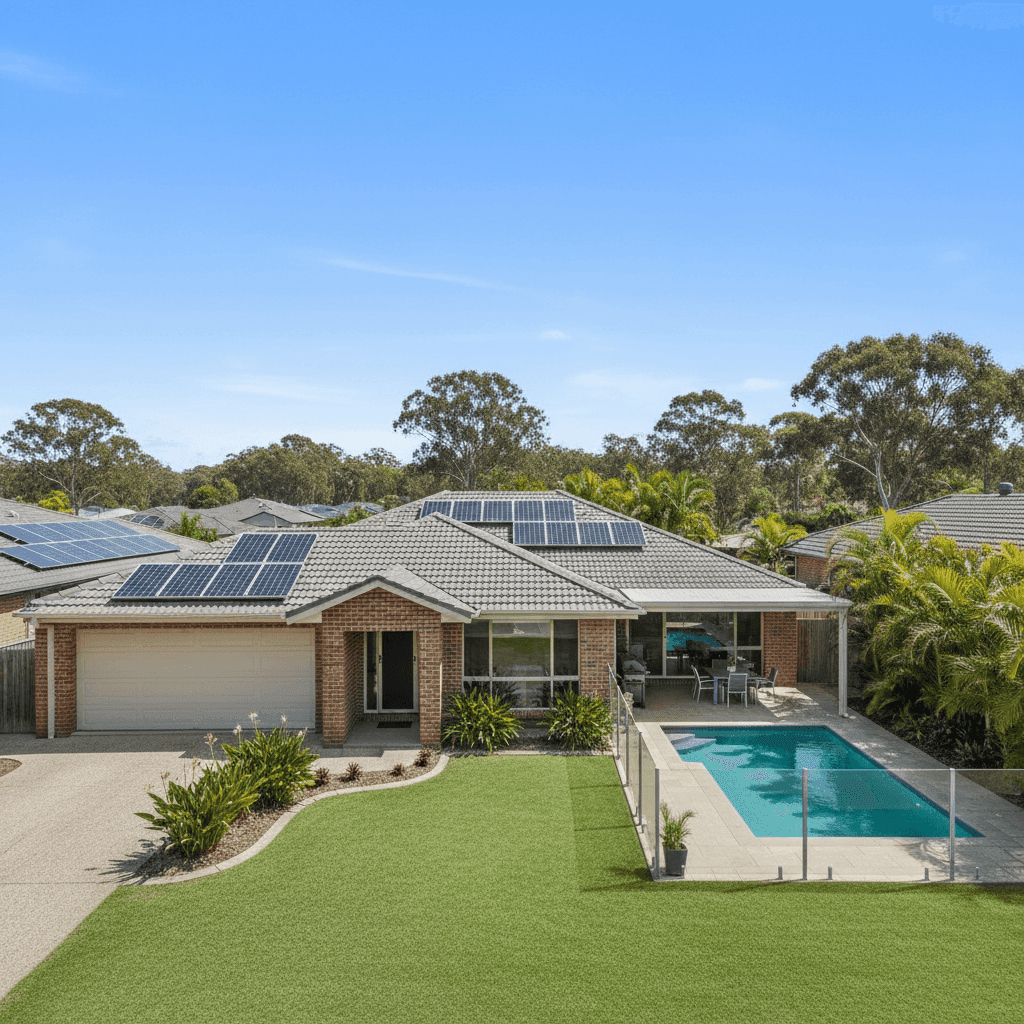
Buying or owning a home in Springfield, QLD 4300 is an exciting milestone — and making sure it's properly protected is just as important as the purchase itself. Springfield is one of South-East Queensland's fastest-growing master-planned communities, and like many suburbs in the Ipswich region, home insurance premiums here reflect a unique blend of local risk factors, property characteristics, and market conditions. In this article, we analyse a real building insurance quote for a three-bedroom free-standing home in Springfield to help you understand what you're paying — and whether you could be doing better.
---
Is This Quote Fair?
The quote in question comes in at $2,719 per year (or $261/month) for building-only cover, with a $1,000 building excess and a sum insured of $817,000. Our price rating for this quote is FAIR — Around Average.
That rating is well-earned. Based on 30 quotes sampled for Springfield (4300), the suburb average sits at $2,614/yr and the median at $2,657/yr. At $2,719, this quote lands just above the median — meaning roughly half of Springfield homeowners are paying less, and half are paying more. It's not a bargain, but it's also not cause for alarm.
Importantly, the quote falls comfortably within the interquartile range for the suburb: the 25th percentile is $2,267/yr and the 75th percentile is $3,003/yr. Sitting between those two goalposts signals that this premium is broadly in line with what comparable Springfield properties are attracting from insurers right now.
The bottom line? This is a reasonable quote — but "fair" doesn't mean you can't find better. There's still meaningful room between this premium and the cheapest quarter of quotes in the suburb.
---
How Springfield Compares
Context is everything when it comes to insurance pricing, and Springfield's numbers look quite favourable when stacked up against broader benchmarks.
| Benchmark | Average Premium | Median Premium |
|---|---|---|
| Springfield (4300) | $2,614/yr | $2,657/yr |
| Ipswich LGA | $8,901/yr | — |
| Queensland | $9,129/yr | $3,903/yr |
| National | $5,347/yr | $2,764/yr |
The contrast between Springfield's suburb-level figures and the broader Queensland state average of $9,129/yr is striking. That state average is heavily skewed by high-risk coastal and cyclone-prone areas in Far North Queensland, where premiums can run into the tens of thousands. Springfield, sitting well inland and outside any designated cyclone risk zone, benefits enormously from that geographic advantage.
Even against the national average of $5,347/yr, Springfield homeowners are in a relatively comfortable position — the suburb median of $2,657/yr is well below the national figure. The national median of $2,764/yr is a closer comparison, and Springfield's median actually comes in slightly under that mark, which is encouraging.
Worth noting: the Ipswich LGA average of $8,901/yr is dramatically higher than Springfield's suburb-level data. This disparity likely reflects the inclusion of older, flood-prone suburbs closer to the Bremer River within the broader Ipswich council area. Springfield's newer, purpose-built infrastructure and elevated terrain help shield it from some of the flood risk that drives premiums skyward elsewhere in the LGA.
---
Property Features That Affect Your Premium
Every property tells its own insurance story, and this one has several features that insurers look at carefully when calculating risk and rebuild cost.
Brick Veneer Walls & Tiled Roof This combination is generally viewed favourably by insurers. Brick veneer offers solid fire resistance and durability, while a tiled roof is considered more resilient than corrugated iron or fibrous cement alternatives. Together, they contribute to a more competitive premium compared to lightweight or older construction materials.
Slab Foundation A concrete slab foundation is the standard for homes of this era in Queensland and is generally considered low-risk from a structural perspective — no subfloor cavity means less exposure to pests and moisture-related claims.
Swimming Pool A pool adds to the insured value of the property and can introduce liability considerations, which may nudge the premium slightly higher. Ensuring the pool is included in your sum insured calculation is essential — leaving it out could result in being underinsured at claim time.
Solar Panels Solar panels are a fixed improvement to the building and should be covered under a building policy. Their inclusion adds to the replacement cost the insurer must account for, which is factored into the $817,000 sum insured on this policy. Always confirm with your insurer that panels are explicitly covered, including for storm and hail damage.
Ducted Climate Control Ducted air conditioning is a significant built-in system that adds meaningful value to the structure. Like solar, it's typically covered under building insurance, but it's worth verifying the policy wording to ensure full replacement is included.
Construction Year: 2009 At roughly 15–16 years old, this home sits in a sweet spot for insurers — modern enough to meet contemporary building codes, but not so new that it commands a premium rebuild cost. Homes built after the post-2011 flood and cyclone code updates in Queensland benefit from improved structural standards.
Building Size: 139 sqm A 139 sqm footprint is relatively modest for a three-bedroom home, which helps keep the sum insured and associated premium in check compared to larger dwellings.
---
Tips for Homeowners in Springfield
1. Review your sum insured annually Construction costs in South-East Queensland have risen sharply in recent years. The $817,000 sum insured on this policy should be reviewed at least once a year — ideally using a professional quantity surveyor or an insurer-provided calculator — to ensure it reflects current rebuild costs rather than the purchase price.
2. Compare quotes before renewal A "fair" rating means there's room to do better. Insurers don't reward loyalty — premiums can drift upward at renewal without a corresponding change in risk. Use a comparison tool like CoverClub to check the market before auto-renewing.
3. Ask about excess trade-offs The $1,000 excess on this policy is standard, but opting for a higher excess (say, $2,000 or $2,500) can reduce your annual premium meaningfully. If you're unlikely to make small claims, this trade-off often makes financial sense.
4. Document your home's features and improvements With a pool, solar system, and ducted climate control, there's a lot of value tied up in fixed improvements. Maintain a photographic record and keep receipts for any upgrades — this makes the claims process significantly smoother and helps ensure you're not shortchanged on a payout.
---
Compare Your Home Insurance Today
Whether you're happy with your current quote or think you're paying too much, it pays to stay informed. CoverClub makes it easy to benchmark your premium against real data from your suburb and beyond. Get a quote and compare in minutes — you might be surprised at what's on offer for a well-built Springfield home like this one.