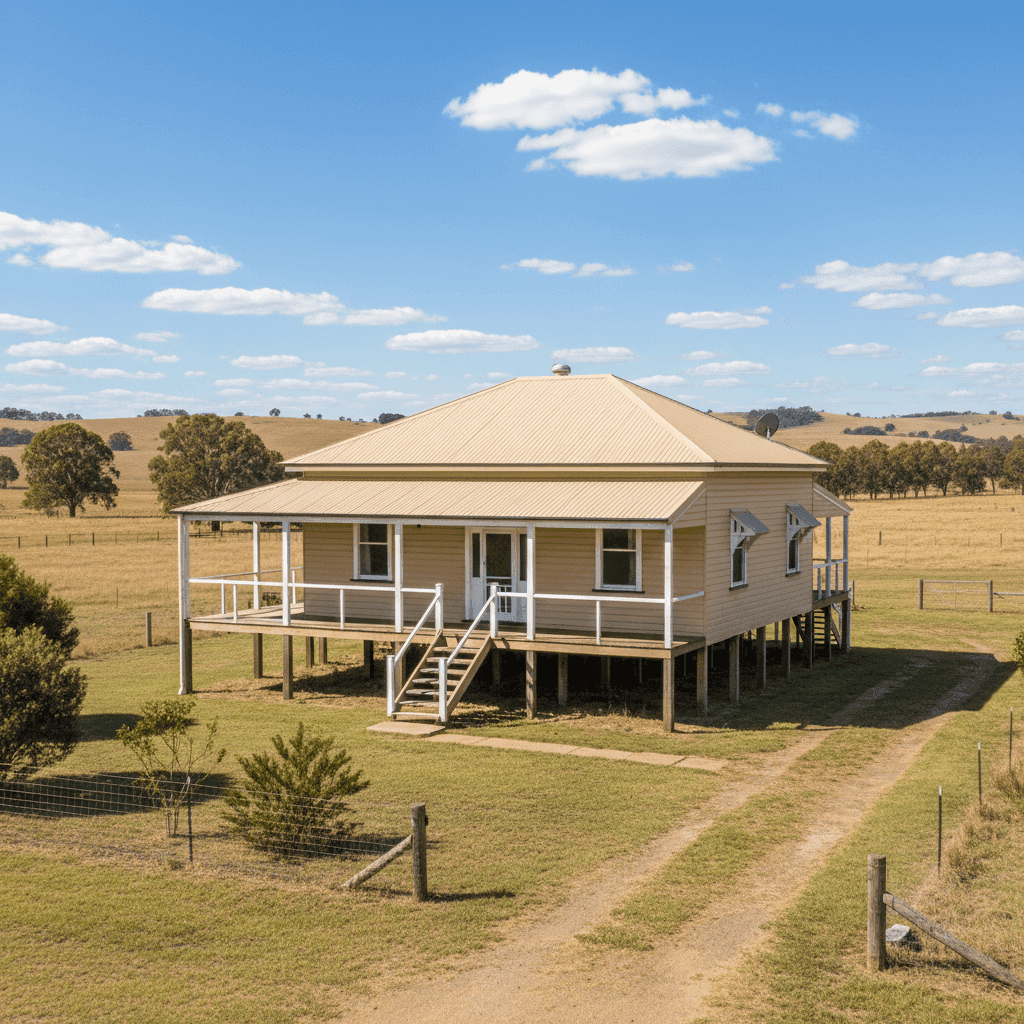
Springsure is a quiet Central Queensland town sitting in the heart of the Central Highlands region — a landscape defined by open grazing country, red soil plains, and a strong rural identity. For homeowners here, finding affordable home insurance can feel like a challenge, particularly given Queensland's reputation for elevated premiums driven by weather risk. This article breaks down a recent home and contents insurance quote for a three-bedroom free standing home in Springsure (postcode 4722), and puts the numbers into context against suburb, state, and national benchmarks.
---
Is This Quote Fair?
The annual premium for this quote comes in at $2,548 per year (or $237/month), covering a building sum insured of $500,000 and contents valued at $150,000 — both with a $500 excess. Our pricing analysis rates this quote as CHEAP (Below Average), meaning it sits meaningfully below what most comparable properties in Springsure are paying.
To put that in perspective:
- The suburb average for Springsure is $3,611/year — this quote is roughly $1,063 cheaper
- The suburb median sits at $3,421/year, still well above this quote
- Even the 25th percentile (the cheapest quarter of quotes in the area) is $2,785/year — this quote undercuts that too
That's a genuinely strong result. Paying less than 75% of local quotes while maintaining solid coverage levels is the kind of outcome homeowners should aim for. If you're curious about what others in the area are paying, you can explore Springsure insurance statistics on CoverClub.
---
How Springsure Compares
One of the most striking aspects of this analysis is just how wide the pricing gap is between Springsure and the broader Queensland market.
| Benchmark | Annual Premium |
|---|---|
| This Quote | $2,548 |
| Springsure Suburb Average | $3,611 |
| Springsure Suburb Median | $3,421 |
| QLD State Average | $9,129 |
| QLD State Median | $3,903 |
| National Average | $5,347 |
| National Median | $2,764 |
| Central Highlands LGA Average | $14,474 |
The Queensland state average of $9,129/year is eye-watering — largely driven by high-risk coastal and cyclone-prone postcodes in Far North Queensland. Springsure, while still in Queensland, sits inland and outside designated cyclone risk zones, which helps keep premiums far more manageable.
What's particularly notable is the Central Highlands LGA average of $14,474/year. This figure is heavily skewed by other postcodes within the LGA that may carry higher flood, storm, or bushfire exposure. Springsure itself tells a very different story — and this quote, at $2,548, is a fraction of that LGA average.
Compared to the national average of $5,347/year, this quote is still well below the mark, reinforcing its "cheap" classification even on a broader scale.
---
Property Features That Affect Your Premium
Several characteristics of this property play a meaningful role in shaping the insurance premium — both positively and negatively.
Weatherboard Timber Walls
Weatherboard wood construction is one of the most common wall types in older Queensland homes, but it does carry a higher risk profile than brick or rendered masonry. Timber is more susceptible to fire, termite damage, and general wear over time, which can push premiums up slightly. Insurers price this risk into their calculations.
Steel / Colorbond Roof
On the upside, a Colorbond steel roof is generally viewed favourably by insurers. It's durable, low-maintenance, and performs well in high-wind events. Compared to older tile or fibrous cement roofing, Colorbond tends to attract more competitive premiums.
Stump Foundation
The home sits on stumps, which is extremely common in regional Queensland — it allows airflow beneath the structure and can help manage moisture in warmer climates. However, stump foundations can be a consideration for insurers when assessing flood or inundation risk, as elevated homes may be more exposed to wind uplift. That said, stumps also reduce the risk of groundwater damage in some scenarios.
Construction Year: 1989
At around 35 years old, this home falls into a mid-age bracket. It's old enough to potentially have ageing plumbing, wiring, or structural components, but not so old as to attract the highest age-related risk loadings. Keeping up with maintenance is key for homes of this era.
Ducted Climate Control
The presence of ducted climate control is a contents and building consideration — it adds to the replacement cost of the home and can be a factor in both the building sum insured and the overall premium. It's worth ensuring your sum insured adequately accounts for the cost of replacing this system.
No Pool, No Solar Panels
The absence of a pool and solar panels simplifies the risk profile. Both features can add complexity (and cost) to a policy, so their absence is a minor positive in keeping this premium lean.
---
Tips for Homeowners in Springsure
Whether you're reviewing your current policy or shopping for the first time, here are four practical tips tailored to homeowners in this part of Queensland.
1. Don't Underinsure Your Building
$500,000 is a reasonable sum insured for a 130 sqm home, but construction costs in regional Queensland have risen sharply in recent years. Use a building calculator to verify your sum insured covers full rebuild costs — including demolition, site clearance, and professional fees — not just the market value of the property.
2. Review Your Contents Value Annually
$150,000 in contents cover is a solid starting point, but it's easy for this figure to drift out of date. New appliances, furniture, and electronics add up. Spend 20 minutes each year doing a rough room-by-room inventory to make sure you're not underinsured.
3. Maintain Your Timber Walls and Roof
Weatherboard homes require regular upkeep — painting, gap-sealing, and checking for signs of rot or termite activity. Insurers can decline claims if damage is linked to poor maintenance, so staying on top of repairs protects both your home and your coverage.
4. Compare Quotes at Renewal Time
The insurance market shifts constantly, and loyalty doesn't always pay. Even if you're happy with your current insurer, it's worth getting a fresh comparison quote each year. A quote that's competitive today might not be the best deal in 12 months — and vice versa.
---
Ready to Compare Home Insurance in Springsure?
Whether this quote matches your situation or not, the best way to know if you're getting a fair deal is to compare. CoverClub makes it easy to see real quotes from multiple insurers in minutes — no jargon, no pressure. Get a home insurance quote today and find out where your premium sits relative to the rest of Springsure.