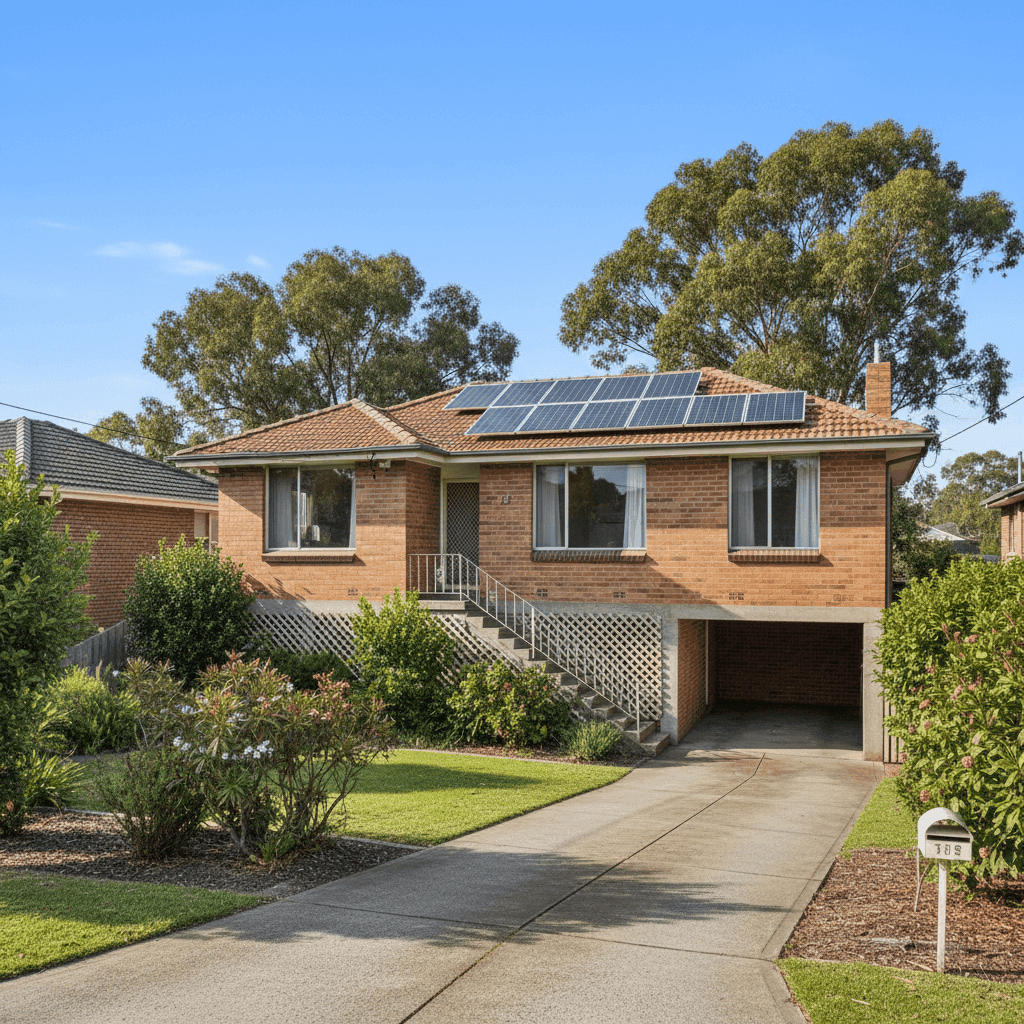
If you own a free standing home in Springvale South, VIC 3172, you've probably wondered whether you're paying a fair price for your building insurance — or whether there's a better deal out there. This article breaks down a real building-only insurance quote for a 3-bedroom, 2-bathroom brick veneer home in Springvale South, comparing it against local, state, and national benchmarks so you can make a more informed decision.
---
Is This Quote Fair?
The quote in question comes in at $1,554 per year (or $149/month) for building-only cover, with a $1,000 building excess and a sum insured of $560,000. Our price rating for this quote is FAIR — Around Average.
That "fair" rating isn't a consolation prize — it actually means this premium sits in a reasonable position relative to what other homeowners in Springvale South are paying. Based on 26 quotes collected for this suburb, the local average annual premium is $1,943 and the median is $1,981. At $1,554, this quote lands below both figures, placing it closer to the 25th percentile of $1,321 than the 75th percentile of $2,429.
In practical terms, this homeowner is paying less than most of their neighbours for comparable cover — which is a solid outcome. That said, "fair" doesn't mean "the best available." There could still be room to shop around and potentially land something closer to that 25th percentile mark.
---
How Springvale South Compares
One of the most useful ways to assess any insurance quote is to zoom out and look at the broader picture. Here's how Springvale South stacks up:
| Benchmark | Annual Premium |
|---|---|
| This Quote | $1,554 |
| Suburb Average (3172) | $1,943 |
| Suburb Median (3172) | $1,981 |
| VIC State Average | $3,000 |
| VIC State Median | $2,718 |
| LGA Average (Kingston, Vic.) | $3,103 |
| National Average | $5,347 |
| National Median | $2,764 |
The numbers tell an encouraging story for Springvale South homeowners. At a suburb average of $1,943, this area sits well below the Victorian state average of $3,000 and even further below the national average of $5,347 — which is heavily skewed by high-risk regions like Far North Queensland and parts of Western Australia prone to cyclones and flooding.
Even compared to the broader Kingston LGA average of $3,103, Springvale South comes out ahead. This suggests the suburb benefits from relatively lower perceived risk in the eyes of insurers — a reflection of its stable urban environment, established infrastructure, and distance from major natural disaster corridors.
For a deeper dive into local pricing trends, you can explore the Springvale South suburb stats page or browse all Victorian data.
---
Property Features That Affect Your Premium
Insurance pricing isn't arbitrary — every feature of your home plays a role in how insurers assess risk and calculate your premium. Here's how the key characteristics of this property likely influence its cost:
Brick Veneer Walls & Tiled Roof Brick veneer is generally viewed favourably by insurers. It's durable, fire-resistant, and widely used in Melbourne's suburban housing stock. Tiled roofs similarly offer good longevity and weather resistance, making this combination a relatively low-risk profile compared to, say, weatherboard cladding with a corrugated iron roof.
Stump Foundation & Elevated Design The home sits on stumps and is elevated by at least one metre. While this style of construction — common in older Melbourne homes built around 1980 — can introduce some additional risk factors (such as subfloor moisture or pest vulnerability), the elevation can actually be beneficial in areas with surface water runoff. Insurers assess this on a case-by-case basis, and it's worth confirming your insurer understands the foundation type accurately.
1980 Construction Year Homes built in 1980 are now over 40 years old. While many are structurally sound, ageing plumbing, electrical systems, and roofing materials can increase the likelihood of claims. Some insurers may apply a loading for older homes, so it's worth checking whether your policy accounts for any age-related considerations.
Solar Panels This property has solar panels installed, which adds value to the building and should be reflected in the sum insured. Most building insurance policies cover fixed solar panels as part of the structure, but it's always worth confirming this with your insurer — particularly for damage caused by storms or hail.
Ducted Climate Control Ducted heating and cooling systems are a significant fixed asset. Like solar panels, they're typically covered under building insurance, but their presence increases the replacement cost of the home — something to keep in mind when reviewing your sum insured of $560,000.
Timber & Laminate Flooring Timber and laminate floors can be costly to replace after water damage or fire. While this is more relevant for contents or combined policies, it's worth noting for homeowners who may later consider upgrading to a combined building and contents policy.
---
Tips for Homeowners in Springvale South
1. Review your sum insured regularly At $560,000, this building's sum insured needs to reflect the true cost of rebuilding — not the market value of the property. Construction costs have risen sharply in recent years, so it's wise to revisit this figure annually or after any renovations. Underinsurance is one of the most common and costly mistakes homeowners make.
2. Confirm solar panels and ducted systems are covered With both solar panels and ducted climate control on the property, make sure your policy explicitly covers these as part of the building. Ask your insurer whether there are any sub-limits or exclusions that apply.
3. Check your stump foundation is accurately disclosed Some insurers treat stump or pier foundations differently, particularly in terms of subsidence or pest damage exclusions. Ensure your policy correctly reflects the elevated, stump-based construction so you're not caught out at claim time.
4. Compare at least 3 quotes before renewing Even if your current premium feels reasonable, the insurance market shifts constantly. Given this quote sits above the suburb's 25th percentile, there may be value in comparing alternatives — you could potentially save several hundred dollars a year without sacrificing cover quality.
---
Ready to Compare?
Whether you're reviewing your existing policy or shopping for the first time, comparing quotes is the single most effective way to make sure you're not overpaying. At CoverClub, we make it easy to benchmark your premium against real data from homeowners in your suburb and across Australia.
Get a building insurance quote for your Springvale South home →