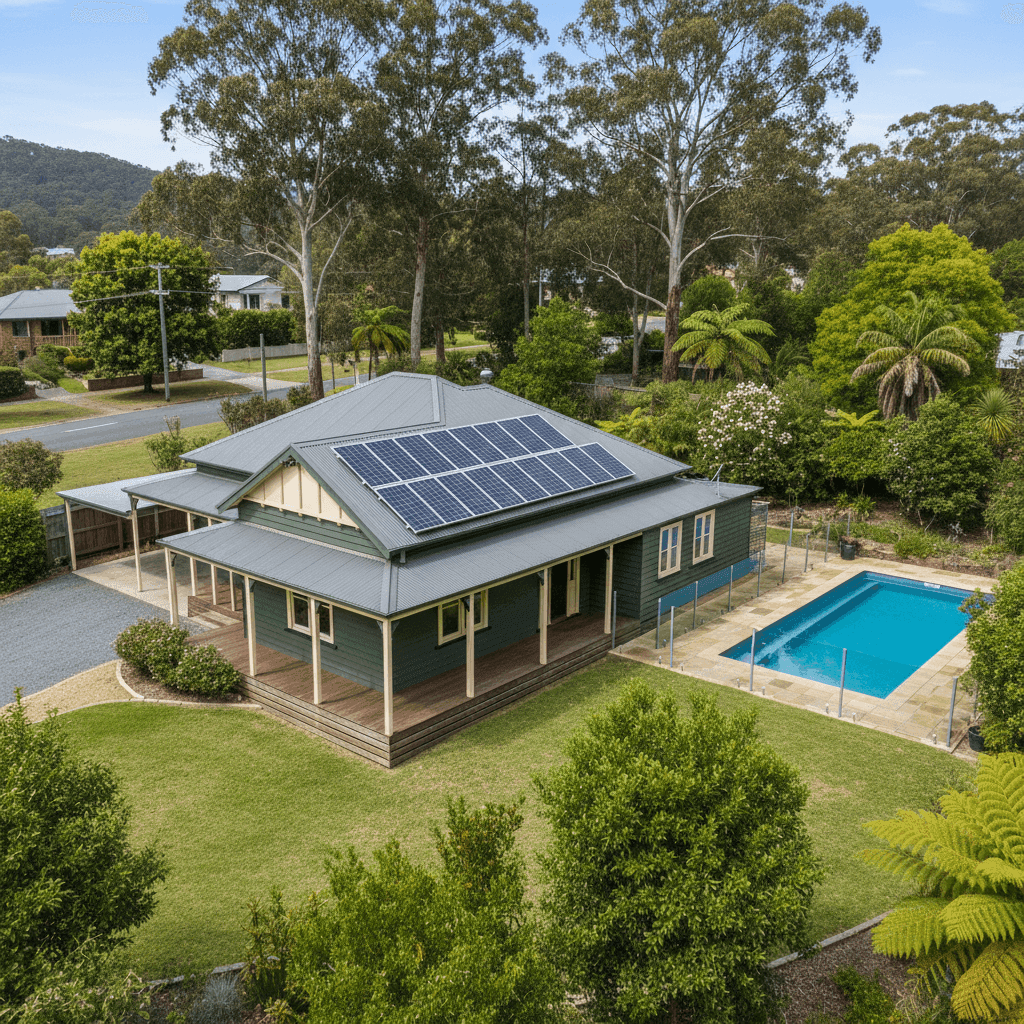
Nestled in the Blue Mountains foothills, Springwood is one of the most characterful suburbs in the Greater Sydney region. With its leafy streets, heritage homes, and proximity to national parkland, it's a sought-after address — but one that comes with some unique considerations when it comes to home insurance. This article breaks down a real home and contents insurance quote for a four-bedroom free standing home in Springwood (postcode 2777), and puts the numbers in context so you can judge whether you're getting a fair deal.
---
Is This Quote Fair?
The annual premium for this property came in at $2,278 per year (or $218/month), covering both building (sum insured: $589,000) and contents ($50,000). Our pricing model rates this quote as CHEAP — below average for the area.
To understand why that's significant, consider that the suburb average for Springwood sits at $3,909/year, with a median of $4,010/year. That means this quote is coming in roughly 42% below the suburb average — a substantial saving that's well worth paying attention to.
Even against the broader NSW state average of $3,801/year, this premium is still around 40% cheaper. And compared to the national average of $2,965/year, it's still meaningfully below the benchmark.
In short: if you were quoted something similar for a comparable property in Springwood, you'd be doing very well. For context, 75% of quotes in this suburb come in at $4,282/year or higher — so landing below the 25th percentile figure of $3,322/year is a genuinely strong outcome.
---
How Springwood Compares
Springwood tends to attract higher-than-average home insurance premiums, and the data bears this out clearly:
| Benchmark | Annual Premium |
|---|---|
| This Quote | $2,278 |
| Springwood Suburb Average | $3,909 |
| Springwood Suburb Median | $4,010 |
| Blue Mountains LGA Average | $3,517 |
| NSW State Average | $3,801 |
| National Average | $2,965 |
| National Median | $2,716 |
Springwood's suburb average of $3,909 sits noticeably above both the state and national averages. The Blue Mountains LGA average of $3,517 also exceeds the national figure, suggesting that insurers consistently price this region at a premium — likely due to the elevated bushfire risk associated with living near the escarpment and surrounding national parks.
It's worth noting that the suburb sample size here is six quotes, so while directionally useful, these figures should be treated as indicative rather than definitive. As more quotes are gathered for this area, the averages will become increasingly reliable. You can track the latest data on the Springwood suburb stats page.
---
Property Features That Affect Your Premium
Several characteristics of this particular property are worth examining, as they each play a role in how insurers assess risk and calculate premiums.
Weatherboard Timber Construction
The external walls are weatherboard wood — a classic material seen throughout older Blue Mountains homes. While charming and historically significant, timber weatherboard is considered higher risk than brick veneer or double brick by most insurers. It's more susceptible to fire damage, moisture ingress, and general wear over time. Expect this to be a contributing factor in any quote you receive.
Age of Construction (1921)
At over 100 years old, this is a heritage-era home. Older properties can be more expensive to insure because of the higher cost to repair or rebuild using period-appropriate materials and methods. The building sum insured of $589,000 reflects this — replacement costs for a home of this age and character are typically well above what the land value or market value might suggest.
Stump Foundation
The home sits on stumps, which is common for homes of this era and style in the Blue Mountains. Stump foundations can be vulnerable to movement, rot, and pest damage over time, and insurers may factor this into their risk assessment. Regular inspection and maintenance of stumps is important for both safety and insurability.
Steel/Colorbond Roof
On the positive side, a Colorbond steel roof is generally viewed favourably by insurers. It's durable, fire-resistant, and low-maintenance compared to older roofing materials like terracotta tiles or corrugated iron. This is likely helping to offset some of the risk factors associated with the timber construction and age.
Swimming Pool
The presence of a pool adds to the overall replacement value of the property and may slightly increase the contents or building premium. It also introduces liability considerations — something worth confirming is adequately covered in your policy's legal liability section.
Solar Panels
Solar panels are increasingly common on Australian homes and most standard building policies will cover them as a fixed fixture of the home. It's worth double-checking that your sum insured accounts for the replacement cost of the panels, particularly as system sizes and installation costs have increased in recent years.
Building Excess vs Contents Excess
One thing to note with this particular quote is the disparity between the building excess ($2,500) and the contents excess ($500). The higher building excess is likely a deliberate choice to bring the overall premium down — a common and sensible strategy for homeowners who are primarily concerned about catastrophic building loss rather than smaller claims.
---
Tips for Homeowners in Springwood
1. Review your bushfire preparedness annually Springwood is in a region with elevated bushfire risk. Many insurers will assess your property's proximity to bushland, slope, and vegetation when calculating premiums. Maintaining a defendable space around your home, clearing gutters, and following Blue Mountains City Council guidelines can reduce risk — and may positively influence future quotes.
2. Get your sum insured right With a 1921 weatherboard home, underinsurance is a real risk. The cost to rebuild a period home with appropriate materials can be significantly higher than a standard modern build. Use a building cost calculator or speak to a quantity surveyor to ensure your $589,000 sum insured is genuinely sufficient for full replacement.
3. Consider your excess strategically As demonstrated in this quote, opting for a higher building excess ($2,500) can meaningfully reduce your annual premium. If you have savings to cover smaller claims out of pocket, this is often a smart trade-off — especially for a building that's unlikely to be claimed on for minor issues.
4. Compare quotes every year at renewal The Springwood market shows significant spread between the 25th percentile ($3,322) and 75th percentile ($4,282), meaning the insurer you choose matters enormously. Don't let your policy auto-renew without checking the market — a few minutes comparing quotes can save you well over $1,000 annually.
---
Compare Your Own Quote
Whether you're a long-time Springwood local or just settling into the Blue Mountains, it pays to know what you should be paying for home insurance. CoverClub makes it easy to compare quotes from multiple insurers in minutes, so you can see exactly where your premium sits relative to your neighbours.