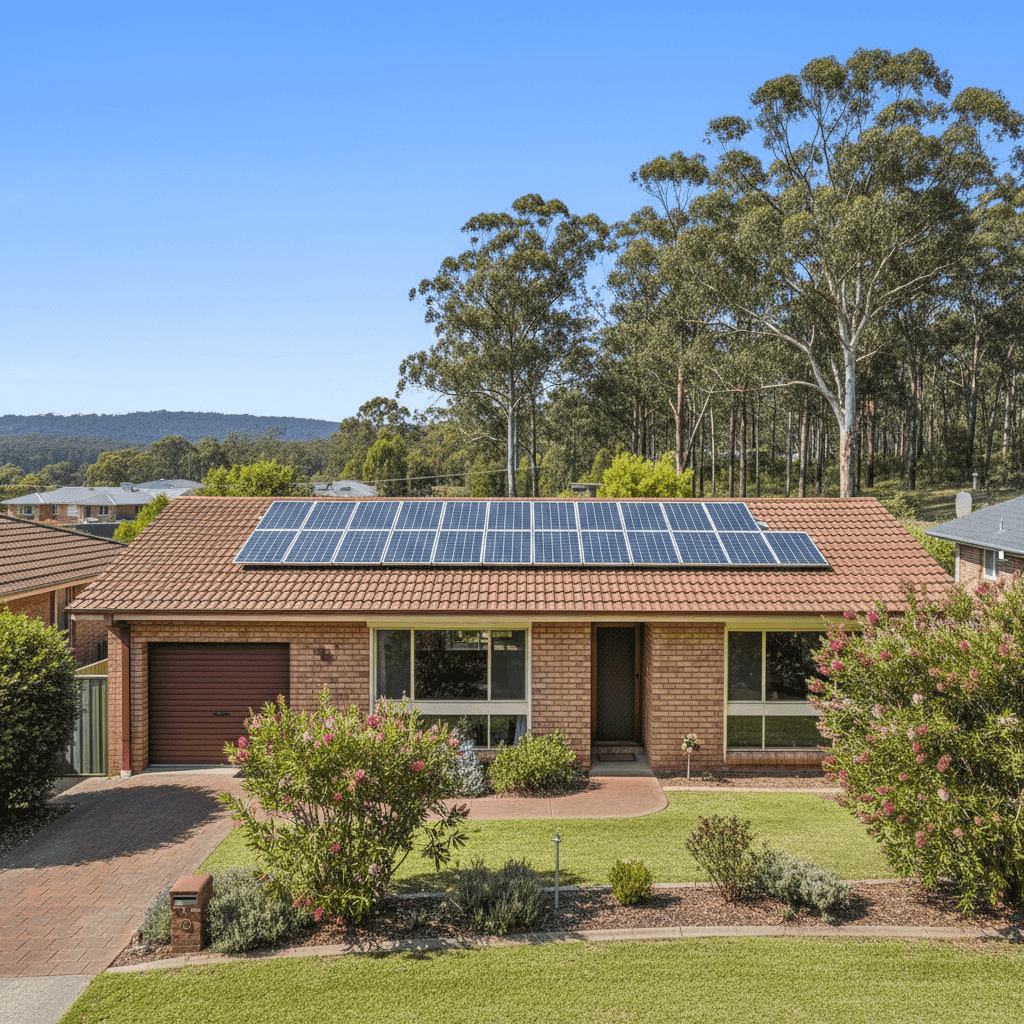
Springwood sits in the heart of the Blue Mountains, offering a leafy, relaxed lifestyle just over an hour west of Sydney. It's a popular suburb for families and tree-changers alike — but that beautiful bushland setting also comes with its own insurance considerations. This article breaks down a real home and contents insurance quote for a four-bedroom, free-standing home in Springwood (postcode 2777), and puts the numbers in context so you can judge whether you're getting a fair deal.
---
Is This Quote Fair?
The quote in question comes in at $1,844 per year (or $181/month) for combined home and contents cover, with a building sum insured of $496,000 and contents valued at $50,000. Both the building and contents carry a $2,000 excess.
Our pricing analysis rates this quote as CHEAP — below average for the area. That's genuinely good news for the homeowner. Based on local suburb data for Springwood, the average annual premium sits at $2,580, meaning this quote is saving roughly $736 per year compared to what many neighbours are paying. It also comes in well under the suburb median of $2,563.
To put it another way, this quote sits below the 25th percentile for Springwood — meaning fewer than a quarter of comparable quotes in the area are priced this low. That's a strong result by any measure.
---
How Springwood Compares
To fully appreciate how competitive this quote is, it helps to zoom out and look at the broader picture.
| Benchmark | Annual Premium |
|---|---|
| This Quote | $1,844 |
| Springwood Suburb Average | $2,580 |
| Springwood Suburb Median | $2,563 |
| Springwood 25th Percentile | $1,977 |
| Blue Mountains LGA Average | $4,220 |
| NSW State Average | $9,528 |
| NSW State Median | $3,770 |
| National Average | $5,347 |
| National Median | $2,764 |
A few things stand out here. First, the NSW state average of $9,528 is dramatically higher than what Springwood residents typically pay — this is largely driven by high-value properties and coastal flood or storm-prone areas elsewhere in the state pushing that figure up. The median of $3,770 is a more realistic yardstick for most NSW homeowners.
At the national level, the average premium of $5,347 reflects the outsized impact of cyclone-prone Queensland and Northern Territory properties, as well as increasing flood and bushfire risk across the country. The national median of $2,764 is closer to the Springwood norm.
What's particularly interesting is the Blue Mountains LGA average of $4,220 — notably higher than the Springwood suburb average of $2,580. This suggests that while the broader LGA carries elevated risk (likely due to bushfire exposure in outlying areas), Springwood itself may benefit from better access to emergency services and a somewhat more suburban character compared to more remote parts of the mountains.
This quote, at $1,844, sits comfortably below every single one of these benchmarks. It's a genuinely competitive result.
---
Property Features That Affect Your Premium
Several characteristics of this property are likely working in the homeowner's favour — and a couple deserve closer attention.
Brick Veneer Construction & Tiled Roof Brick veneer walls and a tiled roof are among the most insurer-friendly combinations in Australia. Brick is highly resistant to fire and doesn't rot or warp over time, while tiles are durable and provide good weather protection. Compared to timber weatherboard or steel sheet roofing, this combination typically attracts lower premiums.
Built in 1970 A construction year of 1970 means the home is over 50 years old. While the brick veneer and tile construction hold up well over time, older homes can attract scrutiny around plumbing, wiring, and structural integrity. Some insurers may apply loadings for older properties, so it's worth ensuring the building sum insured of $496,000 accurately reflects current rebuild costs — not just market value.
Stump Foundation Homes on stumps (also called pier and beam foundations) are common in older Australian properties and can be more vulnerable to movement, moisture, and pest damage over time. Insurers sometimes view this foundation type as a slightly higher risk than a concrete slab, particularly in areas with variable soil conditions.
Solar Panels This property has solar panels installed, which adds value to the home but also increases the cost to rebuild or replace. It's important to confirm that the building sum insured accounts for the replacement cost of the solar system — a quality rooftop solar installation can easily add $8,000–$15,000 or more to rebuild costs.
Ducted Climate Control Ducted air conditioning is another fixed asset that should be factored into the building sum insured. Like solar, it's often overlooked when homeowners estimate rebuild costs, potentially leaving them underinsured.
No Pool, Standard Fittings The absence of a pool removes one common source of liability and premium loading. Standard fittings (rather than premium) also keep rebuild cost estimates — and therefore premiums — more modest.
---
Tips for Homeowners in Springwood
1. Review Your Building Sum Insured Regularly With a 1970s home on stumps, solar panels, and ducted climate control, it's easy to end up underinsured if you set your sum insured once and forget it. Building costs in Australia have risen significantly in recent years. Use a professional building calculator or get a quantity surveyor's estimate to make sure $496,000 still reflects what it would actually cost to rebuild your home from scratch today.
2. Understand Your Bushfire Risk Springwood is in the Blue Mountains, and bushfire is a real consideration for many properties in the area. Check your property's bushfire attack level (BAL) rating and confirm your policy covers bushfire damage without significant exclusions. Some policies in high-risk zones have specific conditions around ember protection and maintenance of defensible space.
3. Don't Overlook Contents A $50,000 contents sum may be sufficient for some households, but it's worth doing a room-by-room audit to make sure it covers everything — furniture, electronics, appliances, clothing, and valuables. Many homeowners underestimate their contents value, which can lead to a painful shortfall at claim time.
4. Compare Before You Renew Even if your current premium is competitive, insurers regularly adjust their pricing models. What's cheap today may not be cheap at renewal. Set a reminder to compare quotes on CoverClub at least 30 days before your policy expires — you may find an even better deal, or confirm you're already on a winner.
---
Ready to See What You'd Pay?
Whether you're a Springwood local or just curious how your own home insurance stacks up, CoverClub makes it easy to compare quotes from multiple insurers in minutes. Head to coverclub.com.au and enter your address to get started — it's free, fast, and could save you hundreds every year.