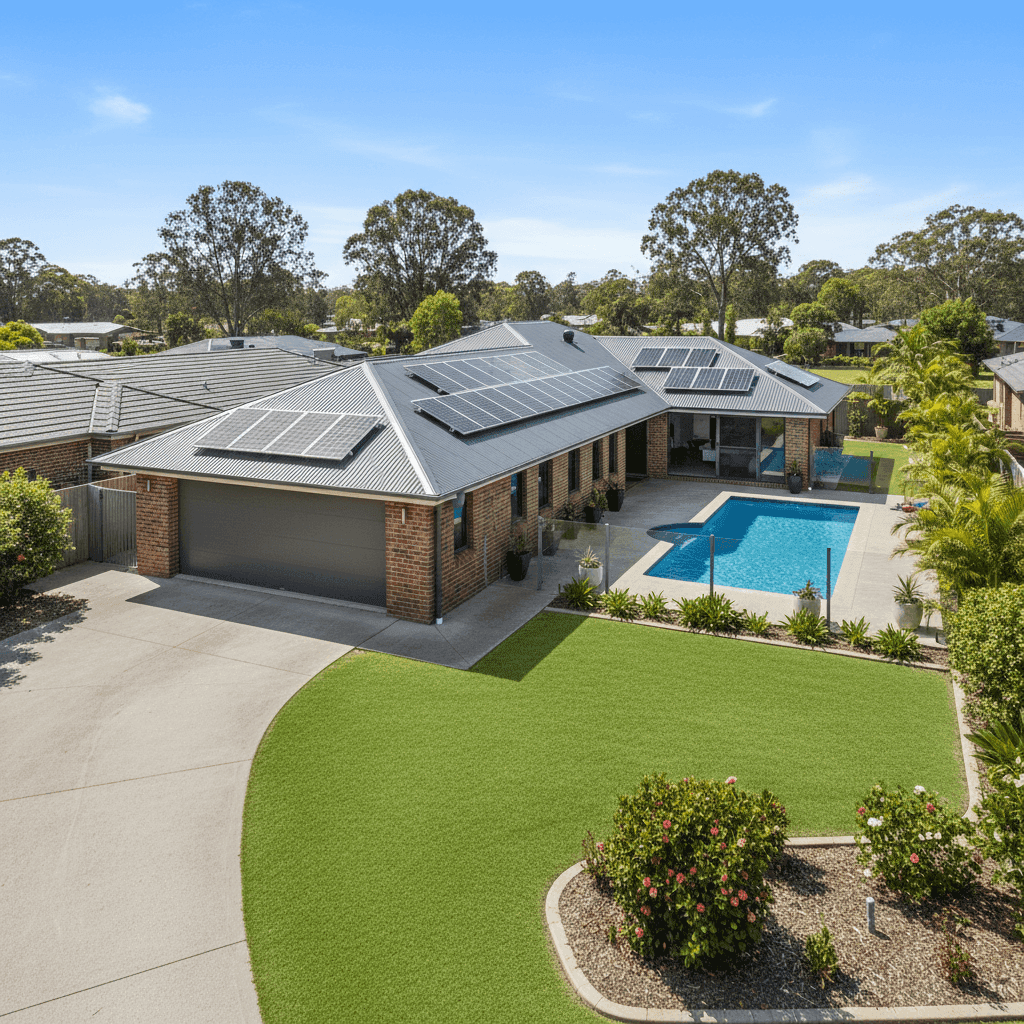
Springwood, nestled in Brisbane's southern corridor at postcode 4127, is a well-established suburban pocket known for its leafy streets and generous block sizes. It's exactly the kind of area where larger, well-appointed homes are common — and where getting home insurance right really matters. This article breaks down a real home and contents insurance quote for a six-bedroom free standing home in Springwood, examining whether the price stacks up and what's driving the cost.
---
Is This Quote Fair?
The annual premium for this property came in at $4,782 per year (or $458 per month), covering both building and contents with a sum insured of $1,492,000 on the building and $249,000 on contents. Our price rating for this quote is Expensive — Above Average.
To put that in context: the suburb average for Springwood sits at just $1,923 per year, with a median of $1,863. At $4,782, this quote is running at roughly 2.5 times the local median — a significant gap that warrants a closer look.
That said, "expensive" doesn't necessarily mean "wrong." This is a large, high-value property with a substantial building sum insured of nearly $1.5 million. The contents cover alone at $249,000 is well above what many households insure. When you factor in the size, the inclusions, and the replacement cost of a 399 sqm home with premium fixtures, a higher premium is to be expected. The question is whether it's proportionally fair — and there's a reasonable case that shopping around could still yield a better deal.
---
How Springwood Compares
Understanding where this quote sits relative to broader benchmarks helps paint a clearer picture.
| Benchmark | Premium |
|---|---|
| This Quote | $4,782/yr |
| Springwood Suburb Average | $1,923/yr |
| Springwood Suburb Median | $1,863/yr |
| Springwood 25th Percentile | $1,129/yr |
| Springwood 75th Percentile | $2,506/yr |
| QLD State Average | $9,129/yr |
| QLD State Median | $3,903/yr |
| National Average | $5,347/yr |
| National Median | $2,764/yr |
| Brisbane LGA Average | $16,277/yr |
A few things stand out here. First, Queensland as a whole carries some of the highest home insurance premiums in the country — largely driven by cyclone-prone coastal and far-north regions that push the state average to $9,129. Springwood, being in the greater Brisbane area and not classified as a cyclone risk zone, benefits from comparatively lower local premiums.
Interestingly, this quote at $4,782 sits below both the national average of $5,347 and well below the Brisbane LGA average of $16,277 (which is heavily skewed by higher-risk and higher-value properties across the broader council area). So while it's above the Springwood suburb norm, it's not out of step with what larger, well-insured homes pay nationally.
The suburb's 75th percentile sits at $2,506 — meaning roughly 75% of Springwood quotes in our dataset come in under that figure. This quote exceeds even that upper band, which reinforces the "expensive" rating for the local area, even if it looks more reasonable on a national scale.
---
Property Features That Affect Your Premium
Several characteristics of this property have a direct bearing on the premium calculated.
Size and Sum Insured At 399 sqm, this is a substantial home. The building sum insured of $1,492,000 reflects the genuine cost of rebuilding a large, modern home to its current standard — and insurers price accordingly. A higher replacement value means greater exposure for the insurer, which flows through to the premium.
Construction Type The home features brick veneer external walls and a steel/Colorbond roof — both of which are generally viewed favourably by insurers. Brick veneer offers solid fire resistance and durability, while Colorbond roofing is low-maintenance and performs well in Australian conditions. These materials typically attract more competitive rates compared to timber weatherboard or older tile roofs.
Slab Foundation and Tile Flooring A concrete slab foundation is standard for homes of this era and is considered a low-risk construction method. Combined with tile flooring throughout, the property has limited exposure to water and moisture damage compared to homes with timber subfloors or carpet — a minor but positive factor in risk assessment.
Swimming Pool A pool adds both value and liability to a property. Insurers factor in the cost of pool infrastructure when calculating building replacement costs, and some policies also consider public liability exposure. Make sure your policy explicitly covers pool-related structures and equipment.
Solar Panels The presence of solar panels is increasingly common on Australian homes, but it's worth confirming your policy covers them. Solar systems are typically considered part of the building sum insured, but coverage for accidental damage, storm damage, or electrical faults can vary between insurers. Always check the Product Disclosure Statement (PDS).
Ducted Climate Control Ducted air conditioning is a significant fixed asset that adds to building replacement costs. It's generally covered under building insurance, but again, the specifics depend on the policy wording.
---
Tips for Homeowners in Springwood
1. Review Your Building Sum Insured Annually Construction costs have risen sharply in recent years. A sum insured of $1,492,000 may be appropriate today, but it's worth reassessing each year to ensure it reflects current rebuild costs — not just the original estimate. Underinsurance is one of the most common and costly mistakes homeowners make.
2. Confirm Solar and Pool Coverage Explicitly Don't assume these features are automatically covered. Ask your insurer or check the PDS to confirm that solar panels, pool equipment, and associated plumbing are included in your building cover — and at what limits.
3. Compare Quotes Before Renewing Given this quote is rated as expensive relative to the local market, it's well worth comparing alternatives before accepting a renewal. Premiums for the same property can vary by hundreds — sometimes thousands — of dollars between insurers. Use CoverClub's free comparison tool to see what other providers are offering.
4. Consider Your Excess Strategy Both the building and contents excess on this policy sit at $1,000. Opting for a higher voluntary excess can meaningfully reduce your annual premium. If you have the financial buffer to cover a larger out-of-pocket cost in the event of a claim, this is a practical way to bring the premium down.
---
Ready to Find a Better Rate?
If you're a homeowner in Springwood or anywhere across Queensland, it pays to compare. CoverClub makes it easy to benchmark your current premium against real quotes from multiple insurers — so you can be confident you're not overpaying. Get a home insurance quote today and see how much you could save. You can also explore local insurance data for Springwood or dig into Queensland-wide premium trends to better understand what's driving costs in your area.