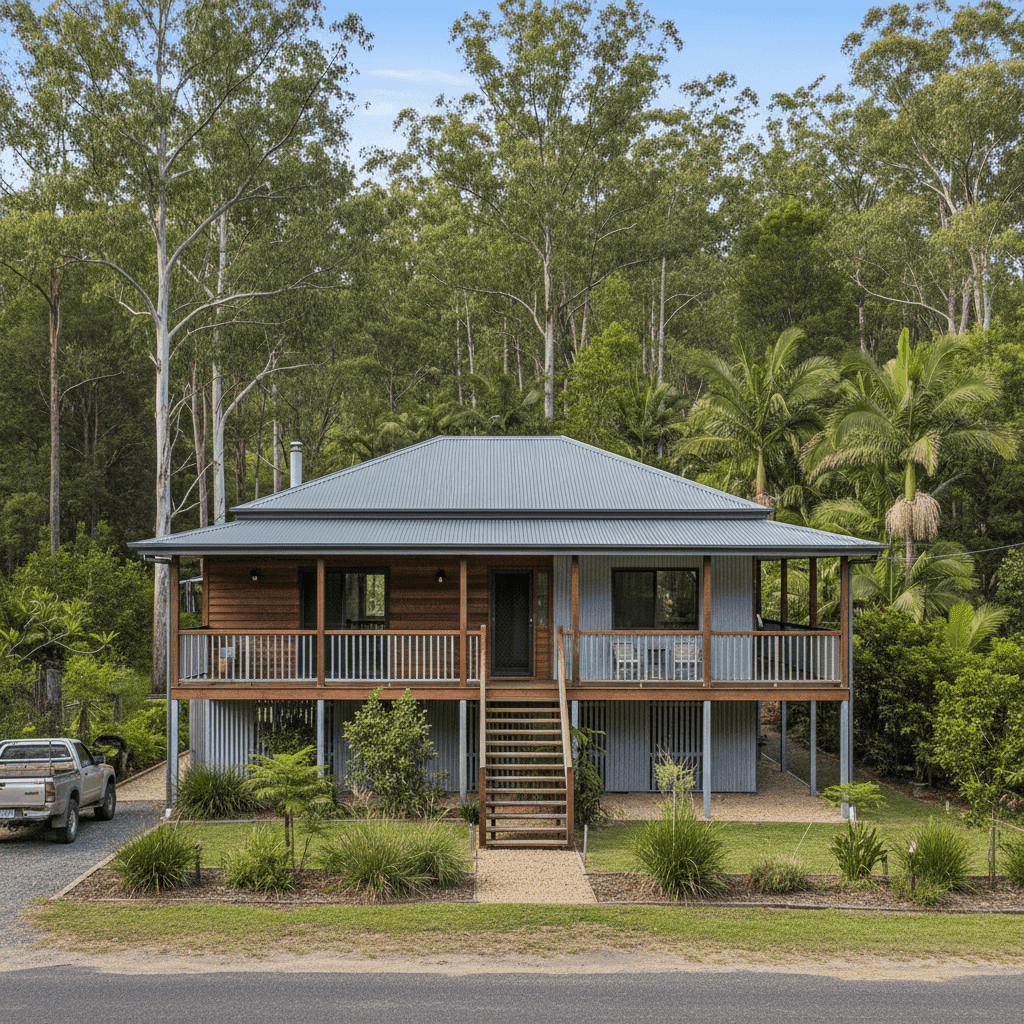
If you own a free standing home in Stony Chute, NSW 2480, you're living in a quiet, semi-rural pocket of the Northern Rivers region — and your home insurance premium reflects a unique mix of local risk factors, property characteristics, and market dynamics. This article breaks down a real home and contents insurance quote for a 2-bedroom, 1-bathroom property in Stony Chute, examines how it stacks up against state and national benchmarks, and offers practical tips to help you get the most out of your cover.
---
Is This Quote Fair?
The annual premium for this property came in at $2,766 per year (or $265/month), covering both building (sum insured: $394,000) and contents ($130,000). Our pricing analysis rates this quote as CHEAP — below average — which is genuinely good news for the homeowner.
To put that in perspective: the NSW state average premium sits at a hefty $9,528 per year, and even the state median is $3,770. Nationally, the average premium across Australia is $5,347, with a median of $2,764. This quote comes in almost exactly at the national median — a strong result given the property's location and features.
What makes this particularly noteworthy is the Ballina LGA context. The average premium across the Ballina local government area is a striking $23,241 per year — nearly ten times this quote. That figure is heavily influenced by flood and storm risk in low-lying coastal and riverfront areas within the LGA. The fact that this Stony Chute property is rated so competitively suggests its specific risk profile is considerably more favourable than many neighbouring properties.
---
How Stony Chute Compares
While suburb-level data for Stony Chute isn't yet available in our database, the broader comparisons paint a clear picture. You can explore local insurance statistics for postcode 2480 as more data becomes available.
| Benchmark | Annual Premium |
|---|---|
| This Quote | $2,766 |
| National Median | $2,764 |
| NSW State Median | $3,770 |
| NSW State Average | $9,528 |
| National Average | $5,347 |
| Ballina LGA Average | $23,241 |
The gap between the LGA average and this quote is remarkable. The Ballina LGA encompasses everything from flood-prone low-lying areas near the Richmond River to elevated hinterland properties like those in Stony Chute. Insurers price risk at a granular level, and being situated away from waterways and flood corridors can make an enormous difference to what you pay.
---
Property Features That Affect Your Premium
Several characteristics of this property play a meaningful role in how insurers calculate the premium.
Elevated Foundation on Poles
This home sits elevated by at least one metre on a pole/stump foundation — a construction style common in the Northern Rivers hinterland. Elevated homes are generally viewed more favourably by insurers in flood-prone regions because water is less likely to enter the living areas during a flood event. This feature almost certainly contributes to the competitive premium on this property.
Steel/Colorbond Roof
Colorbond roofing is a popular and well-regarded material in Australian residential construction. It's durable, fire-resistant, and performs well in high-wind conditions. Insurers typically view steel roofing positively, as it reduces the likelihood of storm damage claims compared to older materials like terracotta or asbestos cement sheeting.
Vinyl Flooring
Vinyl is a practical, water-resistant flooring choice that can reduce the severity of water damage claims. Unlike timber floors or carpet, vinyl is easier and cheaper to replace after a flood or leak — a factor that can keep contents and building claims lower.
Standard Fittings Quality
With standard-grade fittings throughout, the rebuild cost is more straightforward to estimate and less expensive than a home with high-end or custom finishes. This helps keep the building sum insured at a reasonable level ($394,000 for 139 sqm) and reduces the risk of under- or over-insurance.
Ducted Climate Control
The presence of ducted climate control is worth noting. This system adds to the overall replacement value of the home and is factored into the building sum insured. Ducted systems can be expensive to repair or replace after storm or fire damage, so ensuring your sum insured adequately accounts for this is important.
No Pool, No Solar Panels
The absence of a swimming pool and solar panels simplifies the risk profile. Pools add liability exposure and maintenance complexity, while solar panel systems — particularly older ones — can be a source of electrical fire risk. Neither factor applies here, which keeps things clean from an underwriting perspective.
---
Tips for Homeowners in Stony Chute
1. Review your building sum insured regularly Construction costs in regional NSW have risen significantly in recent years. At $394,000 for a 139 sqm home, the sum insured works out to roughly $2,835 per sqm — a reasonable figure, but worth reviewing annually. If rebuild costs in your area have risen, being underinsured could leave you out of pocket after a major claim. Use a building cost calculator or speak with a local builder to sense-check your figure each year.
2. Document your contents thoroughly With $130,000 in contents cover, it's worth keeping an up-to-date home inventory. Photograph your valuables, keep receipts where possible, and store a copy of your inventory securely off-site or in the cloud. This makes claims significantly easier to process and helps ensure you're not underinsured.
3. Understand your excess structure This policy carries a $2,000 building excess and a $1,000 contents excess. These are on the higher side, which is partly why the premium is competitive. Consider whether you have the financial buffer to cover these amounts in the event of a claim — if not, it may be worth exploring policies with lower excesses, even if the premium is slightly higher.
4. Compare at renewal time Even though this quote is rated as cheap, the insurance market changes constantly. Insurers reprice risk, introduce new products, and adjust their appetite for certain property types. Set a reminder to compare quotes at CoverClub before your renewal date each year — loyalty doesn't always pay in the insurance world.
---
Ready to Compare Your Options?
Whether you're reviewing your current policy or shopping for cover for the first time, comparing quotes is the smartest way to make sure you're getting value. At CoverClub, we make it easy to see how your premium stacks up against real market data — so you always know if you're paying a fair price. Get a home insurance quote today and see what the market has to offer for your Stony Chute property.