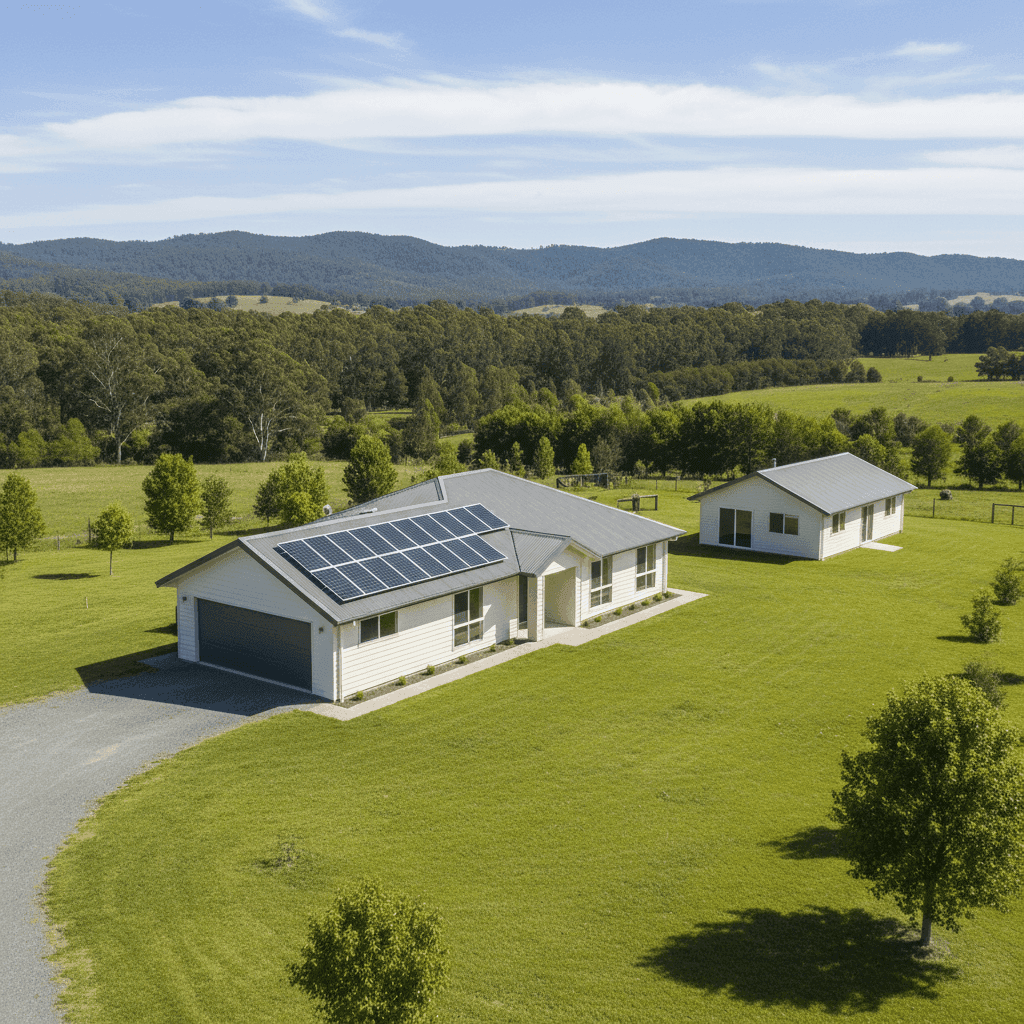
Stony Creek is a small rural locality nestled in South Gippsland, Victoria — known for its lush green hills, agricultural land, and tight-knit community. If you own a free standing home in this area and you're wondering whether your home and contents insurance quote stacks up, you're in the right place. This article breaks down a real quote for a 3-bedroom, 1-bathroom property in Stony Creek (postcode 3957) and puts it in context against local, state, and national benchmarks.
---
Is This Quote Fair?
The annual premium for this property came in at $3,442 per year (or $330/month), covering both building (sum insured: $662,000) and contents ($101,000). Our pricing engine has rated this quote as FAIR — Around Average.
That rating is a reasonable reflection of the full picture. The premium sits above the Victorian state average and median, but it's not out of line given the property's specific characteristics — more on those shortly. Importantly, it's well below the national average, which suggests homeowners in this part of Gippsland are not facing the kind of extreme pricing pressure seen in higher-risk regions of Australia.
A "Fair" rating means you're unlikely to be significantly overpaying, but there may still be room to find a more competitive price by shopping around. It's always worth comparing — even a modest saving of a few hundred dollars a year adds up over time.
---
How Stony Creek Compares
Without suburb-level comparison data available, we can look at broader benchmarks to put this quote in perspective. You can explore available Stony Creek insurance statistics as more data becomes available for this postcode.
| Benchmark | Annual Premium |
|---|---|
| This Quote | $3,442 |
| LGA Average (South Gippsland) | $2,250 |
| VIC State Average | $3,000 |
| VIC State Median | $2,718 |
| National Average | $5,347 |
| National Median | $2,764 |
A few things stand out here:
- Against the LGA: This quote is notably higher than the South Gippsland LGA average of $2,250/yr. That gap of roughly $1,200 is worth investigating — it may reflect the specific features of this property (see below), the level of cover selected, or simply variation between insurers.
- Against Victoria: The quote is above both the Victorian state average ($3,000) and median ($2,718), but not dramatically so. The state average includes a wide range of property types and risk profiles, so some variation is expected.
- Against the nation: The quote looks quite competitive when stacked against the national average of $5,347. Homeowners in parts of Queensland, Northern Australia, and coastal flood zones regularly pay significantly more, which pulls that national figure upward.
The takeaway? This quote is broadly in line with Victorian norms, but sits above the local LGA average — making it worth comparing alternatives before committing.
---
Property Features That Affect Your Premium
Several characteristics of this property are likely influencing the premium, both upward and downward.
Construction Era
Built in 1960, this home is over 60 years old. Older homes often attract higher premiums because ageing materials, wiring, and plumbing can increase the likelihood of claims. Insurers factor in the cost of restoring or replacing period features to a comparable standard.
External Walls & Roof
The home features Hardiplank/Hardiflex cladding — a fibre cement product that is generally considered a positive from an insurance perspective. It's durable, fire-resistant, and less susceptible to rot than timber weatherboards. The steel/Colorbond roof is similarly well-regarded: lightweight, long-lasting, and resistant to fire and corrosion. These materials may help moderate the premium compared to, say, a timber-clad home with a terracotta tile roof.
Stumps Foundation
A stump foundation (also known as a pier or post foundation) is common in older Victorian homes, particularly in rural and semi-rural areas. While it offers good ventilation and can be easier to access for repairs, it may also be flagged by insurers as a risk factor — particularly in areas prone to ground movement or flooding.
Granny Flat
The presence of a granny flat on the property adds complexity to the insured structure. It increases the total rebuild cost, which is reflected in the higher building sum insured of $662,000. Homeowners should ensure their policy explicitly covers the granny flat as part of the building, or consider whether it needs to be listed separately.
Solar Panels & Ducted Climate Control
Solar panels are increasingly common on Australian homes, but they do add to the replacement cost of a property. Most standard policies cover solar panels as part of the building, but it's worth confirming this with your insurer. Ducted climate control similarly adds to the value of the home's fixed fittings, which can influence both the sum insured and the premium.
Building Size
At 235 sqm, this is a comfortably sized family home. Larger floor areas generally mean higher rebuild costs, which feeds directly into the building sum insured and, in turn, the premium.
---
Tips for Homeowners in Stony Creek
1. Review Your Sum Insured Regularly
Building costs in regional Victoria have risen sharply in recent years. With a sum insured of $662,000 covering a 235 sqm home plus a granny flat, it's worth getting an independent building replacement cost estimate to make sure you're neither underinsured nor paying for more cover than you need.
2. Confirm Granny Flat Coverage
Not all policies automatically extend cover to secondary dwellings. Ask your insurer directly whether the granny flat is included under your building policy, and request written confirmation. If it's not covered, you may need to add it as a listed item or take out a separate policy.
3. Shop Around — Especially Given the LGA Gap
The difference between this quote and the South Gippsland LGA average is significant. While some of that gap is explained by property features, it's still worth getting two or three competing quotes. Use CoverClub to compare options and see whether another insurer prices this risk more competitively.
4. Ask About Discounts for Solar and Security
Some insurers offer discounts for homes with solar panels (reduced energy risk), monitored alarm systems, or deadbolt locks. It's a simple question to ask, and the savings can be meaningful over the life of a policy.
---
Ready to Find a Better Deal?
Whether you're renewing your existing policy or shopping for the first time, comparing quotes is the single most effective way to make sure you're getting value for money. Head to CoverClub to enter your property details and see how your current premium stacks up against the market — it only takes a few minutes and could save you hundreds of dollars a year.