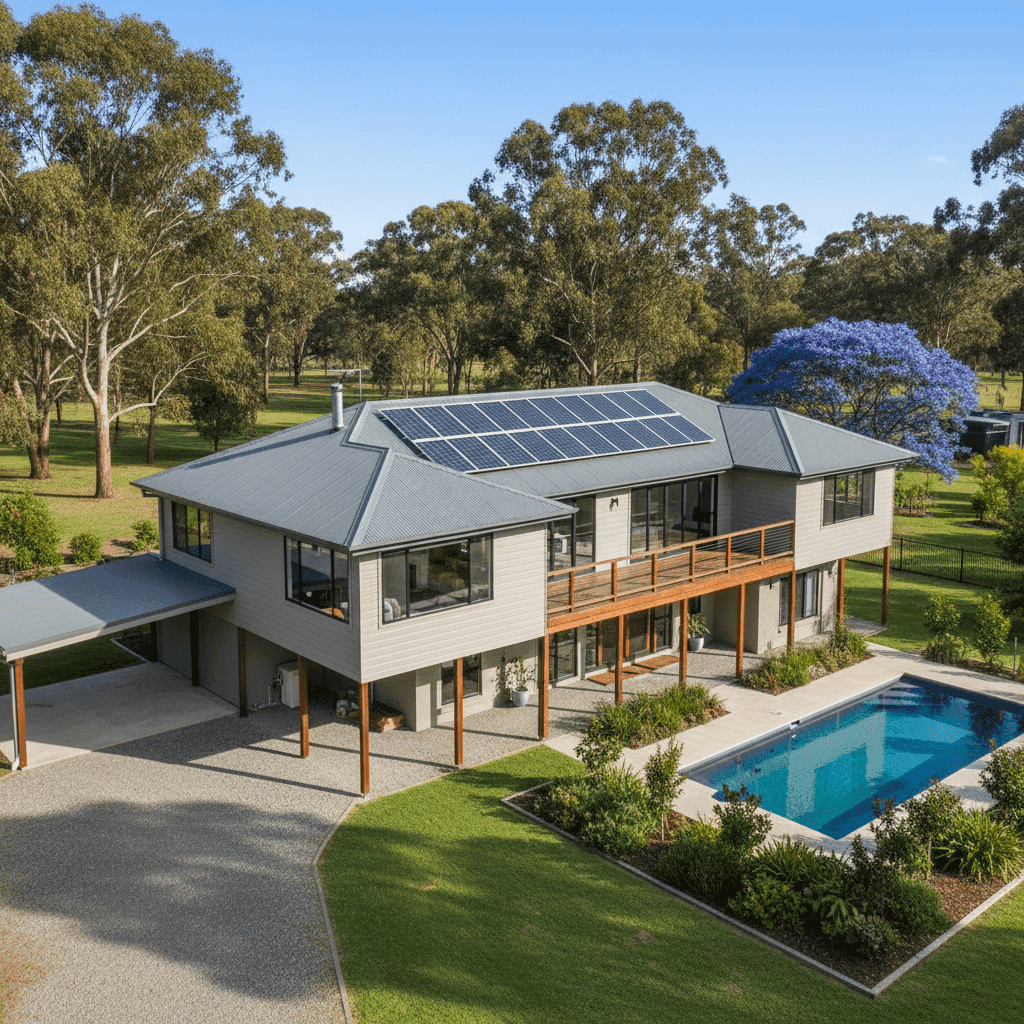
If you own a free standing home in Strathallan, VIC 3622, you already know the appeal of rural Victorian living — wide open spaces, a tight-knit community, and the kind of lifestyle that's hard to put a price on. But when it comes to home insurance, putting a price on your property is exactly what's required. This article breaks down a recent home and contents insurance quote for a five-bedroom property in Strathallan, compares it against Victorian and national benchmarks, and helps you understand what's driving the cost — and what you can do about it.
---
Is This Quote Fair?
The quote in question comes in at $5,342 per year (or $523 per month) for combined home and contents cover, with a building sum insured of $765,000 and contents valued at $200,000. The building excess is $2,000 and the contents excess is $600.
Our price rating for this quote is EXPENSIVE — above average.
To put that in perspective: the average home insurance premium across Victoria sits at around $2,921 per year, with a state median of $2,694. Nationally, the average is $2,965 and the median is $2,716. This quote is roughly 83% above the Victorian average and nearly double the national median — a significant gap that warrants a closer look.
That said, "expensive" doesn't automatically mean "wrong." Several features of this particular property push the risk profile — and therefore the premium — well above the norm. The key is understanding why the quote is where it is, and whether there's room to negotiate or shop around.
---
How Strathallan Compares
Suburb-level comparison data for Strathallan (3622) isn't currently available in our database, but we can draw meaningful context from the broader region. The LGA of Campaspe — within which Strathallan sits — has an average premium of $2,979 per year, which is broadly in line with both the Victorian and national averages.
That means this particular quote at $5,342 is sitting $2,363 above the Campaspe LGA average — a premium uplift that's hard to ignore. You can explore Strathallan-specific insurance data as it becomes available, and compare it against all of Victoria or the national picture to keep tabs on how your suburb tracks over time.
The takeaway here is clear: this property is being priced significantly above what a typical home in the region would attract. The question is whether the property's specific characteristics justify that gap.
---
Property Features That Affect Your Premium
Several attributes of this home contribute meaningfully to its elevated premium. Let's work through them:
Size and Age
At 214 square metres with five bedrooms and two bathrooms, this is a large home. Larger homes cost more to rebuild, and a building sum insured of $765,000 reflects that. The property was also built in 1975, which means it's approaching 50 years old. Older homes can carry higher rebuild risk due to outdated materials, plumbing, and wiring — all factors insurers weigh carefully.
Construction Materials
The external walls are Hardiplank/Hardiflex — a fibre cement sheeting product that's generally considered a moderate-risk material. The steel/Colorbond roof is actually a positive from an insurer's perspective, as it's durable, fire-resistant, and less prone to storm damage than older roofing types. These two factors partially offset each other.
Elevated Foundation (Stumps)
This home is elevated by at least one metre on stumps, which is a notable risk factor. Elevated homes on stumps can be more vulnerable to underfloor damage, wind uplift, and in some areas, flooding — and they typically cost more to repair or rebuild due to access and structural complexity. This feature alone can add a meaningful loading to a premium.
Timber and Laminate Flooring
Timber flooring is more expensive to replace than tiles or carpet, and insurers account for this in their contents and building valuations. Combined with the large floor area, this adds to the overall replacement cost.
Pool, Solar Panels, and Ducted Climate Control
The presence of a swimming pool, solar panel system, and ducted climate control all add to the insured value of the property. These are not small-ticket items — a pool alone can cost $20,000–$50,000 to repair or replace, and solar systems and ducted HVAC are similarly significant. Each of these features increases the total exposure for the insurer.
---
Tips for Homeowners in Strathallan
If you're looking at a quote like this and wondering whether you're paying too much, here are four practical steps worth taking:
1. Shop Around — Seriously
The single most effective thing you can do is compare quotes from multiple insurers. Premiums for the same property can vary by hundreds — or even thousands — of dollars depending on the provider. Use a comparison tool like CoverClub to see what other insurers are offering for your address.
2. Review Your Sum Insured
Make sure your building sum insured reflects the actual rebuild cost of your home — not its market value. Over-insuring is surprisingly common, and it directly inflates your premium. Consider using a building cost calculator or speaking with a quantity surveyor to get an accurate figure.
3. Adjust Your Excess Strategically
A $2,000 building excess is on the higher end, but increasing your excess further can reduce your premium. Conversely, if your excess feels uncomfortably high, it's worth modelling what a lower excess would cost. The goal is finding the right balance between affordability and out-of-pocket risk.
4. Ask About Discounts
Many insurers offer discounts for bundling home and contents, paying annually rather than monthly, having security systems installed, or being claim-free for several years. It's always worth asking — these discounts aren't always advertised upfront.
---
Ready to Compare?
A quote of $5,342 per year is a significant household expense, and it's worth making sure you're getting genuine value for that spend. At CoverClub, we make it easy to compare home and contents insurance quotes from a range of Australian insurers — so you can see exactly where your quote sits and whether a better deal is out there.