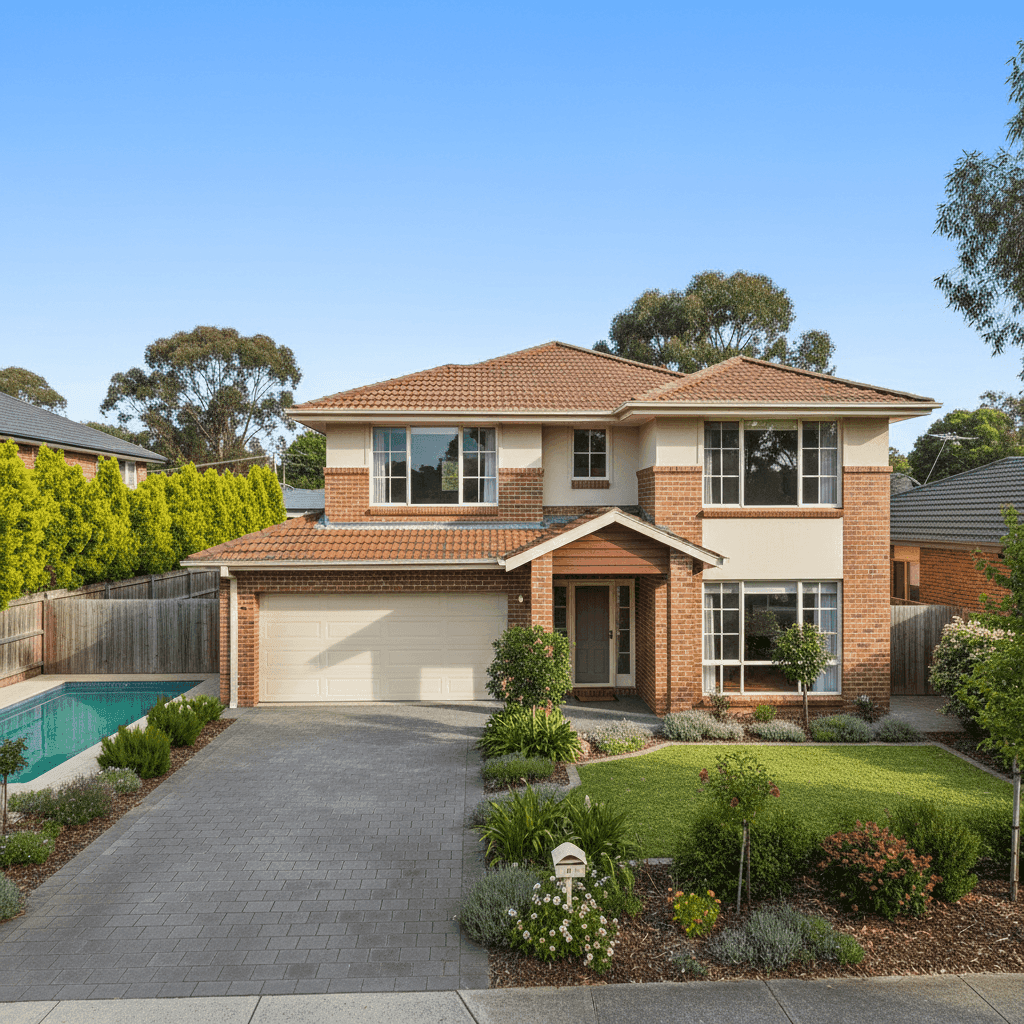
If you own a free standing home in Strathmore, VIC 3041, you're likely paying close attention to the cost of home and contents insurance — especially as premiums across Australia continue to shift. This article breaks down a real insurance quote for a four-bedroom, three-bathroom home in Strathmore, compares it against local and national benchmarks, and offers practical advice for getting better value on your cover.
---
Is This Quote Fair?
The quote in question comes in at $2,769 per year (or $261/month) for combined home and contents insurance, covering a building sum insured of $1,205,000 and contents valued at $207,000. Both the building and contents excess are set at $1,000.
Based on our pricing data, this quote is rated Expensive — above average for the Strathmore area. The suburb average sits at just $1,855/year, and the median is even lower at $1,772/year. That means this quote is roughly 49% above the suburb average and nearly 56% above the median — a meaningful gap worth investigating.
That said, context matters. The building sum insured of $1,205,000 is on the higher end, which will naturally push premiums upward. A high-quality four-bedroom home with top-of-the-range fittings, a swimming pool, and ducted climate control represents a significantly greater replacement liability for an insurer than a more modestly appointed property. So while the price tag looks steep against local comparisons, some of that premium reflects the genuine cost of insuring a premium property.
---
How Strathmore Compares
Understanding where your premium sits relative to broader benchmarks is essential for making an informed decision. Here's how this quote stacks up:
| Benchmark | Annual Premium |
|---|---|
| This Quote | $2,769 |
| Strathmore Suburb Average | $1,855 |
| Strathmore Suburb Median | $1,772 |
| Strathmore 25th Percentile | $1,561 |
| Strathmore 75th Percentile | $2,079 |
| Moonee Valley LGA Average | $1,817 |
| VIC State Average | $3,000 |
| VIC State Median | $2,718 |
| National Average | $5,347 |
| National Median | $2,764 |
A few things stand out here. While the quote exceeds the Strathmore suburb average by a notable margin, it actually sits below the Victorian state average of $3,000/year and is broadly in line with the national median of $2,764/year. Compared to the VIC state median of $2,718, this quote is only slightly higher.
This tells an interesting story: Strathmore is actually a relatively affordable suburb for home insurance within the Victorian and national context. Homeowners in this pocket of Melbourne's north-west tend to benefit from lower-than-average risk profiles — no cyclone exposure, established infrastructure, and a low flood risk compared to many other parts of the country. The fact that this particular quote exceeds local norms is more likely attributable to the specific property's characteristics than to any elevated suburb-level risk.
With only 29 quotes in our Strathmore sample, it's also worth noting that the local dataset is still growing, and averages can shift as more data comes in.
---
Property Features That Affect Your Premium
Several features of this property have a direct bearing on what insurers will charge. Understanding them helps explain the premium — and may highlight areas where savings are possible.
Brick veneer construction and tiled roof are generally viewed favourably by insurers. Brick veneer offers solid fire resistance and structural durability, while tiled roofs are considered more resilient than corrugated iron or Colorbond in certain weather conditions. These features typically work in a homeowner's favour when it comes to pricing.
Slab foundation is standard for homes built around the year 2000 and carries no particular premium loading in a non-cyclone, non-flood-prone area like Strathmore.
Top-of-the-range fittings are a significant factor. When a home is fitted with premium appliances, high-end cabinetry, luxury bathrooms, and quality flooring — as is the case here with timber and laminate floors throughout — the cost to rebuild or repair is substantially higher. Insurers price this accordingly.
Swimming pool adds liability exposure and increases the overall insured value of the property. Pool-related claims (damage to the pool structure, fencing compliance issues, or liability for accidents) are a genuine cost consideration for insurers.
Ducted climate control is another high-value fixture that contributes to both the building sum insured and the overall replacement cost. These systems can cost tens of thousands of dollars to replace, and their presence in a policy will nudge premiums upward.
Building size of 153 sqm is a moderate footprint for a four-bedroom home, which may actually help keep the premium from climbing even higher. Larger floor areas generally mean higher rebuild costs.
---
Tips for Homeowners in Strathmore
If you're a homeowner in Strathmore looking to get better value from your insurance, here are four practical steps worth considering:
- Review your sum insured carefully. A building sum insured of $1,205,000 is substantial. Make sure this figure accurately reflects the rebuild cost — not the market value — of your home. Overinsuring is a common mistake that quietly inflates premiums year after year. Use a professional building cost estimator or consult your insurer to validate the figure.
- Compare quotes from multiple insurers. The spread between the 25th percentile ($1,561/year) and this quote ($2,769/year) in Strathmore is over $1,200 annually. That gap represents real money, and it underscores how much variation exists between insurers for similar properties. Get a quote through CoverClub to see how different providers price your specific risk.
- Consider a higher excess to lower your premium. Both excesses on this policy are set at $1,000. Opting for a higher excess — say $1,500 or $2,000 — can meaningfully reduce your annual premium. This approach suits homeowners who have an emergency fund and are primarily seeking cover for major, infrequent events rather than smaller claims.
- Bundle your home and contents cover. This quote already combines building and contents insurance, which is typically the most cost-effective approach. If you're currently holding separate policies with different insurers, consolidating them could unlock a multi-policy discount and simplify your claims experience.
---
Ready to Compare?
Whether this quote looks right for your situation or you think there's room to do better, the smartest move is to compare. CoverClub makes it easy to see how your home insurance premium stacks up against real data from your suburb and beyond. Start comparing home insurance quotes today and make sure you're not paying more than you need to for the cover you deserve.