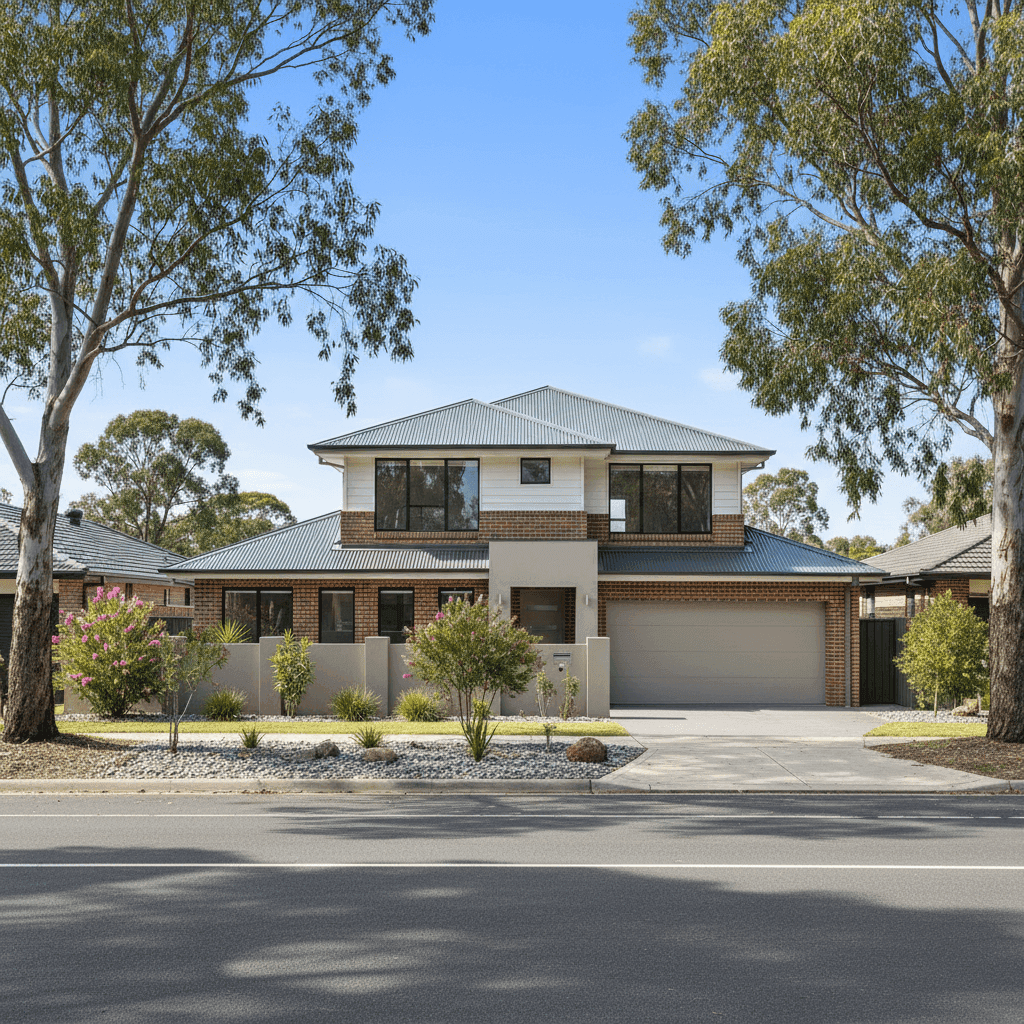
If you own a free standing home in Summerland Point, NSW 2259, you're likely aware that insurance costs can vary significantly depending on your property's features and location. Nestled on the shores of Lake Macquarie, Summerland Point is a relaxed lakeside community — but that doesn't mean home insurance is always straightforward. This article breaks down a real building insurance quote for a 2-bedroom, 1-bathroom home in the area, and puts it in context against local, state, and national benchmarks so you can make a more informed decision.
---
Is This Quote Fair?
The quote in question comes in at $1,579 per year (or approximately $164/month) for building-only cover, with a $3,000 building excess and a sum insured of $350,000.
Our rating for this quote? Cheap — below average. That's genuinely good news for the homeowner.
To put it in perspective, the suburb average for Summerland Point sits at $2,891/year, and the median is $2,398/year. This quote falls well below even the 25th percentile for the suburb, which is $1,963/year — meaning it's cheaper than at least 75% of quotes we've seen in the area. In practical terms, this homeowner is saving roughly $819 per year compared to the typical Summerland Point policyholder.
It's worth noting that the higher $3,000 excess does play a role in bringing the premium down. A lower excess would likely push the annual cost upward, so it's important to weigh up whether that trade-off suits your financial situation. If you'd struggle to cover a $3,000 out-of-pocket cost in the event of a claim, it may be worth exploring quotes with a lower excess — even if it means a slightly higher premium.
---
How Summerland Point Compares
Zooming out from the suburb level reveals just how much location shapes your insurance costs. Here's how Summerland Point stacks up:
| Benchmark | Annual Premium |
|---|---|
| This quote | $1,579 |
| Summerland Point suburb average | $2,891 |
| Summerland Point suburb median | $2,398 |
| LGA average (Cessnock) | $2,462 |
| NSW average | $9,528 |
| NSW median | $3,770 |
| National average | $5,347 |
| National median | $2,764 |
A few things stand out here. First, the NSW state average of $9,528 is extraordinarily high — this is heavily skewed by extremely expensive properties and high-risk areas across the state, which is why the median of $3,770 is a far more useful comparison point. Even so, this quote sits well below the NSW median.
Compared to the national median of $2,764, this quote is still notably cheaper. And relative to the Cessnock LGA average of $2,462, it's around $883 less per year.
For more detail on how Summerland Point premiums compare over time, visit the Summerland Point insurance stats page. You can also explore broader NSW home insurance data or check out national home insurance benchmarks to see how your area fares across Australia.
---
Property Features That Affect Your Premium
Every insurer prices risk differently, but certain property characteristics consistently influence what you'll pay. Here's how the features of this particular home likely shape its premium:
Brick Veneer Walls Brick veneer is generally viewed favourably by insurers. It offers solid fire resistance and durability compared to weatherboard or fibrous cement cladding, which can contribute to a more competitive premium.
Steel/Colorbond Roof Colorbond roofing is another plus from an insurer's perspective. It's lightweight, resistant to fire and corrosion, and holds up well in severe weather. Compared to older terracotta or concrete tiles, Colorbond is less prone to cracking or dislodging in storms.
Stump Foundation Homes on stumps (also known as timber or concrete piers) are common in coastal and lake-adjacent areas of NSW. While they offer good ventilation and can be advantageous in flood-prone areas, some insurers may factor in the additional complexity of underfloor spaces when assessing risk.
Timber/Laminate Flooring Flooring type can affect rebuild costs. Timber and laminate floors are relatively standard in homes of this era and don't typically push premiums in either direction dramatically.
1987 Construction Year Homes built in the late 1980s sit in a reasonable middle ground — old enough to have some wear, but generally built after significant improvements in Australian building codes. Electrical and plumbing systems in homes of this age may warrant attention, as ageing infrastructure can be a factor in water damage and fire claims.
Building Size: 105 sqm At 105 square metres, this is a modest-sized home. Smaller footprints generally mean lower rebuild costs, which is reflected in the $350,000 sum insured — a reasonable figure for a property of this size and construction type.
No Pool, Solar, or Ducted Climate Control The absence of a pool, solar panels, and ducted air conditioning simplifies the risk profile. Each of these additions can increase rebuild costs and introduce new liability or mechanical failure risks, so not having them keeps things straightforward.
---
Tips for Homeowners in Summerland Point
Whether you're renewing your policy or shopping around for the first time, here are some practical steps to make sure you're getting the right cover at the right price.
- Review your sum insured annually. Building costs have risen sharply in recent years. The $350,000 sum insured on this property may be appropriate today, but it's worth recalculating your estimated rebuild cost each year — especially given the labour and materials inflation seen across NSW. Underinsurance is one of the most common and costly mistakes homeowners make.
- Consider your excess carefully. This quote carries a $3,000 building excess, which is on the higher side. If you have sufficient savings to cover that amount comfortably, it's a smart way to reduce your premium. If not, a $1,000 or $1,500 excess might offer better peace of mind — just expect a higher annual cost.
- Check for flood and storm surge definitions in your policy. Summerland Point's proximity to Lake Macquarie means water-related risks are worth understanding clearly. Not all policies define "flood" the same way, and some exclude storm surge or rising water from lakes. Read the Product Disclosure Statement (PDS) carefully before signing.
- Don't auto-renew without comparing. Loyalty doesn't always pay in the insurance world. Even if your current insurer offers a competitive rate, it's worth getting at least two or three quotes at renewal time. Premiums can shift significantly from year to year, and a newer policy might offer better coverage at a similar price.
---
Ready to Compare?
Whether this quote matches your own situation or you're simply curious about what's available in Summerland Point, comparing multiple policies is always the smartest move. At CoverClub, we make it easy to see how your quote stacks up and find better value cover in minutes. Get a home insurance quote today and see what you could be saving.