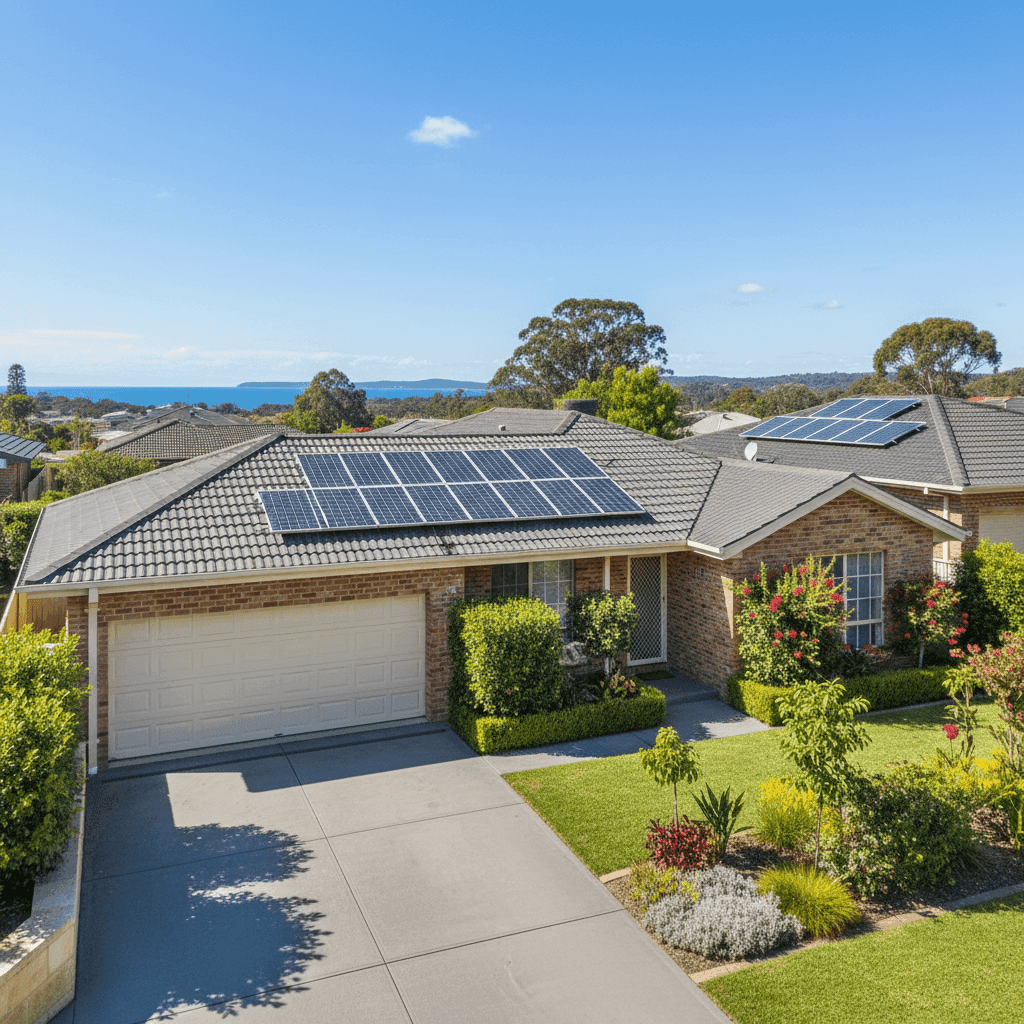
If you own a free standing home in Sunshine Bay, NSW 2536, you're likely no stranger to the balancing act of protecting a valuable coastal property while keeping insurance costs manageable. Situated on the South Coast of New South Wales within the Shoalhaven local government area, Sunshine Bay is a relaxed seaside community — but that desirable location comes with its own insurance considerations. This article breaks down a real home and contents insurance quote for a four-bedroom property in the area, benchmarks it against local, state, and national data, and offers practical tips to help you get better value on your cover.
---
Is This Quote Fair?
The annual premium for this quote comes in at $4,172 per year (or $408/month) for combined home and contents cover, with a building sum insured of $848,000 and contents valued at $100,000. Both the building and contents excess are set at $1,000.
Our price rating for this quote is EXPENSIVE — above average for the Sunshine Bay suburb.
To put that in context, the suburb average premium sits at $3,425/yr, with a median of $3,347/yr. This quote lands well above the 75th percentile for the area ($3,911/yr), meaning it's pricier than roughly three-quarters of comparable quotes we've seen in the postcode. That's a meaningful gap, and one worth investigating before simply accepting the renewal.
That said, it's important to consider what's driving the higher figure. A building sum insured of $848,000 is substantial — reflecting the cost to rebuild a 244 sqm brick veneer home with quality fittings, ducted climate control, solar panels, and timber/laminate flooring. Higher rebuild values naturally push premiums up, and in a coastal suburb like Sunshine Bay, insurers also factor in proximity to water and the associated weather risks.
---
How Sunshine Bay Compares
Understanding where your premium sits relative to broader benchmarks helps you judge whether you're being charged fairly — or whether it's time to shop around.
| Benchmark | Average Premium | Median Premium |
|---|---|---|
| Sunshine Bay (NSW 2536) | $3,425/yr | $3,347/yr |
| NSW State | $9,528/yr | $3,770/yr |
| National | $5,347/yr | $2,764/yr |
| Shoalhaven LGA | $11,272/yr | — |
A few things stand out here. The NSW state average of $9,528/yr is dramatically higher than the median of $3,770/yr — a sign that a small number of very high-risk or high-value properties are pulling the average up significantly. The same dynamic plays out at the Shoalhaven LGA level, where an average of $11,272/yr is skewed by properties with elevated flood, bushfire, or coastal inundation risk within the broader region.
For Sunshine Bay specifically, the suburb median of $3,347/yr is actually quite competitive — sitting below the NSW median and not far off the national median. This suggests that, for most properties in the area, insurance is reasonably priced. The quote we're analysing, at $4,172/yr, is above that local norm — but the higher building sum insured and property features go some way to explaining the difference.
Explore more data for your area at the Sunshine Bay insurance stats page, or compare against all of NSW and national benchmarks.
---
Property Features That Affect Your Premium
Every property is different, and insurers weigh up a range of characteristics when calculating your premium. Here's how the features of this particular home come into play:
Brick Veneer Walls & Tiled Roof Brick veneer construction with a tiled roof is generally viewed favourably by insurers. These materials offer solid fire resistance and durability compared to timber-framed or metal-clad alternatives, which can translate to slightly lower premiums. That said, tiles can be more susceptible to hail damage than Colorbond or metal roofing, so it's worth checking whether your policy includes adequate storm cover.
Slab Foundation A concrete slab foundation is standard for homes built in the 2000s and is generally considered low-risk from an insurance perspective. It eliminates the underfloor access issues associated with raised stumped foundations and reduces the likelihood of subsidence claims.
Solar Panels This property has solar panels installed — a feature that's increasingly common but one that insurers treat in varying ways. Some policies include solar panels as part of the building cover automatically, while others may require them to be specifically listed. It's worth confirming your policy explicitly covers the panels for damage from storms, fire, or impact.
Ducted Climate Control Ducted air conditioning systems are a significant fixed asset and are typically covered under building insurance. However, mechanical breakdown is usually excluded from standard home policies, so a separate appliance protection product may be worth considering.
Timber & Laminate Flooring These flooring types are popular but can be more vulnerable to water damage than tiles. If a burst pipe or storm event causes flooding, timber floors can warp or buckle quickly. Ensuring your policy has strong water damage provisions is particularly relevant here.
Building Size & Sum Insured At 244 sqm and a building sum insured of $848,000, this is a well-appointed home. Getting the sum insured right is critical — underinsuring can leave you significantly out of pocket after a major claim, while overinsuring means you're paying more in premiums than necessary. Using a building cost calculator to verify your rebuild estimate is always a smart move.
---
Tips for Homeowners in Sunshine Bay
1. Shop around at renewal time The gap between this quote ($4,172/yr) and the suburb median ($3,347/yr) is over $800 annually. Even if your current insurer has served you well, comparing quotes from multiple providers every year can reveal meaningful savings. Get a new quote at CoverClub to see what's available for your property.
2. Review your sum insured carefully Building costs have risen sharply in recent years, and many homeowners are either underinsured or paying premiums on an inflated rebuild estimate. Check your figure against a professional quantity surveyor's assessment or an online rebuild calculator — and make sure your solar panels and ducted system are factored in.
3. Confirm your solar panels are explicitly covered Ask your insurer directly whether solar panels are included under the building definition in your policy. Some policies cover them automatically; others require an endorsement. Given the cost of replacing a solar system, this is not a detail to leave ambiguous.
4. Consider your excess level Both excesses on this policy are set at $1,000. Opting for a higher excess (say, $2,000 or $2,500) can reduce your annual premium noticeably. If you have a solid emergency fund and are unlikely to make small claims, this trade-off can make good financial sense.
---
Compare Your Options with CoverClub
Whether this quote is the right fit or you're simply curious about what else is out there, CoverClub makes it easy to compare home and contents insurance for properties across Australia. Our platform aggregates real quote data so you can see exactly how your premium stacks up — and find a policy that genuinely suits your home. Start comparing today and make sure you're not paying more than you need to.