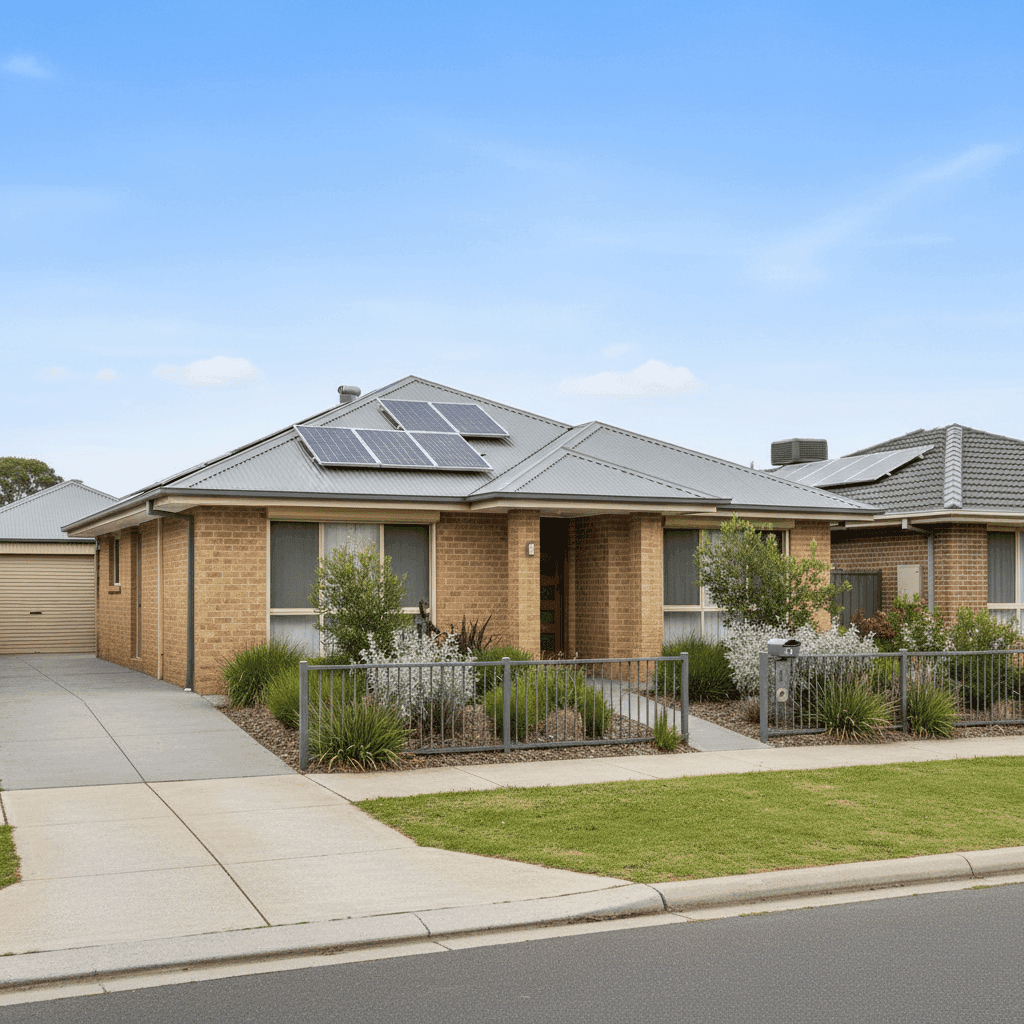
If you own a semi detached home in Sunshine West, VIC 3020, you've probably wondered whether your building insurance premium is competitive — or whether you're quietly paying more than you need to. This article breaks down a real building-only insurance quote for a three-bedroom, two-bathroom semi detached property in Sunshine West, and puts it in context against suburb, state, and national benchmarks.
---
Is This Quote Fair?
The quote in question sits at $1,363 per year (or roughly $140 per month) for building-only cover on a 153 sqm semi detached home, with a building sum insured of $555,000 and a $2,000 excess.
Our rating for this quote is FAIR — Around Average.
Within the Sunshine West suburb, the average annual premium across 63 quotes is $1,828, and the median sits at $1,599. At $1,363, this quote comes in below both the suburb average and median, sitting closer to the 25th percentile of $1,097 than the 75th percentile of $2,059. In practical terms, roughly half of Sunshine West homeowners with similar properties are paying more than this — which is a reasonably positive position to be in.
That said, "fair" doesn't mean "the best available." There's still meaningful room between this quote and the cheapest 25% of premiums in the suburb. If you're motivated to optimise your insurance spend, it's worth exploring whether other insurers can sharpen their pencils further.
---
How Sunshine West Compares
One of the most telling ways to evaluate a home insurance premium is to zoom out and compare it against broader benchmarks. Here's how Sunshine West stacks up:
| Benchmark | Average Premium | Median Premium |
|---|---|---|
| Sunshine West (suburb) | $1,828/yr | $1,599/yr |
| Brimbank LGA | $1,707/yr | — |
| Victoria (state) | $3,000/yr | $2,718/yr |
| National | $5,347/yr | $2,764/yr |
The numbers tell an encouraging story for Sunshine West homeowners. Premiums in this suburb are significantly lower than the Victorian state average — roughly 40% below it — and dramatically lower than the national average, which is heavily skewed upward by high-risk regions like Far North Queensland and parts of coastal New South Wales.
You can explore the full Sunshine West insurance stats, compare them against Victoria-wide data, or benchmark against national figures to get a fuller picture of where your suburb sits in the broader landscape.
The relatively affordable premiums in Sunshine West reflect the suburb's lower exposure to catastrophic natural hazards. Unlike coastal or far-north Queensland properties that face cyclone and flood risk, or bushfire-prone areas in regional Victoria, Sunshine West sits in Melbourne's western suburbs with a more moderate risk profile — and insurers price accordingly.
---
Property Features That Affect Your Premium
Every property is different, and insurers weigh up a range of physical characteristics when calculating your premium. Here's how the features of this particular home are likely influencing the quote:
Brick Veneer Walls Brick veneer is one of the most common wall constructions in suburban Melbourne, and insurers generally view it favourably. It offers solid fire resistance and structural durability compared to lightweight cladding, which can help keep premiums competitive.
Steel / Colorbond Roof Colorbond steel roofing is highly regarded by insurers. It's durable, resistant to ember attack, and performs well in storms. Compared to older tile roofs, Colorbond can contribute to lower premiums due to its longevity and reduced maintenance risk.
Concrete Slab Foundation A slab foundation is standard for homes of this era in Victoria and is generally considered low-risk from an insurance perspective. It avoids the subsidence and pest-related vulnerabilities sometimes associated with older timber subfloor construction.
Construction Year: 2007 At roughly 18 years old, this home sits in a sweet spot — modern enough to have been built to post-2000 building codes (which improved structural requirements), but not so new that replacement costs are at a premium. This tends to translate into more predictable and reasonable rebuild cost estimates.
Solar Panels The presence of solar panels is worth noting. While they don't dramatically inflate premiums, some insurers treat rooftop solar as an additional item that may require specific coverage under a building policy. It's worth confirming with your insurer that the solar system is explicitly covered under the building sum insured of $555,000.
153 sqm Building Size At 153 sqm, this is a modest but practical semi detached footprint. Smaller floor areas generally mean lower rebuild costs, which supports a more competitive sum insured and, in turn, a lower premium.
No Pool, No Ducted Climate Control The absence of a pool removes a common source of liability and maintenance-related claims. No ducted climate control also means fewer mechanical systems that could fail and cause water or electrical damage — both factors that can quietly inflate premiums.
---
Tips for Homeowners in Sunshine West
1. Review your sum insured annually Building costs in Victoria have risen significantly over the past few years due to labour shortages and material price increases. A sum insured of $555,000 may have been accurate when the policy was first set up, but it's worth revisiting with a building cost calculator to ensure you're not underinsured — especially given the current construction environment.
2. Confirm solar panel coverage As mentioned above, rooftop solar panels are a meaningful asset. Check your policy wording to confirm whether the panels are covered under the building definition, and whether damage from panel-related issues (such as electrical faults or fire) is included. Not all standard building policies treat solar the same way.
3. Compare quotes before renewal With a "fair" rating, this quote is reasonable — but the insurance market is competitive. Insurers reprice risk regularly, and a quote that was sharp 12 months ago may no longer be the best available. Using a comparison tool at renewal time takes only a few minutes and could save hundreds of dollars.
4. Consider your excess level This policy carries a $2,000 building excess. A higher excess generally reduces your premium, but it also means more out-of-pocket cost if you need to make a claim. Think about whether $2,000 is a comfortable amount to cover in the event of storm damage or an unexpected event — and if you'd prefer a lower excess, get quotes with different excess options to see the trade-off.
---
Ready to Compare?
Whether you're renewing an existing policy or buying insurance for the first time, it pays to shop around. CoverClub makes it easy to compare building insurance quotes for homes in Sunshine West and across Victoria — so you can see exactly where your premium sits relative to the market.
Get a building insurance quote now and find out if you could be paying less.