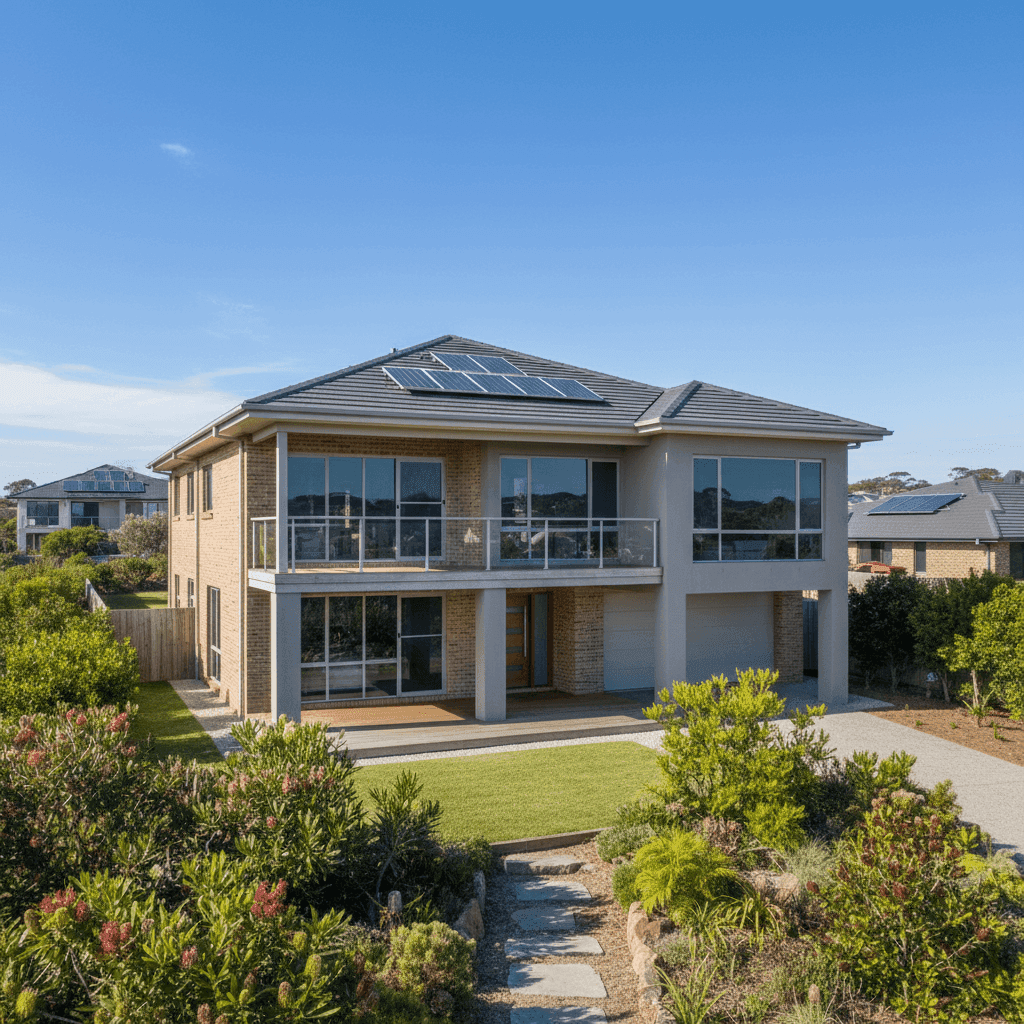
Sussex Inlet is a relaxed coastal town on the NSW South Coast, tucked between St Georges Basin and the Tasman Sea. It's the kind of place where the lifestyle is enviable — but that doesn't mean your home insurance bill should be. This article takes a close look at a real home and contents insurance quote for a four-bedroom, two-bathroom free standing home in Sussex Inlet (postcode 2540), breaking down whether the premium stacks up, how it compares to broader benchmarks, and what homeowners in the area can do to keep costs in check.
---
Is This Quote Fair?
The quote in question comes in at $3,638 per year (or $349/month) for combined home and contents cover, with a building sum insured of $997,000 and contents valued at $109,000. Both the building and contents excess are set at $2,000.
Our pricing engine rates this quote as Expensive (Above Average) — and the data backs that up.
Against the Sussex Inlet suburb average of $3,495/year, this quote sits roughly 4% higher. More tellingly, it's a significant 45% above the suburb median of $2,508/year, which is often a more reliable benchmark than the average because it's less skewed by outlier premiums at the top end.
That said, context matters. The suburb's 75th percentile sits at $3,618/year — meaning this quote is right at the boundary where only the most expensive quarter of local quotes sit. It's not wildly out of range for the area, but it does suggest there's room to shop around and potentially find a more competitive price for a similar level of cover.
---
How Sussex Inlet Compares
To understand whether Sussex Inlet is an expensive postcode in the broader scheme of things, it helps to zoom out.
| Benchmark | Average Premium | Median Premium |
|---|---|---|
| Sussex Inlet (2540) | $3,495/yr | $2,508/yr |
| NSW State | $9,528/yr | $3,770/yr |
| National | $5,347/yr | $2,764/yr |
At first glance, the NSW state average of $9,528/year looks alarming — but this figure is heavily influenced by high-risk and high-value properties across the state, including flood-prone regions and premium coastal markets. The NSW median of $3,770/year is a more grounded comparison, and Sussex Inlet's median of $2,508 actually sits comfortably below it.
Compared to the national median of $2,764/year, Sussex Inlet is broadly in line — slightly cheaper, in fact. This suggests the suburb isn't an inherently high-risk postcode from an insurer's perspective, which makes the above-average rating on this particular quote worth investigating further.
The LGA average (Unincorporated Other Territories) comes in at $2,613/year — again, below what this quote is charging.
---
Property Features That Affect Your Premium
Several characteristics of this property will be influencing the premium, both positively and negatively.
Features Working in Your Favour
- Brick veneer construction is generally viewed favourably by insurers. It's durable, fire-resistant, and holds up well in storm conditions — all factors that reduce claim likelihood.
- Tiled roof is similarly well-regarded. Compared to Colorbond or corrugated iron, tiles offer solid weather resistance and longevity.
- Concrete slab foundation is considered a low-risk foundation type, with minimal susceptibility to movement or flood ingress compared to raised timber stumps.
- Built in 2015 — a relatively modern build means the property benefits from up-to-date building codes, which typically include improved cyclone, fire, and structural standards.
- No cyclone risk area designation removes a significant premium loading that affects many coastal Queensland and northern NSW properties.
Features Adding Complexity
- Elevated by at least 1 metre — while elevation can be a flood mitigation measure, some insurers factor in the structural complexity and potential for wind exposure at height.
- Solar panels add replacement value to the property and require specific cover considerations. Not all policies cover solar panels under the standard building definition, so it's worth confirming this is explicitly included.
- Above average fittings quality directly increases the rebuild cost estimate, which in turn pushes up the sum insured — and the premium. A $997,000 building sum insured is substantial and reflects the quality of finishes throughout the home.
- Ducted climate control is another high-value fixed installation that contributes to the rebuild cost and contents valuation.
- 214 sqm floor area is a generous size for a four-bedroom home and will be a key driver of the building sum insured calculation.
---
Tips for Homeowners in Sussex Inlet
1. Review Your Sum Insured Carefully
At $997,000, the building sum insured is the largest lever on your premium. Make sure it reflects the actual cost to rebuild — not the market value of the property. An independent quantity surveyor's report can help you avoid both over-insuring (paying too much) and under-insuring (being caught short at claim time).
2. Confirm Solar Panel Cover Is Explicit
Solar panels are a meaningful asset, but coverage varies significantly between policies. Check whether your policy covers panels as part of the building, as a separate item, or not at all. If you've added panels since the policy was taken out, notify your insurer to ensure they're properly included.
3. Consider Increasing Your Excess
Both the building and contents excess are set at $2,000. If you can comfortably self-fund smaller claims, opting for a higher excess (say, $2,500–$5,000) can reduce your annual premium meaningfully. Just make sure the savings justify the increased out-of-pocket exposure.
4. Shop Around at Renewal Time
The gap between the suburb's 25th percentile ($1,894/year) and 75th percentile ($3,618/year) is substantial — nearly $1,700/year for broadly similar properties. That spread tells you the market is competitive and that loyalty doesn't always pay. Comparing multiple quotes before your renewal date is one of the most effective ways to ensure you're not overpaying.
---
Compare Your Options with CoverClub
Whether you're renewing soon or just curious about what else is out there, CoverClub makes it easy to see how your current premium stacks up. Get a quote today at CoverClub and compare home and contents options for your Sussex Inlet property — you might be surprised at the difference a little comparison shopping can make.